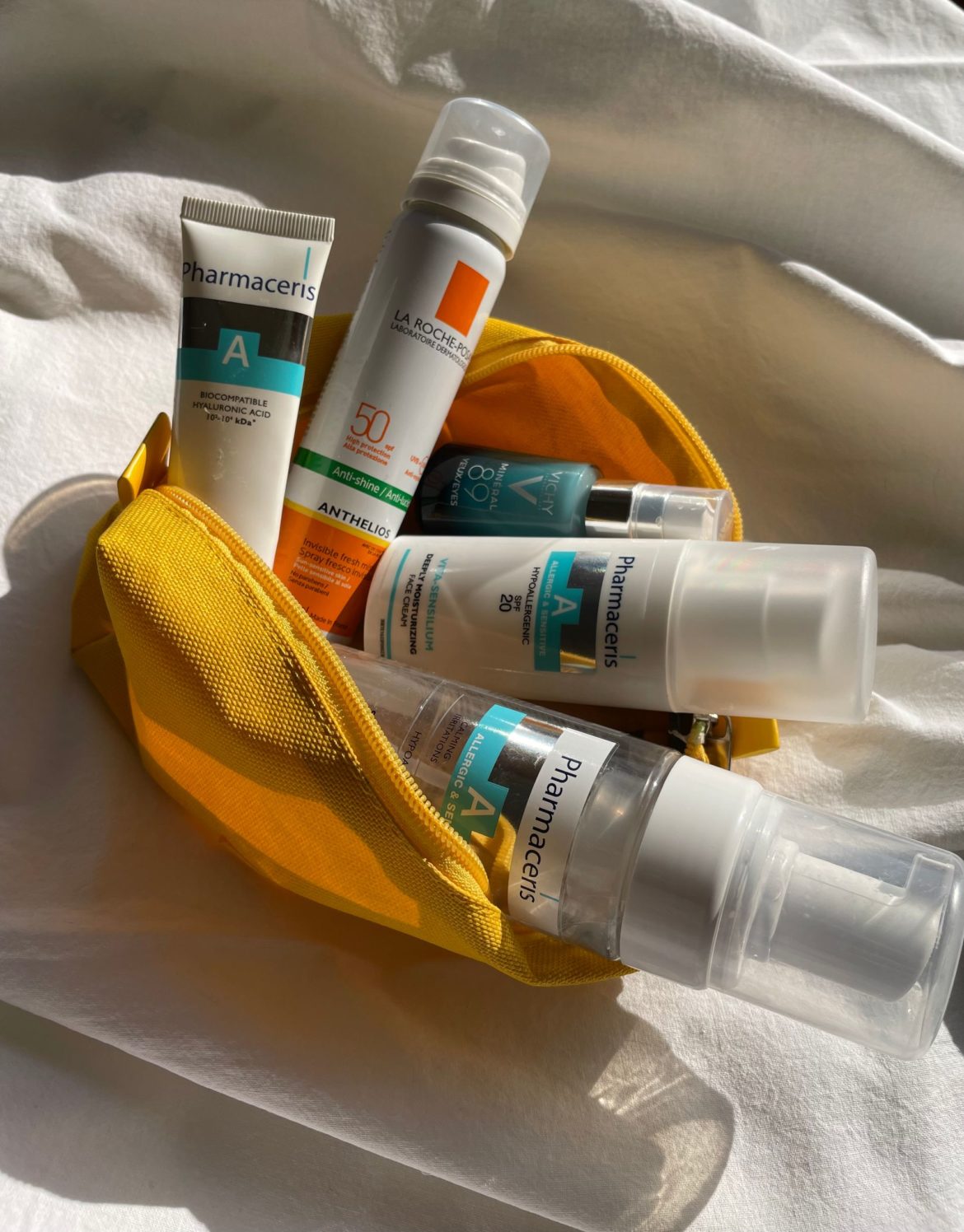
Travel is hard on skin in ways that are easy to underestimate until you land at your destination looking like you have aged three years overnight. Recirculated cabin air on long flights is notoriously desiccating: the humidity inside an aircraft cabin can drop 20 per cent below, well below the 40 to 60 per cent your skin is accustomed to at home. Disrupted sleep, different water quality at your destination, sun exposure you may not have planned for, and the general stress of time zones and schedule disruption all leave their mark.
None of this requires an elaborate travel skincare kit. It requires a considered one.
The non-negotiable: SPF
South Africa has some of the highest UV intensity readings in the world, and wherever you are travelling, the same principle applies: UV radiation causes skin damage year-round, regardless of cloud cover, and in most climates the sun’s UV index is higher than most people expect on overcast winter days. A broad-spectrum SPF30 or SPF50 sunscreen is the single most evidence-backed skin protection product available, and it is non-negotiable regardless of where you are going, what the season is, or how cloudy the forecast looks.
For travel, a lightweight formula that doubles as a moisturiser, sometimes described as a tinted moisturiser with SPF or a skin tint, cuts the morning routine in half and fits into a compact bag more easily than a full separate moisturiser plus sunscreen. These should be applied last in your morning skincare routine.
The cleanser: gentle and predictable
Travel is not the moment to introduce a new cleanser or experiment with a new formula. Take what your skin knows. A gentle, low-foam cleanser that does not strip the skin barrier is ideal for both the drying environment of travel and the varied water quality you encounter across different destinations. Micellar water in a travel-sized format is effective for double cleansing or for removing makeup on long travel days when a full face wash is not convenient.
The moisturiser: richer than usual
Most people need a richer moisturiser when travelling than their regular at-home formula. Aircraft cabins, heated hotel rooms and long days of varying weather and climate all deplete the skin’s moisture levels, and even a skin type that runs oily at home may feel dry and tight after a long-haul flight. A hydrating cream with a combination of occlusives, ingredients that seal moisture into the skin, and humectants like hyaluronic acid and glycerin, which draw moisture to the skin surface, provides the most useful defence. If you travel with just one moisturiser, err toward something more nourishing than your usual.
In-flight skincare: the specific rules
The advice to apply a rich facial serum or sheet mask mid-flight is well-circulated but not particularly practical for most travellers. What is practical: keep lips covered with a hydrating lip treatment throughout the flight, since lips lose moisture even more rapidly than the surrounding skin at low humidity. Reapply facial moisturiser a few hours into a long flight if you wake up feeling dry. Drink water consistently throughout the flight rather than catching up at the end, and avoid alcohol and caffeine on board where possible, as both accelerate dehydration.
A hydrating facial mist, kept in your carry-on for spritzing through the flight, provides a useful top-up of surface moisture. Choose one with humectant ingredients rather than just water, which evaporates from the skin surface and can draw out moisture as it goes.
What to leave at home
Active treatments, particularly exfoliating acids like AHAs and BHAs, retinoids and vitamin C serums, are best left at home or saved for your return unless your skin is well-adapted to them and you travel consistently with the same routine. These ingredients increase photosensitivity and require the kind of consistent conditions that travel does not always provide. If you do travel with them, use vitamin C in the mornings and retinoids at night with consistent SPF coverage during the day, and be more generous with your SPF application than you would be at home.
The packing principle
Multi-use formats save space and reduce the number of decisions you need to make at 5am. A tinted moisturiser with SPF, a lip balm with colour, a solid cleanser bar and a single multipurpose balm that works on dry patches, lips and cuticles represent a full routine in four small items. Solid formats, including shampoo bars, conditioner bars and solid cleansers, are also carry-on friendly and eliminate the need for leak-proof bags and liquid restrictions. Build the kit around the specific conditions of your trip, the climate, the activities, the duration, rather than packing your entire bathroom shelf and editing on the other end.
ALSO SEE:
Featured Image: Pexels