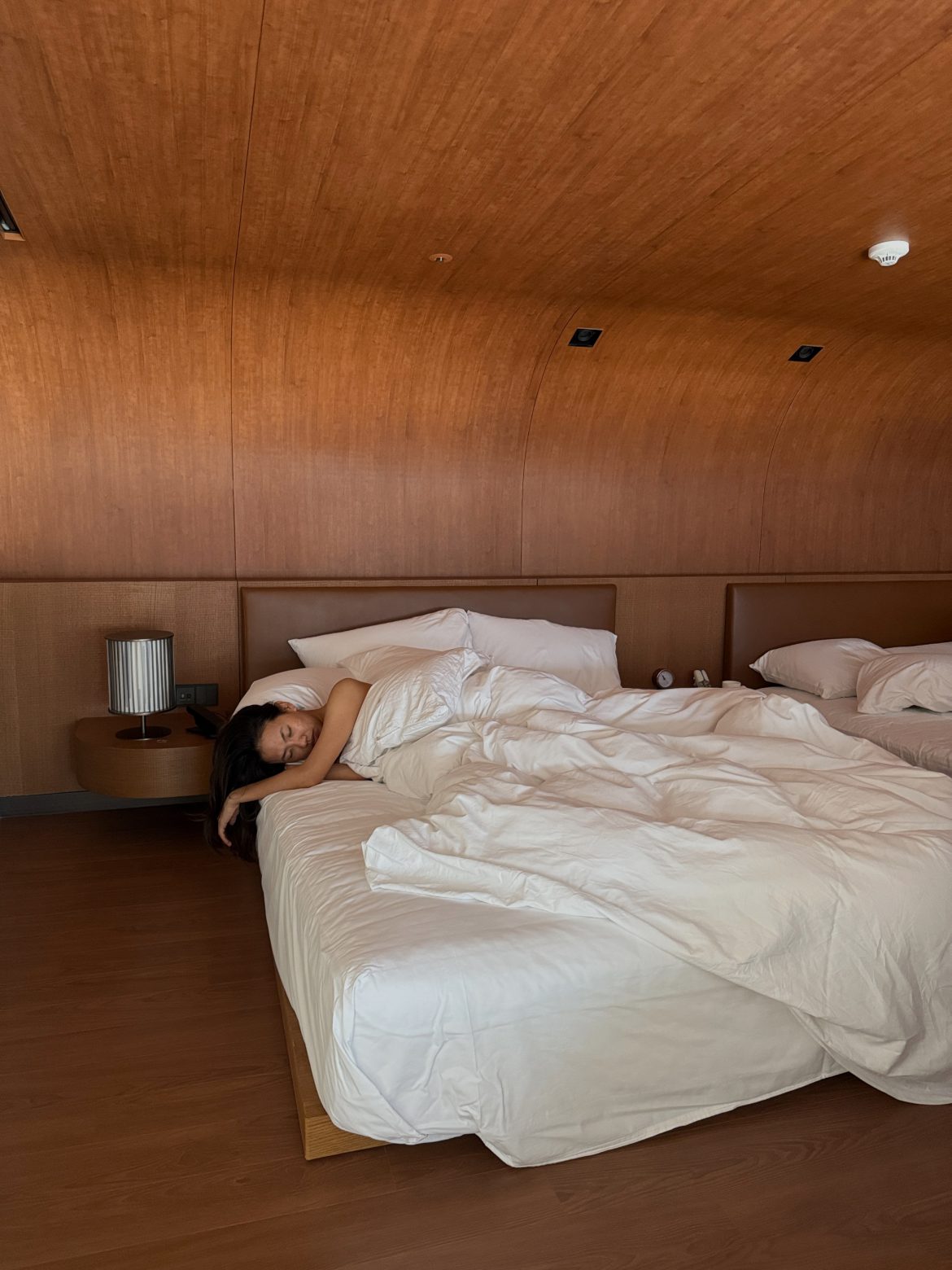
Quality sleep isn’t just about what you do before bed — it’s about how well you help your nervous system wind down. Gentle, intentional movement in the evening can cue your body to release tension, lower cortisol levels and transition from “go mode” into rest.
These six slow, accessible movements are designed to calm the body, quiet the mind and prepare you for deeper, more restorative sleep — no intense stretching, no sweating, just softness.
1. Legs up the wall (Viparita Karani)
This is one of the most powerful pre-sleep postures for calming the nervous system.
Lying on your back with your legs resting vertically against a wall helps reduce swelling in the legs, improves circulation and signals safety to the body. It also gently stimulates the parasympathetic nervous system — the part responsible for rest and digestion.
Lie on your back and place your legs up against a wall. Let your arms relax by your sides, palms facing up. Stay here for 3–5 minutes while breathing slowly through your nose.
It reduces physical restlessness and mental overstimulation, making it easier to drift off once you lie down.
2. Seated forward fold
This movement is grounding and introspective — perfect for transitioning out of a busy day.
A gentle forward fold helps release tension in the spine, lower back and hamstrings, areas where stress often accumulates without us realising.
Sit on your bed or the floor with legs extended. Inhale to lengthen your spine, then slowly fold forward, resting your hands on your legs or feet. Keep the stretch soft, not forced.
Forward folds naturally encourage the body to turn inward, calming the mind and reducing anxiety before bedtime.
3. Supine spinal twist
Twists are excellent for releasing tension held in the lower back and hips — especially after a day of sitting or standing for long periods.
This movement gently massages the internal organs and encourages deeper breathing.
Lie on your back, bring one knee into your chest and gently guide it across your body to the opposite side. Extend your arms out like a T and allow your shoulders to soften. Hold for 1–2 minutes on each side.
It eases physical discomfort and helps the body feel supported and relaxed, reducing tossing and turning.
4. Neck rolls and shoulder releases
Stress often lives in the neck and shoulders, and if it’s not released, it can lead to shallow breathing and restless sleep.
Slow, controlled neck movements can make a noticeable difference.
Sit or lie comfortably. Gently roll your shoulders back and down. Slowly tilt your head side to side, then make small circles with your neck. Keep the movements slow and intentional.
Releasing tension here allows your breath to deepen and your body to fully soften into rest.
5. Child’s pose with deep breathing
This posture offers a sense of safety and grounding — something the nervous system deeply responds to in the evening.
It’s especially helpful if you feel mentally overwhelmed or emotionally overstimulated.
Kneel on the floor or bed, sit your hips back towards your heels and fold forward, resting your forehead down. Stretch your arms forward or let them relax by your sides. Take slow, deep breaths for 2–3 minutes.
It slows the heart rate, encourages deeper breathing and creates a sense of calm and containment.
6. Gentle pelvic tilts
This small, rhythmic movement is often overlooked but incredibly effective for releasing lower back tension and soothing the body.
Lie on your back with knees bent and feet flat on the floor. Gently tilt your pelvis up and down, flattening and arching your lower back slowly. Continue for 1–2 minutes.
It relaxes the lower spine and encourages a smooth transition into stillness, making it easier to fall asleep comfortably.
How to use these movements for better sleep
You don’t need to do all six every night. Even 5–10 minutes of gentle movement is enough to create a noticeable shift.
Think of these movements as a signal — a way of telling your body that it’s safe to rest, that the day is done and nothing else is required of you.
When sleep becomes a ritual instead of a struggle, quality naturally follows.
ALSO SEE:
Featured Image: DupePhoto