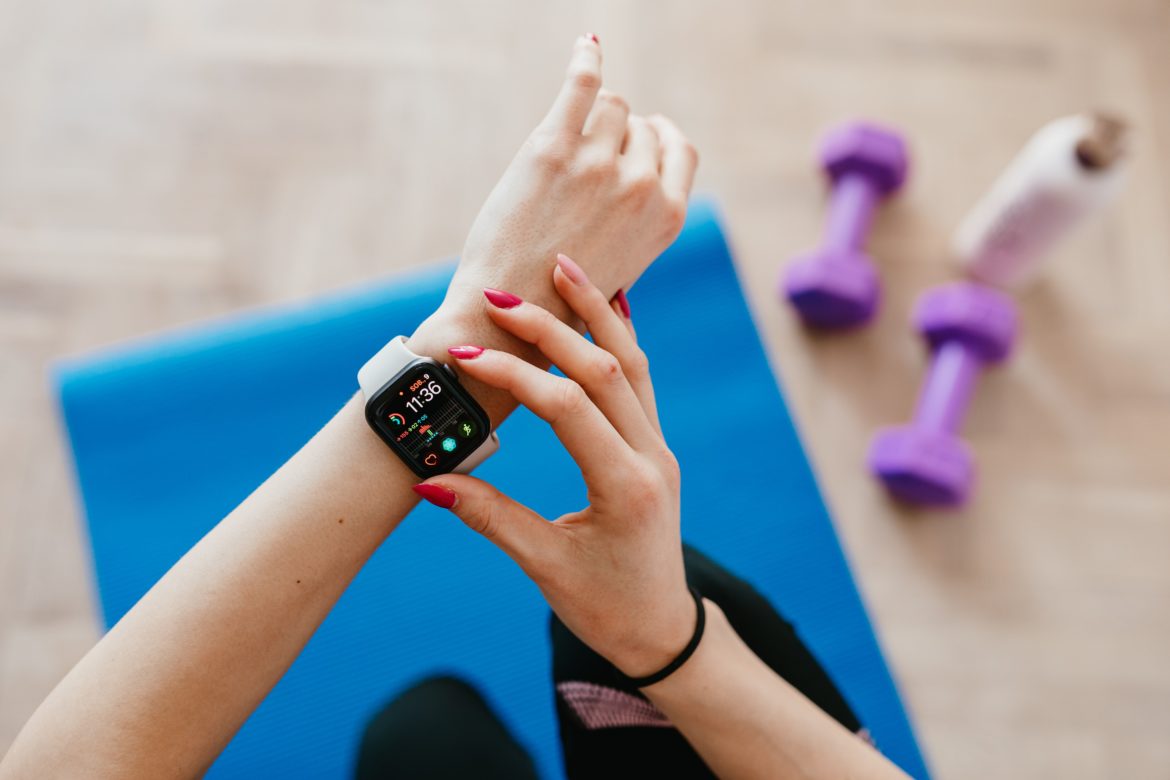
From sleep scores and step counts to cycle data, calorie apps and recovery metrics – we have never had more information about our bodies. But when did wellness become a numbers game and could knowing less actually help us feel better?
There was a time when you simply knew you were tired, you went to bed earlier. You knew you had been sitting too much, so you went for a walk. You knew you were hungry, so you ate. You knew you were stressed because you felt it.
Now, there is an app for almost everything.
Your watch can tell you how well you slept. Your ring can measure your recovery. Your phone can count your steps. Your fitness tracker can estimate your calorie expenditure. Your period app can predict your fertile window. Your smart scale can tell you about your body composition.
And suddenly, something as wonderfully complicated as being a human-being has become a dashboard of data.
When wellness became a performance
The idea behind tracking isn’t inherently problematic. Data can be incredibly useful. Tracking menstrual cycles can help women recognise patterns, monitoring physical activity can encourage us to move more and sleep data can highlight habits that may be worth discussing with a healthcare professional.
The problem begins when tracking stops being information and starts becoming a form of judgement.
Did I get enough steps? Was my sleep score good? Did I burn enough calories? Was my recovery high enough to train? Did I eat too much? Did I exercise enough? Did I spend enough time in deep sleep?
The wellness industry has increasingly blurred the line between understanding ourselves and constantly measuring ourselves.
Instead of asking, “How do I feel today?”, we can find ourselves asking, “What does my data say I should feel like today?”
The illusion that more information means more control
There is something deeply reassuring about a number.
Numbers feel objective. They give us something tangible to work with. If your sleep score is 82, it can feel easier to understand than the vague sensation that you woke up feeling slightly more refreshed than yesterday.
But our bodies aren’t spreadsheets.
A wearable might estimate your sleep, but it doesn’t know that you stayed awake for 20 minutes thinking about tomorrow’s presentation. A calorie tracker doesn’t understand that you are hungrier because you’ve had an unusually active day. A cycle app can’t capture every nuance of your hormonal experience.
The more metrics we collect, the easier it becomes to mistake measurement for certainty.
And sometimes, the number can actually override what we already know.
The pressure to optimise your entire existence
Perhaps the strangest part of modern wellness culture is how little room it leaves for simply being.
Sleep, nutrition, exercise, hormones, productivity and even rest has become something to optimise.
We are encouraged to have the perfect morning routine, the perfect supplement stack, the perfect workout split, the perfect bedtime and the perfect skincare routine.
The result can be a peculiar form of wellness anxiety – the feeling that you are never quite doing enough. And if your goal is supposedly to feel better, that is worth questioning.
Are you tracking or obsessing?
Tracking can be helpful when it answers a specific question.
Perhaps you want to understand whether getting more consistent sleep affects your energy. Maybe you’re training for an event and need to monitor your workload, or if you’re working with a healthcare professional and tracking a symptom could provide useful information.
The intention matters. A useful question to ask is: “What am I hoping to learn from this?”
If the answer is clear, the data may genuinely serve you.
But if you’re checking your tracker repeatedly, feeling guilty when you miss a target, changing your behaviour solely to improve a score, or becoming anxious when the numbers don’t look “right”, it may be time to step back.
Your wearable should be a tool and not a tiny digital boss living on your wrist.
The radical act of not knowing
It might be a great opportunity to need to rediscover the luxury of not measuring everything.
Go for a walk without counting the steps, have dinner without calculating every nutrient, take a rest day without checking whether your recovery score approves. Sleep without worrying about how much REM you achieved. Move because it feels good, not because you’ve reached your activity target.
There is value in experiencing your body without immediately turning the experience into data.
And those natural signs your body gives you, these aren’t inferior forms of information. They are signals – you are able to listen to them without tracking them.
A softer approach to self-improvement
The answer isn’t necessarily to throw every tracker into a drawer and reject technology altogether. The goal is to put the technology back in its place.
You can data to notice patterns rather than police yourself. Look at trends rather than obsess over individual numbers. And, importantly, leave some aspects of your life completely unmeasured.
Because health isn’t a competition and your body isn’t a project that needs to be perfected.
There will always be another percentage to improve, another target to hit and another metric promising to make you a slightly more efficient version of yourself.
Sometimes instead of asking: “How can I optimise myself?”, perhaps the question should be it’s: “What would help me feel more like myself?”
And that answer probably can’t be found on a dashboard.
ALSO SEE:
Featured Image: Pexels