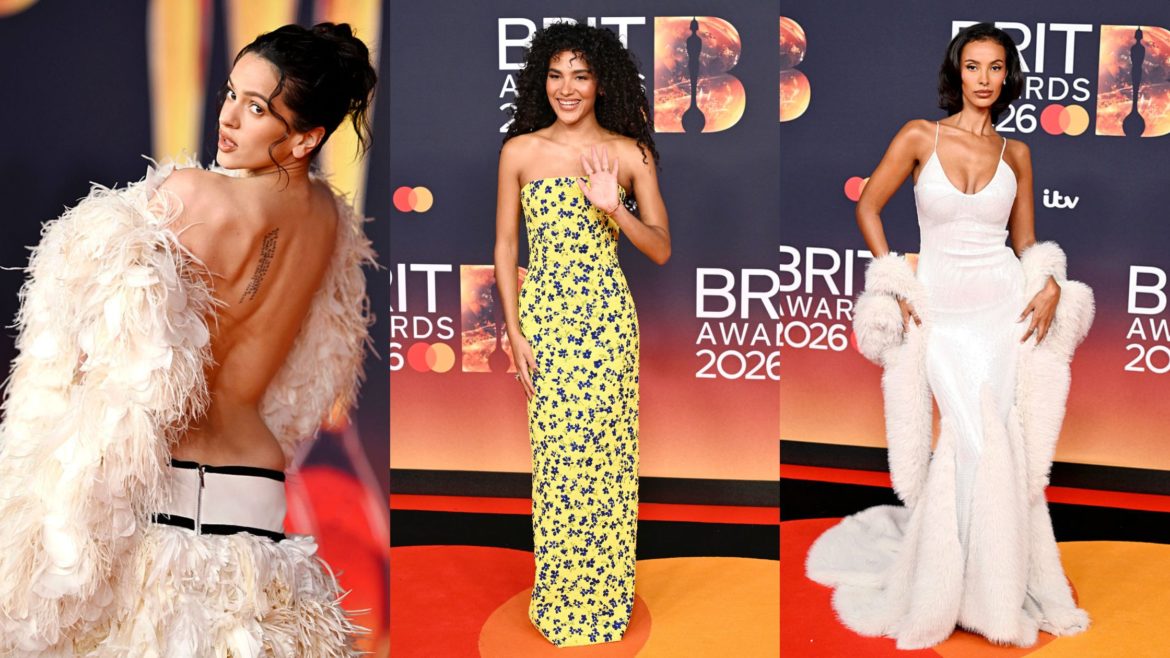
Manchester did not play it safe. For the first time in its history, the BRIT Awards left London behind for the Co-op Live arena — and the red carpet responded accordingly. The 2026 ceremony delivered a fashion narrative defined by sculptural silhouettes, theatrical embellishment and unapologetic colour.
If the mood in previous years leaned polished, this year felt expressive. Intentional. Confident.
And at the centre of it all was Olivia Dean.
The fashion story: statement dressing, done with conviction
Olivia Dean, who would go on to dominate the awards, arrived in a strapless yellow Loewe column gown scattered with delicate blue florals. The silhouette was clean, the palette optimistic and the effect quietly commanding. It was not loud — it was assured.
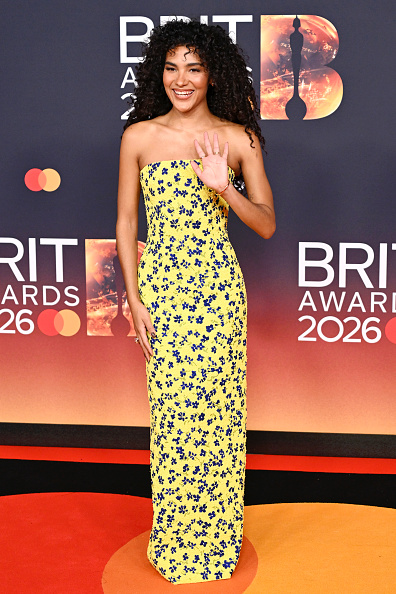
(Photo by Gareth Cattermole/Getty Images)
In contrast, Rosalia delivered full couture drama in a reworked Chanel two-piece featuring a feathered bandeau sash cascading into a layered skirt. The open-back detail modernised the archival reference, giving the look movement and red-carpet theatre without veering into costume.
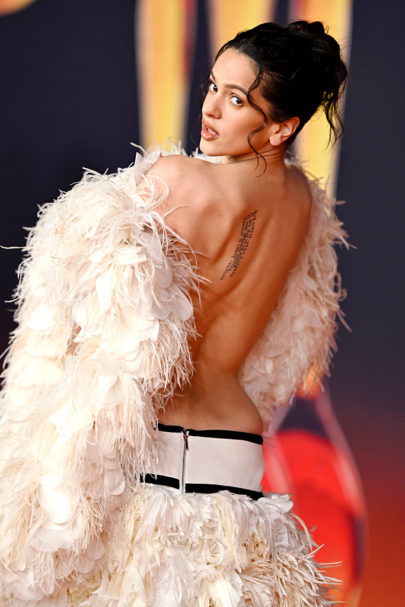
(Photo by Gareth Cattermole/Getty Images)
Lola Young leaned into her signature edge in a sculpted corset top splashed with red spray-paint detailing, styled with relaxed metallic trousers. It was industrial, irreverent and entirely on-brand — proof that formality is no longer a prerequisite for impact.
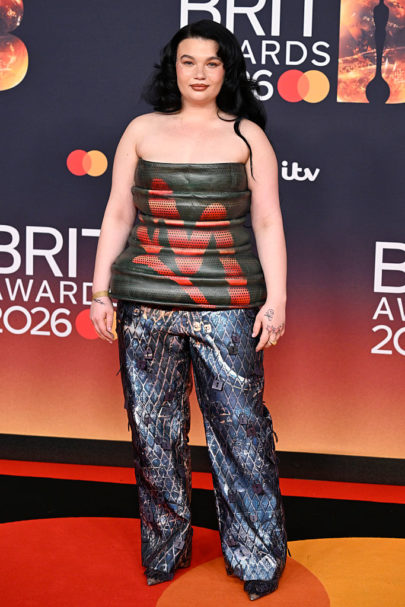
(Photo by Gareth Cattermole/Getty Images)
Colour was the defining through-line of the evening.
Cobalt blue emerged as the night’s most striking shade, worn in sheer asymmetric gowns and sharply structured mini dresses that caught the light against Manchester’s industrial backdrop. Sunshine yellow also made a strong showing, while monochrome tailoring added structure to an otherwise playful carpet.
Maya Jama channelled old Hollywood glamour in a sleek white gown styled with a fur stole, offering a moment of classic red-carpet elegance amid the experimentation.
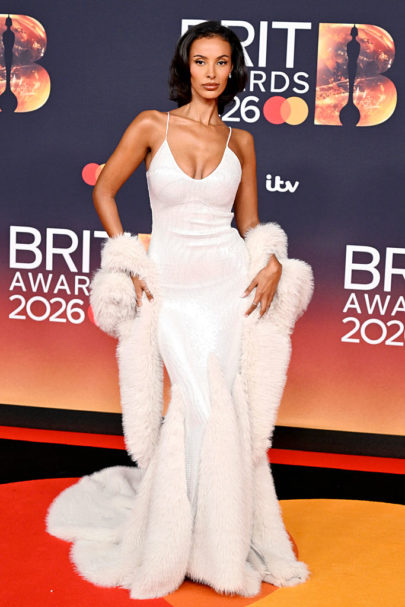
(Photo by Gareth Cattermole/Getty Images)
Taken together, the message was clear: British music’s biggest night is no longer about playing it safe. It is about personality.
Olivia Dean’s historic sweep
Beyond the fashion, the ceremony belonged unequivocally to Olivia Dean.
The 26-year-old singer-songwriter collected four of the night’s most prestigious awards, including British Artist of the Year and British Album of the Year for The Art of Loving. Her collaboration with Sam Fender, Rein Me In, secured Song of the Year — notably in a category where she was also nominated for her own solo hit.
Dean described the album as a project rooted in empathy and connection, themes that resonated strongly in a year defined by uncertainty.
Her performance of Man I Need further cemented her standing, drawing one of the evening’s most engaged audience responses.
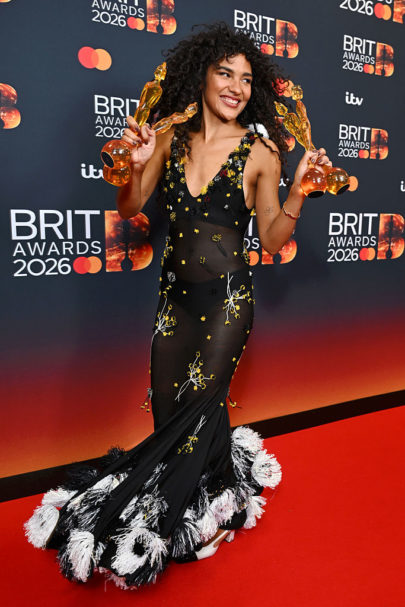
(Photo by Anthony Devlin/Getty Images)
Historic moments and standout performances
The 2026 BRITs also reflected the increasingly global nature of contemporary music.
Rosalia’s recognition for music performed in a foreign language marked a significant milestone for the ceremony, while K-pop star Rosé’s win for Best International Song underlined the growing influence of non-Western pop on mainstream stages.
Harry Styles returned to the BRITs stage after a three-year absence, performing his new track Aperture, while Dua Lipa surprised audiences with a duet alongside Mark Ronson. The pair delivered a slick, high-energy set that blended disco polish with pop precision.
The ceremony also paused for reflection. A moving In Memoriam segment honoured artists lost over the past year, and Ozzy Osbourne was recognised with a Lifetime Achievement Award, with heartfelt tributes from his family preceding a closing performance that shifted the arena’s energy from celebration to reverence.
A ceremony that felt newly energised
Moving the BRIT Awards to Manchester could have been a logistical footnote. Instead, it felt like a tonal shift.
The red carpet was bolder. The performances sharper. The wins are more representative of a diversifying industry.
In a year where women dominated nominations and global artists reshaped the charts, the 2026 BRIT Awards reflected a music scene that feels expansive rather than insular.
And if the fashion was any indication, British music’s biggest night has entered a more expressive era.
ALSO SEE:
Ian von Memerty dies at 61, leaving legacy in theatre and television
Featured Image: Getty