If your hamstrings always seem to feel tight, you’re certainly not alone. Long hours sitting at a desk, a sedentary lifestyle, intense workouts and even simply skipping your stretches can leave the muscles at the back of your thighs feeling stiff and restricted.
While tight hamstrings can make everyday movements feel uncomfortable, the good news is that you don’t necessarily need an elaborate stretching routine to start improving your flexibility. One simple yoga pose can be a great place to begin –the Standing Forward Fold.
Why do your hamstrings feel so tight?
The hamstrings are a group of muscles running along the back of your thighs. They help with movements such as walking, running, bending your knees and extending your hips.
When you spend a lot of time sitting, your hips and knees remain bent for extended periods, which can contribute to that familiar feeling of stiffness. Tightness can also be linked to physical activity, inadequate mobility work, muscle fatigue or simply having naturally limited flexibility.
It’s worth remembering that feeling tight doesn’t always mean a muscle is physically “short”. Sometimes the sensation can also be related to how your nervous system responds to stretching or movement.
The one yoga pose to try: Standing forward fold
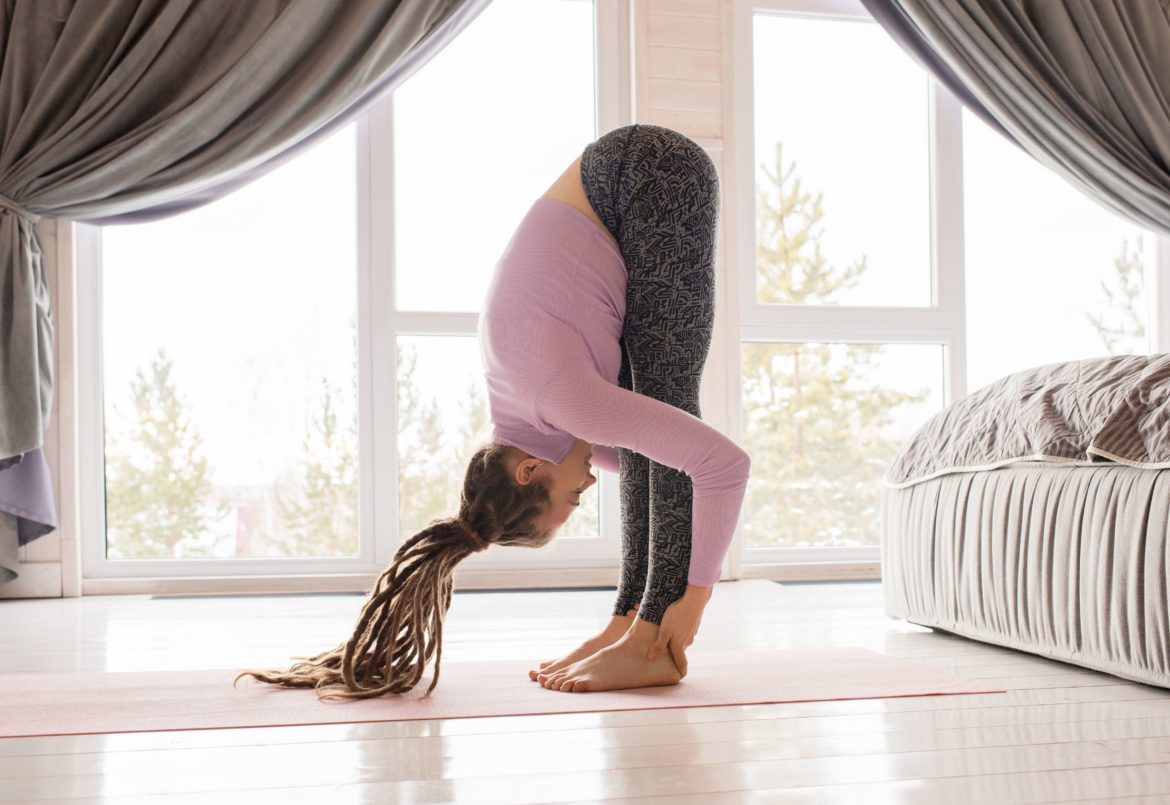
Uttanasana, or Standing Forward Fold, is one of the most accessible yoga poses for gently targeting the back of the legs.
The beauty of this pose is that it requires no equipment and can be modified according to your flexibility.
How to do it
- Stand with your feet hip-width apart and keep your knees soft rather than locked.
- Take a slow breath in and lengthen through your spine.
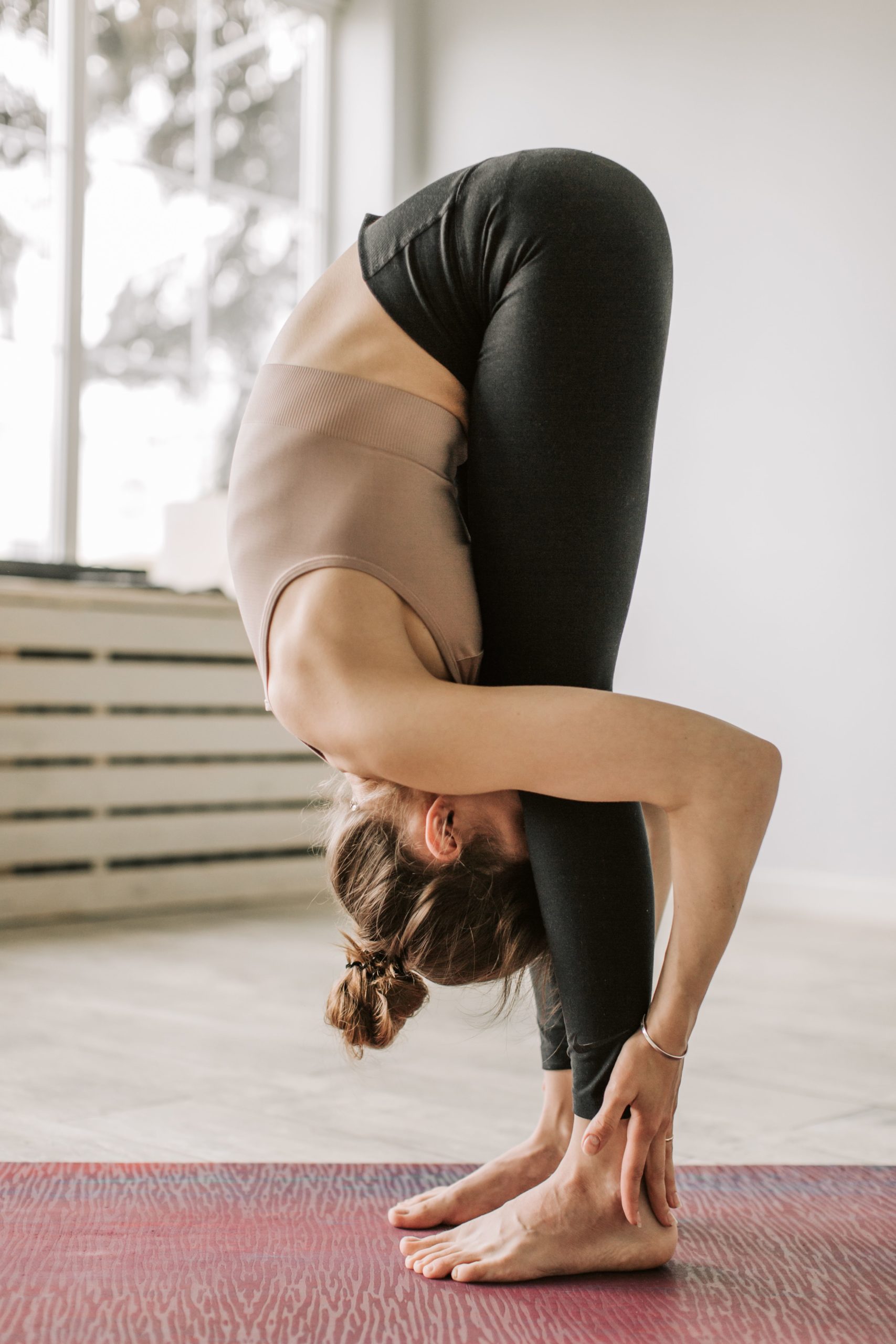
- Exhale as you hinge forward from your hips, allowing your upper body to move towards your thighs.
- Let your hands reach towards the floor, your shins or a yoga block – wherever they comfortably land.
- Keep a slight bend in your knees if your hamstrings feel particularly tight.
- Allow your head and neck to relax without forcing yourself deeper into the stretch.
- Hold the position for around 20–30 seconds, breathing slowly and comfortably.
- To come out of the pose, bend your knees slightly and slowly roll or hinge back up to standing.
Don’t force the stretch
One of the biggest mistakes people make when trying to improve flexibility is believing that a deeper stretch automatically means better results. It doesn’t.
You should feel a gentle pulling or stretching sensation through the backs of your legs, but you shouldn’t experience sharp pain, numbness or tingling. If you do, ease out of the position.
Flexibility is something that develops gradually. Consistency is generally more useful than pushing yourself into an uncomfortable position once in a while.
Make it part of your routine
Try incorporating Standing Forward Fold into your daily routine, particularly after periods of prolonged sitting. You could do a few gentle repetitions when you get up from your desk, after a walk or as part of your evening wind-down.
For an even gentler variation, place your hands on a chair, table or yoga blocks rather than reaching all the way to the floor.
Pro tip: Your goal isn’t to touch your toes – it’s to move more comfortably.
When tight hamstrings may need more attention
Persistent tightness isn’t always something you should simply stretch away. If you experience ongoing pain, significant stiffness, weakness, numbness or discomfort that affects your movement, it’s worth speaking to a physiotherapist or other qualified healthcare professional.
A personalised assessment can help determine whether your hamstrings are actually the source of the problem or whether another area, such as your hips or lower back, is contributing to the sensation.
You don’t need a complicated flexibility routine to start giving your hamstrings some attention. A few minutes of gentle, consistent movement can be a simple way to work on mobility and become more aware of how your body feels.
So the next time your legs feel stiff after a long day, step away from your desk, take a breath and try a gentle Standing Forward Fold. Your hamstrings may thank you for it.
ALSO SEE:
Recovery isn’t one-size-fits-all. Why women’s bodies need different recovery
Featured Image: Pexels