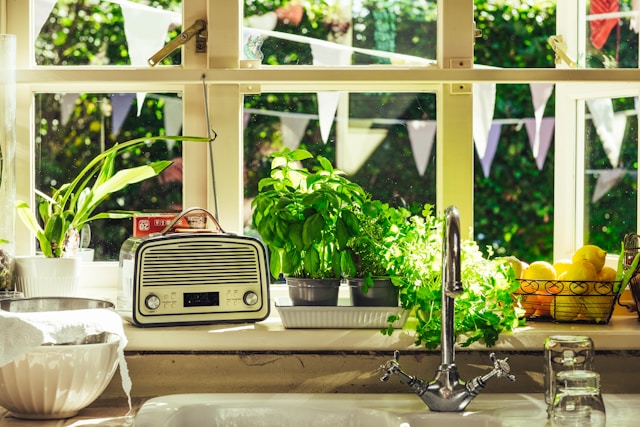
Store-bought herbs sometimes wilt before you’ve had the chance to use it all. So why not grow your own indoors? These are the best low-maintenance herbs you can grow in your own kitchen and have fresh flavour for your meals whenever you feel like it.
ALSO SEE: 6 Plants that naturally fight mould this winter
A sunny windowsill full of fresh herbs is the loveliest sight. Whether you have one or a garden, growing herbs indoors is the easiest way to have a little greenery in your home but also fresh flavour for your meals. The good news is that there are many herbs that thrive in containers and require minimal maintenance.
Basil
Pasta, salads, home-made pasta – basil is the favourite for these dishes. It prefers a sunny, warm position with around 6 hours of light each day. When the top layer of soil is dry, water the plant, and pinch off flower buds to encourage a bushier growth.
Mint
It’s easy to grow and is perfect for teas, cocktails and desserts. Plant it in its own pot rather than share with other plants because it spreads quickly. Keep the soil moist and place it where it can get bright, indirect light.
Chives
Chives are low-maintenance and is ideal for eggs, salads and baked potatoes, adding a slight onion flavour. They grow well in small pots and enjoy lots of sunlight. To encourage fresh new shoots, trim regularly.
Parsley
Versatile in the kitchen and rich in vitamins, parsley thrives indoors with bright light and evenly moist soil. Flat-leaf and curly types grow well in containers, making them a practical addition to your indoor herb collection.
Rosemary
This is a beautiful decorative plant but is also a culinary staple. Full sun and well-draining soil are ideal for rosemary. Be careful not to overwater as it prefers slightly drier conditions between waterings.
Thyme
Thyme is ideal for smaller spaces because it’s compact and hardy. It flourishes in bright sunlight and will still be okay if soil dries out before watering. The earthy flavour pairs nicely with roasted vegetables, meats and soup dishes.
Tips for success
To help your herbs flourish, use pots with drainage holes, choose a quality potting mix and rotate your plants every few days. A small grow light can also be useful if natural light is limited. Regular harvesting encourages fuller and healthier plants – this way you’ll always have fresh herbs available.
ALSO SEE:
Featured image: Unsplash