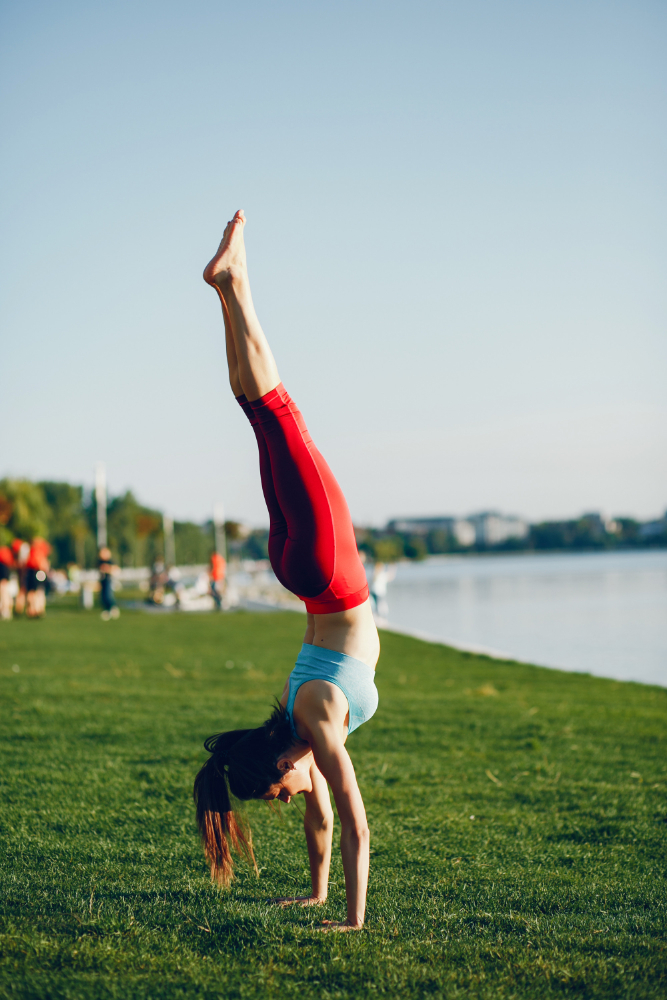
Today is International Handstand Day, a light-hearted celebration that encourages people to see the world from a different angle – quite literally. While balancing upside down might seem like something reserved for gymnasts and yogis, learning a handstand can be a fun fitness goal that offers more than just an impressive party trick.
If you’ve ever been curious about trying one, let today be the excuse to challenge yourself, embrace something new, discover what your body is capable of – and reap the benefits.
ALSO SEE: Plank-free exercises that strengthen your core
It’s a full-body workout
A handstand may look effortless, but it requires strength from head to toe. Your shoulders, arms, chest, back, glutes and legs all work together to keep you balanced, making it an effective full-body exercise that builds functional strength over time.
Your core does the heavy lifting
Think a handstand is all about arm strength? Think again. A strong core is what keeps your body stable and aligned while upside down. As you practise, your abdominal and lower back muscles work hard to maintain balance, helping to improve posture and overall stability in everyday life.
Balance improves with practice
Learning a handstand challenges your coordination, body awareness and balance. While you may not master it overnight, every attempt helps strengthen the connection between your brain and body, improving movement and control.
It builds confidence
There’s something incredibly empowering about achieving a goal that once seemed impossible. Whether you manage a full handstand or simply spend a few seconds with your feet against a wall, every bit of progress is worth celebrating. Stepping outside your comfort zone can do wonders for your confidence.
It’s good for your bones
Because handstands are a weight-bearing exercise, they help place healthy stress on the bones in your wrists, arms and shoulders. Regular strength-based activities like these can support bone health as part of an active lifestyle.
Start slowly and stay safe
If you’re new to handstands, begin by practising against a wall or under the guidance of a qualified instructor. Focus on building shoulder strength, core stability and wrist mobility before attempting a freestanding handstand. If you have neck, shoulder or wrist injuries, or certain medical conditions, it’s best to check with your healthcare provider before trying inverted exercises.
A different way to move
International Handstand Day isn’t about perfection, it’s about play, progress and proving to yourself that it’s never too late to learn something new. Whether you spend five seconds upside down or simply practise the basics, every attempt is a reminder that sometimes the best way to move forward is to flip your perspective.
ALSO SEE:
Featured Image: Magnific