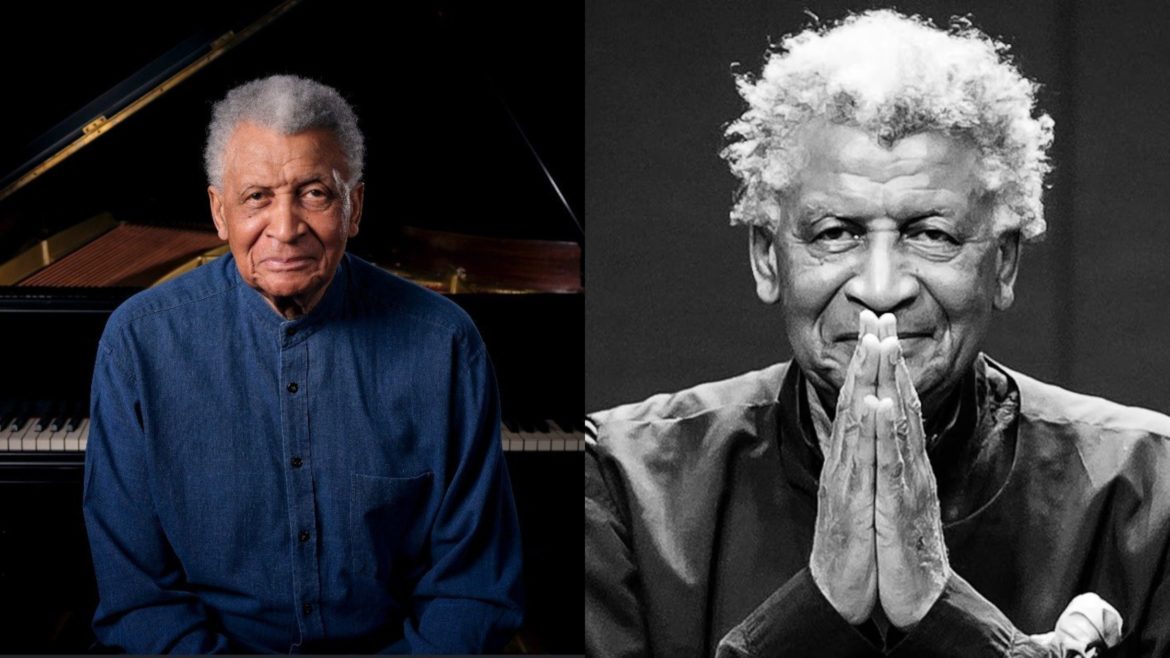
Abdullah Ibrahim, one of the most significant figures in the history of South African jazz, has died in Germany after a short illness. He was 91. His death marks the end of a life that spanned apartheid exile, international acclaim, a profound personal spiritual journey and a musical legacy that resists easy categorisation, rooted always in the sound of Cape Town but belonging, ultimately, to the world.
A life shaped by sound and circumstance
Born Adolph Johannes Brand on 9 October 1934 in Cape Town, he took his first piano lessons at the age of seven and made his professional debut at fifteen. He performed for years under the name Dollar Brand, a stage name that carried the energy and ambition of a young musician navigating a city whose beauty and brutal social architecture existed in constant, painful tension.
In 1968, he converted to Islam and changed his name to Abdullah Ibrahim, a shift that reflected a deepening personal and philosophical conviction that would inform his music for the rest of his life. His interest in Zen philosophy and martial arts, in which he earned a black belt, spoke to the same search for integration and discipline that characterised his decades at the piano.
Exile, ‘Mannenberg’ and return
Ibrahim left South Africa in the 1960s to escape the restrictions and indignities of the apartheid state, settling eventually in Germany. The distance from home shaped his music in ways that became inseparable from it.
His most celebrated composition, “Mannenberg”, recorded in 1974, became something close to an anthem. Named for a Cape Flats township and saturated with the sounds of Cape Town’s particular blend of cultures and musical traditions, it turned melancholy into majesty. It remained, for many, the clearest and most moving expression of what Ibrahim could do: take a specific place, a specific grief, and make it universal.
Honour and recognition
The honours he received over the course of his life were considerable: the Order of Ikhamanga, the Order of the Rising Sun with Gold and Silver Rays from Japan, an honorary doctorate from the University of the Witwatersrand, and the South African Music Lifetime Achievement Award, among them. Each reflected a different dimension of a career that was always more than just a career.
He leaves behind a body of work that is irreplaceable, a sound that was unmistakably South African and unmistakably his own, and a story that contains, in one life, the full weight of what it meant to be an artist in the century he lived through.
ALSO SEE:
Featured Image: X