Most of us have that sweater. The one that has stretched at the wrists, developed a small hole near the hem, or simply given up its shape after a few too many washes. The yarn is still beautiful, still soft, still exactly the colour you fell in love with. But the garment itself is beyond saving in its current form.
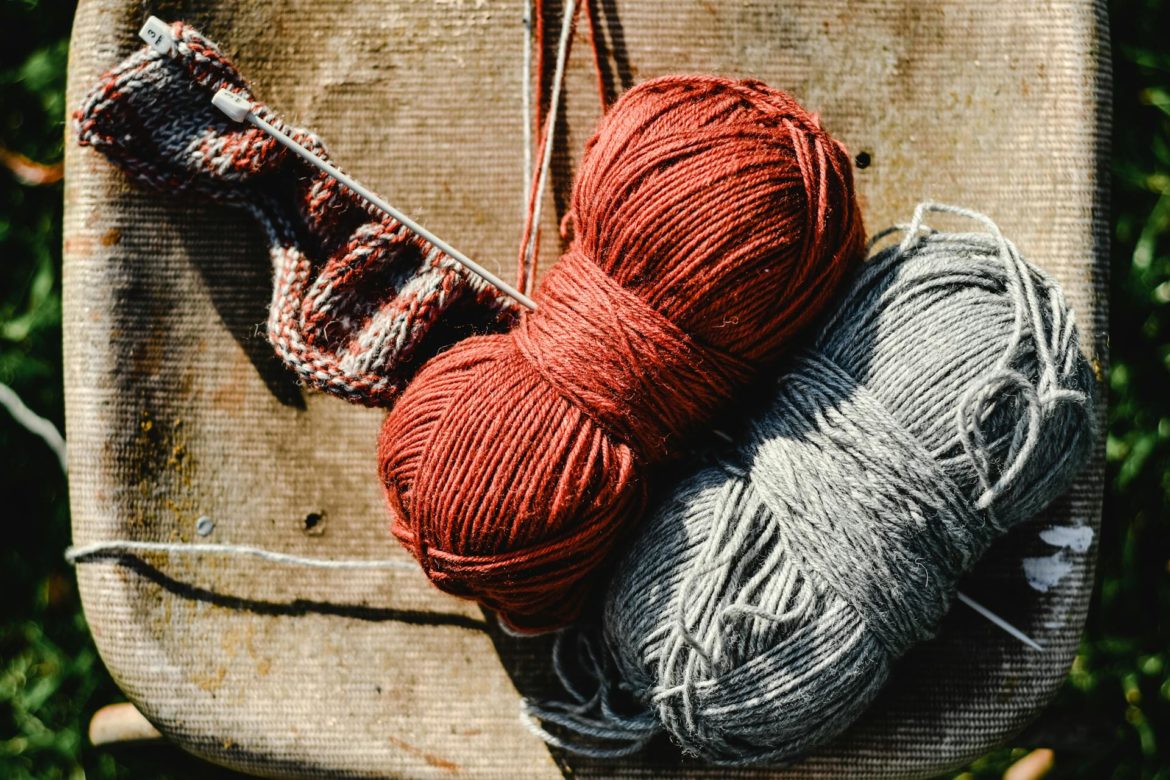
Before it goes in the donation bag or the bin, consider that the yarn itself is often entirely salvageable. Unravelling a well-made sweater yields a surprisingly generous amount of good quality fibre that can be re-used for knitting, crocheting or weaving, or spun into a new textured yarn. For crafters, it is a way to access premium wool and cotton at no cost. For anyone interested in sustainable living, it is one of the most satisfying forms of textile recycling available.
Is your sweater worth unravelling?
Not every sweater is a good candidate, and choosing badly will cost you time without a useful return. The best sweaters to unravel are made from natural fibres: wool, cotton, linen and their blends tend to unravel cleanly and produce yarn worth using. Acrylic and synthetic blends can be unravelled, but the yarn is less valuable and the effort may not be justified unless the colour or sentimental value is the point.
One important disqualification: if a wool sweater has been accidentally washed in hot water or tumble dried on high heat, the fibres may have felted together. Run your fingers across the surface of the fabric. If you cannot see the individual stitches clearly, and the fabric feels dense and compressed rather than knitted, the fibres have bonded permanently and will not unravel. Avoid attempting this with felted garments.
For a first attempt, choose a sweater with a smooth surface where the individual stitches are clearly visible. Fuzzy or halo-yarn sweaters in mohair, angora or alpaca are significantly harder to manage because the loose fibres tangle with neighbouring stitches as you work. Thicker, chunkier yarns are easier than fine ones. A pullover will yield longer continuous runs of yarn than a cardigan because cardigans have more seams interrupting the knitted panels.
How to do it
Wash and air-dry the sweater flat before you begin. It is far easier to wash the garment than to try to wash the loose yarn afterwards, and a clean, lightly blocked garment unravels more smoothly.
Turn the sweater inside out and locate the seams. Sweater seams are typically sewn with a chain stitch that, once the securing thread is found and cut, pulls apart with satisfying ease. Using a seam ripper or small sharp scissors, work along the wrist seam up to the underarm, then down the side seam. Repeat on the opposite side, then detach the sleeves at the shoulder. If there is a collar or neckband, remove that too. You should end up with five separate pieces: a front, a back, two sleeves and a collar.
Most sweaters are knit from the bottom up, which means the working end of the yarn, the end you want to start unravelling from, is at the top of each piece. Look for a loose end at the cast-off edge and use the seam ripper to loosen the first stitch. Once you have the end free, begin pulling gently and steadily. The stitches should pop open one at a time in a continuous chain.
Wind the yarn as you go. Loose yarn left to accumulate on the floor or in a pile will tangle quickly and undo all the progress you have made. A yarn ball winder is the ideal tool, but wrapping the yarn around a book, a cardboard rectangle or even your forearm creates a usable hank that stays organised. Work at a calm, consistent pace: jerking or rushing tends to split the yarn.
What to make with it
Unravelled yarn often has a wavy, crinkled texture from having been knitted. This does not affect its usability but can be smoothed out by winding the yarn into a loose skein, securing it at several points, and hanging it with a small weight attached for a few hours. Alternatively, wetting the skein and allowing it to dry under gentle tension will relax the crimp considerably.
From here the possibilities are genuinely open. The yarn can be used to knit or crochet a new wearable item, anything from a scarf or hat to a full sweater if there is enough. It can be used for home projects: a throw cushion cover, a textured table runner, a small blanket. Wool yarn unravelled from a sweater makes excellent dryer balls, which reduce static and drying time in the tumble dryer. If the quantity is not quite enough for a finished project on its own, it can be held together with a contrasting yarn for a mixed-texture effect.
Yarn that will not be used immediately should be stored loosely wound in a breathable bag, kept away from direct sunlight and, in the case of wool, with a cedar block or lavender sachet to deter moths. Good yarn keeps well, and the supply you have just salvaged has already proved its quality by lasting this long.
ALSO SEE:
Featured Image: Pexels