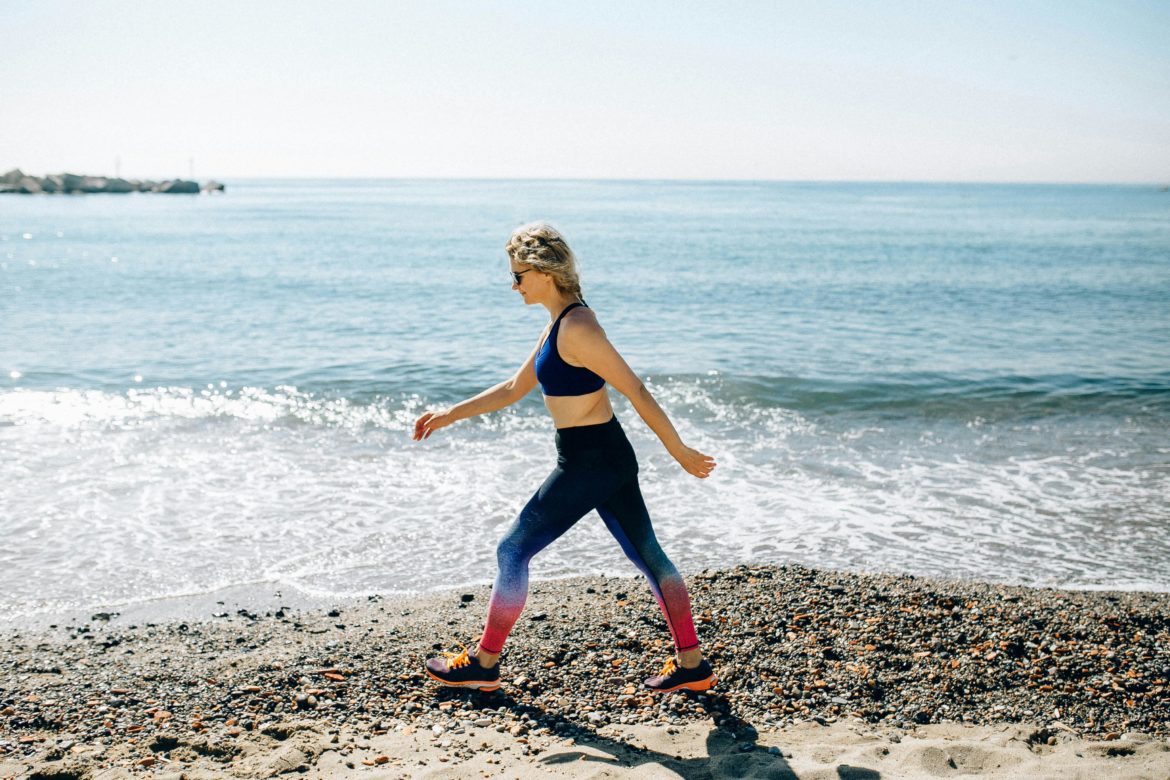
In an era obsessed with step counts and heart rate zones, tai chi walking asks something different of you: slow down, breathe intentionally, and move with complete attention. It sounds unambitious. The benefits suggest otherwise.
Rooted in the ancient Chinese practice of tai chi, which combines meditative movement with martial arts principles, tai chi walking draws on both Qigong energy practices and traditional techniques to build balance, core strength and postural awareness. Unlike interval walking or incline training, it is not designed to raise your heart rate or torch calories. It is designed to bring your mind and body into a state of deliberate, coordinated calm, and that turns out to be particularly good for you.
What tai chi walking actually involves
The practice is built around slow, intentional movement. Begin standing with feet hip-width apart, knees soft, shoulders dropped and spine upright. Take several slow, deep breaths before you begin to move, allowing the breathing to establish a rhythm that will carry through the walk.
Step forward by lifting one foot gently and placing it heel-first, rolling gradually through to the toes before shifting your weight fully onto that foot. The movement should be smooth and continuous rather than staccato. As you walk, allow the arms to move in gentle synchrony with the legs, echoing the flowing quality of traditional tai chi movements rather than swinging purposefully. Keep the abdominal muscles lightly engaged throughout to support the spine and assist with balance. Maintain awareness of the breath, the sensation of the feet making contact with the ground, and the rhythm of the movement. After several minutes, reverse direction and continue.
The pace is considerably slower than ordinary walking, which is precisely the point. The deliberateness of each step is what produces the practice’s characteristic effects.
The physical benefits
Balance and postural control are the most immediately tangible physical benefits of tai chi walking. By moving slowly and with heightened attention to weight transfer and body alignment, the practice trains the stabilising muscles that conventional exercise often bypasses. Over time, this translates to better balance in everyday movement, reduced risk of falls and improved awareness of how the body holds itself.
The low-impact nature of the practice is a particular advantage for people who experience joint discomfort with higher-impact exercise. There is no jarring, no pounding, no demanding range of motion. The movement is fluid and within the body’s natural range, which makes it accessible regardless of age or fitness level.
The mental benefits
The case for tai chi walking’s mental benefits is as strong as the physical one. The synchronisation of breath with slow, intentional movement is one of the most direct ways to activate the parasympathetic nervous system, the branch responsible for rest and recovery. Inhaling and exhaling in rhythm with each step, rather than breathing habitually and unconsciously, shifts the body out of the low-grade stress activation that many people carry through their days without noticing.
Research on traditional tai chi practice, which shares the same foundational principles, consistently shows reductions in stress markers, improved mood and better sleep quality. One study found that tai chi practitioners gained around fifty minutes of additional sleep per night. Tai chi walking offers the same meditative quality in a format that can be practised anywhere: a park, a living room, a quiet corridor.
Starting with intention
One approach that practitioners recommend is beginning each session with a clear intention. A simple, present-tense phrase repeated mentally with each step, something as straightforward as ‘I am calm’ or ‘I am present’, reinforces the meditative quality of the practice and gives the mind something to anchor to rather than drifting to the usual noise of the day. It is a small addition that meaningfully deepens the experience.
The practice requires no equipment, no prior experience and no particular fitness level. It can be done outdoors in natural light, which adds the additional mood benefits of sun exposure, or indoors when the weather does not cooperate. Starting with ten to fifteen minutes is enough to establish a rhythm and experience the calming effect. The invitation is simply to walk more slowly and more intentionally than feels natural, and to discover how much difference that makes.
ALSO SEE:
Featured Image: Pexels