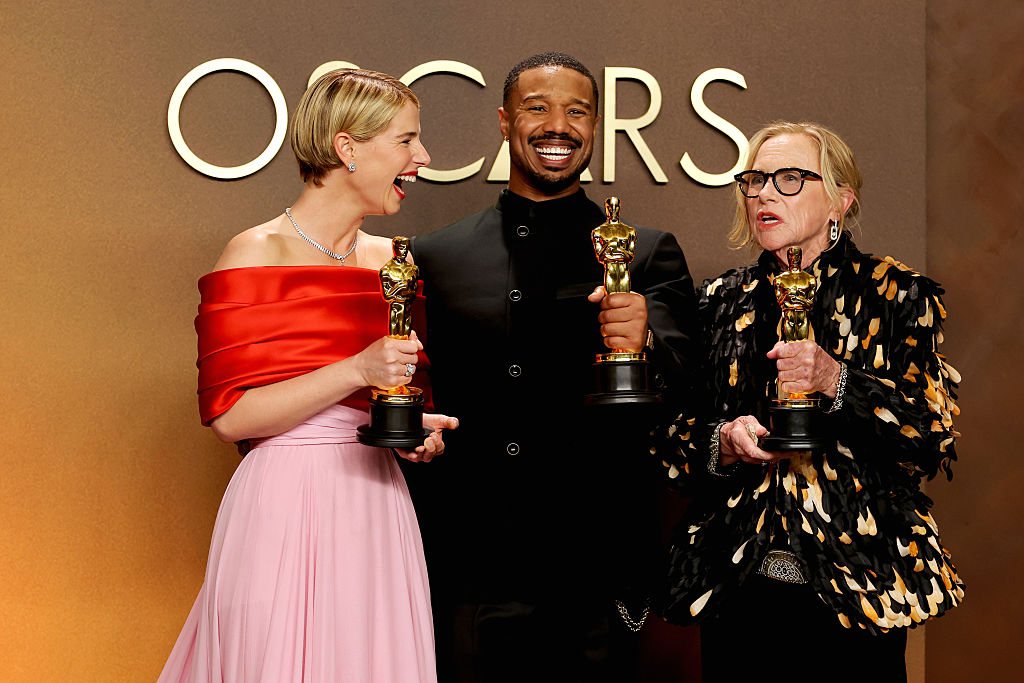
The 98th Academy Awards evening is a night Hollywood will not forget in a hurry.
The 2026 Oscars had been building toward something significant for months, and on Sunday night at the Dolby Theatre in Los Angeles, it delivered. Two films — Ryan Coogler’s blues-soaked vampire epic “Sinners” and Paul Thomas Anderson’s counter-culture thriller “One Battle After Another” — split ten Oscars between them and, in the process, made history several times over.
Conan O’Brien returned as host for a second consecutive year, opening with a pre-filmed segment that inserted him into the night’s nominated films before launching into a monologue that balanced sharp political observation with his signature self-deprecating absurdity. The tone he set — sincere but never solemn — carried through a ceremony that had plenty to say about the world beyond the Dolby Theatre.
“One Battle After Another” claims the biggest prize
Anderson’s film, inspired by Thomas Pynchon’s novel Vineland, entered the night as the frontrunner and left as its undisputed champion. It claimed six awards in total: Best Picture, Best Director, Best Adapted Screenplay, Best Supporting Actor, Best Editing and the newly introduced Best Casting award — the first new Oscar category in 25 years, and a long-overdue acknowledgement of one of the industry’s most underrecognised crafts.
For Anderson, who had received 14 nominations across his career without a single win, Sunday night represented a long-awaited reckoning. Accepting his screenplay award, he told the audience he wrote the film as an apology to his children for the state of the world being passed on to them, and as an expression of faith that their generation would be the one to restore common sense and decency.
Sean Penn, whose supporting performance earned him a record third acting Oscar, was not present to collect the award. Presenter Kieran Culkin noted drily that Penn “couldn’t be here tonight, or didn’t want to.”
“Sinners” makes history four times
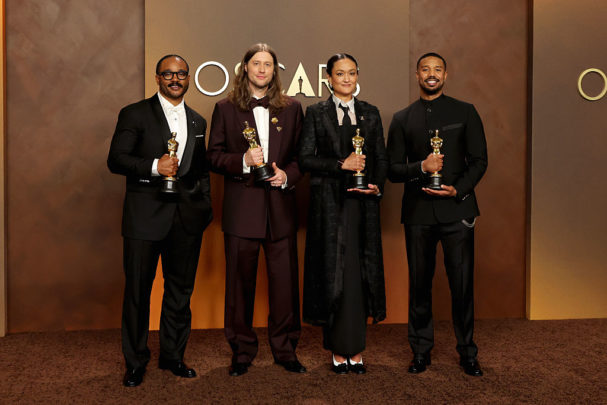
(Photo by Mike Coppola/Getty Images)
Going into the night with 16 nominations — more than any film in Oscar history — Sinners carried extraordinary expectation. It did not take Best Picture, but its four wins may prove the more enduring legacy.
The film claimed Best Original Screenplay for Coogler, making him only the second Black writer to win in that category after Jordan Peele. It also won Best Original Score for Ludwig Göransson, who claimed his third career Oscar, having previously won for Black Panther and Oppenheimer.
But it was the remaining two awards that stopped the room. Autumn Durald Arkapaw became the first woman — and first Black woman — to win the Oscar for Best Cinematography, a landmark that extends well beyond the individual achievement. Backstage, she spoke about what the moment meant for every girl who might now see herself reflected in that role.
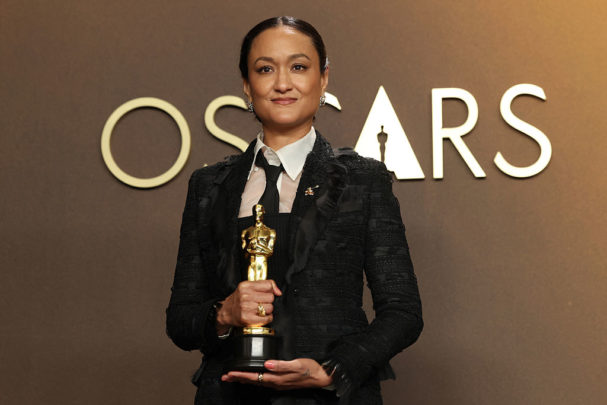
(Photo by Frazer Harrison/Getty Images)
And then there was Michael B. Jordan.
Jordan’s moment
His performance as twins Smoke and Stack in Sinners had been the talk of awards season, and when his name was called, Timothée Chalamet – himself a leading contender throughout the campaign – was immediately on his feet. Jordan’s win made history as the first time an actor has claimed the Oscar for playing two distinct roles in the same film. It was also his first-ever nomination.
At the podium, he was visibly moved, pausing to honour the Black actors who came before him. He becomes the sixth Black winner in the Best Actor category.
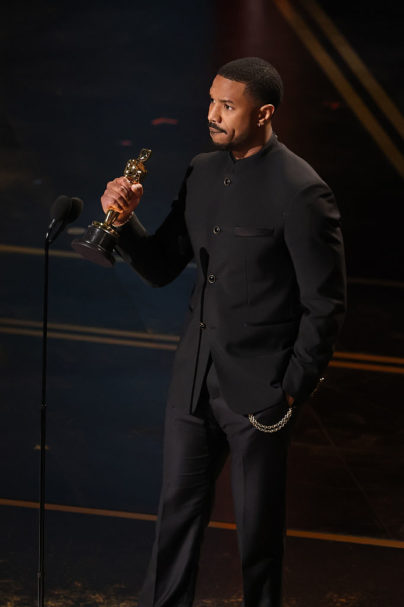
(Photo by Kevin Winter/Getty Images)
The rest of the night
Jessie Buckley took Best Actress for her performance in Chloé Zhao’s “Hamnet”, becoming the first Irish winner in the category. Amy Madigan claimed Best Supporting Actress for “Weapons”, setting a record for the longest gap between nominations and a win at 75 years old.
Norway won its first-ever Best International Feature Film Oscar for Joachim Trier’s “The Worst Person in the World.” KPop Demon Hunters, Netflix’s most-watched film, swept the animated categories and made history with Golden becoming the first K-pop song to win an Oscar. Guillermo del Toro’s “Frankenstein” picked up three craft awards, while “Avatar: Fire and Ash” won Best Visual Effects and “F1” took home Best Sound.
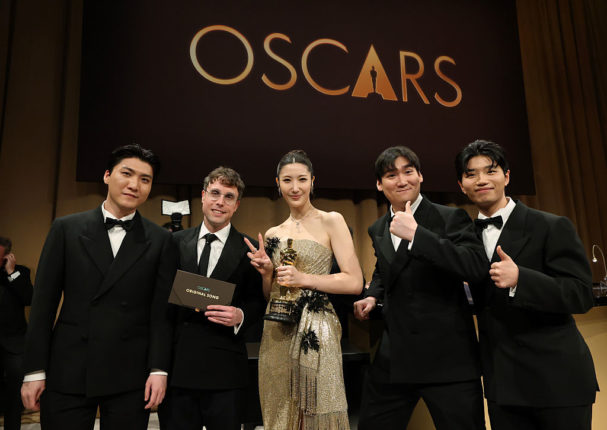
(Photo by Arturo Holmes/Getty Images)
The ceremony also paused for tributes to the late Rob Reiner, honoured by longtime collaborator Billy Crystal, and to Robert Redford, remembered by Barbra Streisand, who closed the In Memoriam segment by singing a verse from The Way We Were.
Warner Bros. ended the night with 11 Oscars between its two flagship productions — its biggest haul since “Argo” took Best Picture in 2013.
ALSO SEE:
Showmax is shutting down: what it means for subscribers and local content
Featured Image: Getty