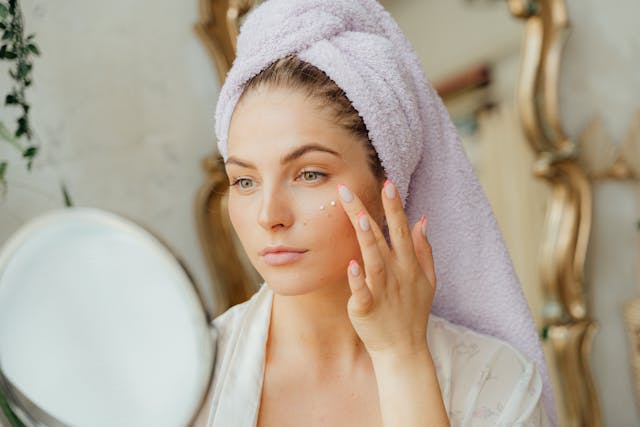
If you want to address skin issues such as fine lines, pigmentation, acne and anti-ageing, tretinoin cream is an incredibly effective treatment. However, you need time, patience and also … a prescription. The purging phase can be brutal especially if you have sensitive skin. Here’s what you need to know before adding it to your skincare routine.
ALSO SEE: Home waxing safety tips: what you need to know
Tretinoin cream is known for tackling acne and fine lines with amazing results. Like retinol, tretinoin is derived from vitamin A, and this prescription-strength retinoid speeds up cell-turnover, revealing fresher and smoother skin over time. However, before you add it to your routine, there are some things to consider.
It makes your skin worse before it gets better
As skin call turnover speeds up, impurities come to the surface, which results in temporary breakouts, flaking and redness. This is known as the ‘purge’ phase. But while this is a frustrating step in the process, it’s a normal part in the adjustment period.
Slow and steady wins the race
Tretinoin cream is a product you cannot use frequently from when you start. Dermatologists advise you to start with two or three applications per week, after which you can increase the frequency. This gives your skin time to adjust and helps minimise irritation.
Sun protection is of vital importance
This product makes your skin more sensitive to sun exposure. A broad-spectrum sunscreen every day is non-negotiable – not just to prevent sun damage but also to protect the results you’re hoping for.
It doesn’t play well with every ingredient
A simple, gentle routine is the best course of action. That means, using tretinoin cream alongside strong exfoliating products such as scrubs or potent actives is just a bad idea as it will increase the risk of irritation.
Patience is key
Using tretinoin is playing the long game. It’s not like other skincare products that promise instant results. You’ll notice improvements in texture and acne after several weeks, however, changes in pigmentation and fine lines can take a couple of months.
It may support hair growth
Tretinoin is mostly used on the skin, but some studies suggest it may help stimulate hair growth when used with treatments like minoxidil. Researchers think it may help the absorption and effectiveness of certain hair growth products. However, if you’re considering it for this purpose, it’s best to consult a dermatologist.
The bottom line
Tretinoin cream requires commitment and careful use, and it’s very effective for the treatment of acne, uneven skin texture and anti-ageing. Understanding what exactly to expect before you get your prescription can help you get the best results while minimising any uncomfortable side effects.
ALSO SEE:
Everything you should know about active skincare ingredients
Featured image: Pexels