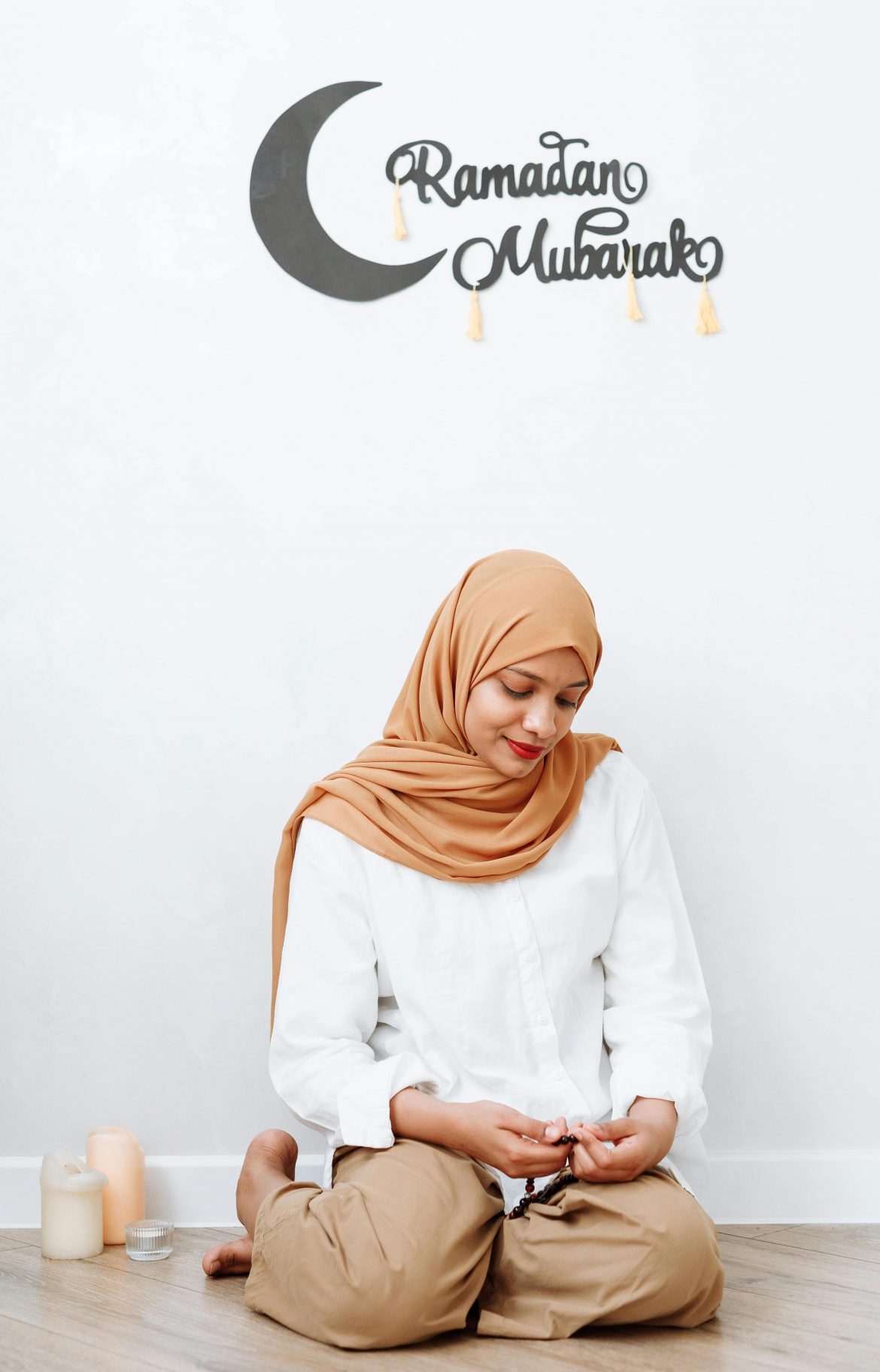
It’s that time of year again, when millions of Muslims around the world observe Ramadan, a sacred month in the Islamic calendar centred on faith, reflection and community. For those unfamiliar with it, Muslims abstain from food, drink (including water), sexual activity and immoral behaviour from sunrise (approximately an hour and a half before) to just after sunset when the athaan (call to prayer) is heard. It’s a deeply spiritual time where Muslims place their focus on self-discipline, gratitude, generosity and reconnecting with what truly matters.
Here is a brief introduction to this holy month for those not in the know:
ALSO SEE: 10 Top tips for staying healthy during Ramadan
When does it start and when does it end?
Ramadan marks the ninth and holiest month of the Islamic calendar, and lasts either 29 or 30 days depending on when the new crescent moon is visible with the naked eye (Muslims follow a lunar calendar consisting of 12 months in a year of either 354 or 355 days). This is why Ramadan begins ten to 12 days earlier each Gregorian calendar year.
How do we know whether the moon has been sighted?
There is a dedicated group of people called The Crescent Observers Society (affectionately called maankykers by local Muslims) that go out to sight the new crescent moon (hilaal in Arabic) on the 29th night of every Islamic month. If the moon is sighted in any of South Africa’s cities, the start of the new month (In this case, Ramadan) commences the next day for the whole country. If not, the current month (in this case, Sha’ban) will have a 30th day.
The maankykers go out to various lookout points around sunset hours. In the Cape, these include Oudekraal, Signal Hill, Soetwater, Stellenbosch and Three Anchor Bay. After much deliberation among the maankykers across the country, a decision is made and an announcement is broadcasted on the Voice of the Cape (VOC) and Radio 786, Cape Town’s local Islamic radio stations.
Fun fact: To wish Muslims well for the blessed month, say ‘Ramadan Kareem’ or ‘Ramadan Mubarak’.
Who fasts and who doesn’t?
Fasting during the month of Ramadan is one of the Five Pillars of Islam, which makes up the foundation of the religion, so it is compulsory for all healthy and post-pubescent Muslims to fast. There are, however, some who are exempt from fasting like those who are mentally or physically limited due to illness and old age as well as pre-pubescent children. Pregnant, breastfeeding and menstruating women are also exempt from fasting. However, they need to make up the days they have missed before the start of the next Ramadan.
Why do Muslims fast?
Ramadan is a special month for Muslims across the globe. There’s a warming sense of unity within the community. Families, friends and strangers come together for boeka and prayer, charity and giving become a central part of daily routines, and people strive to become the best versions of themselves each day. Muslims try their best throughout the month to pray more, recite the Qur’an more and refrain from things like listening to music, watching TV, lying and gossiping – allowing time for self-reflection, healing and gaining closeness to their creator. It’s like a much-needed reset mentally, emotionally and spiritually.
Fun fact: The Arabic term ‘Ramadan’ means ‘intense heat’. It is believed that in pre-Islamic Arabia, Ramadan was the name of a hot summer month. Spiritually, it connotes the idea that like the heat of the sun burns the skin, Allah’s mercy and forgiveness that accompanies Ramadan burns away our sins.
Ramadan mealtimes
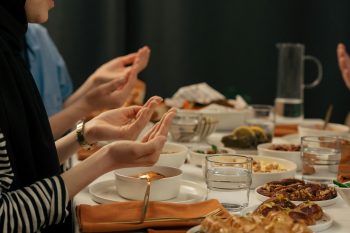
The pre-dawn meal is referred to as suhoor or souwe, according to the Cape Malays. The breaking of the fast in the evening is called iftar or boeka (again according to the Cape Malays). The fast is traditionally broken with dates and water as the Prophet Muhammad (peace be upon Him) did. Many enjoy soup with savouries next, followed by various other traditional Cape Malay meal options and sweet treats.
Fun fact: A much-loved Cape Malay custom is boeberaand. It’s an informal celebration that marks the 15th night of Ramadaan when Muslims are finally ‘op die berg’, which translates to ‘on the mountain’. To commemorate making it halfway through the month, boeka tables are laid with the traditional creamy sweet milk drink boeber.
Fun fact: Another Cape Malay custom centred on community is where kids are sent to the neighbours with a plate of treats to be enjoyed on their boeka table.
Pexels
Prayers during Ramadaan
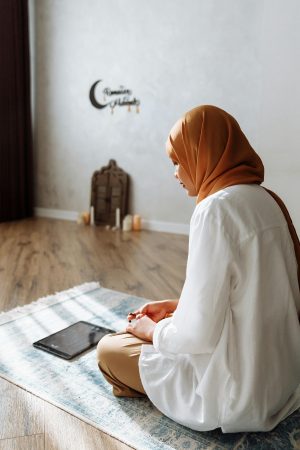
After eshai (the last of the five obligatory daily prayers), there is a special prayer that is performed in congregation at mosques every night of Ramadan called Taraweeh in which the entire Qur’an is recited in portions throughout the month by those who have memorised the Qur’aan by heart (hafiz).
The last ten nights of Ramadan are extra sacred. Within the odd nights of these last ten nights lies Laylatul Qadr (the Night of Power). The Qur’an states that it was during this night that Angel Jibreel (Angel Gabriel) revealed the Holy Qur’an’s first verses to the Prophet Muhammad (peace be upon Him). On this night, a single good deed and supplication can award you the blessings of a thousand months. Although the exact date is unidentified, it is commonly believed that it falls on the 27th night of Ramadan.
Pexels
The eid celebration
Eid al-Fitr, the ‘festival of the breaking of the fast’, marks the end of the blessed month. It begins with a special congregational prayer that takes place outdoors. The day continues with getting dressed up, visiting friends and relatives, gift exchanges and family feasts. Eid al-Adha (sometimes referred to as second Eid by locals) is celebrated later in the year during the month of Dhul-Hijjah. This is the month when Muslims make the pilgrimage (Hajj) to Mecca to fulfil another of the Five Pillars of Islam. It is this Eid celebration in which Muslims slaughter sheep in commemoration of Allah’s mercy in sparing the Prophet Ibrahim (Abraham) from sacrificing his son, and it marks the end of the annual Hajj pilgrimage.
Fun fact: To wish Muslims on Eid, say ‘Eid Mubarak’, which essentially means blessed celebration or blessed feast/festival.
This article includes extracts written by Tauhira Ajam.
Featured Image: Pexels