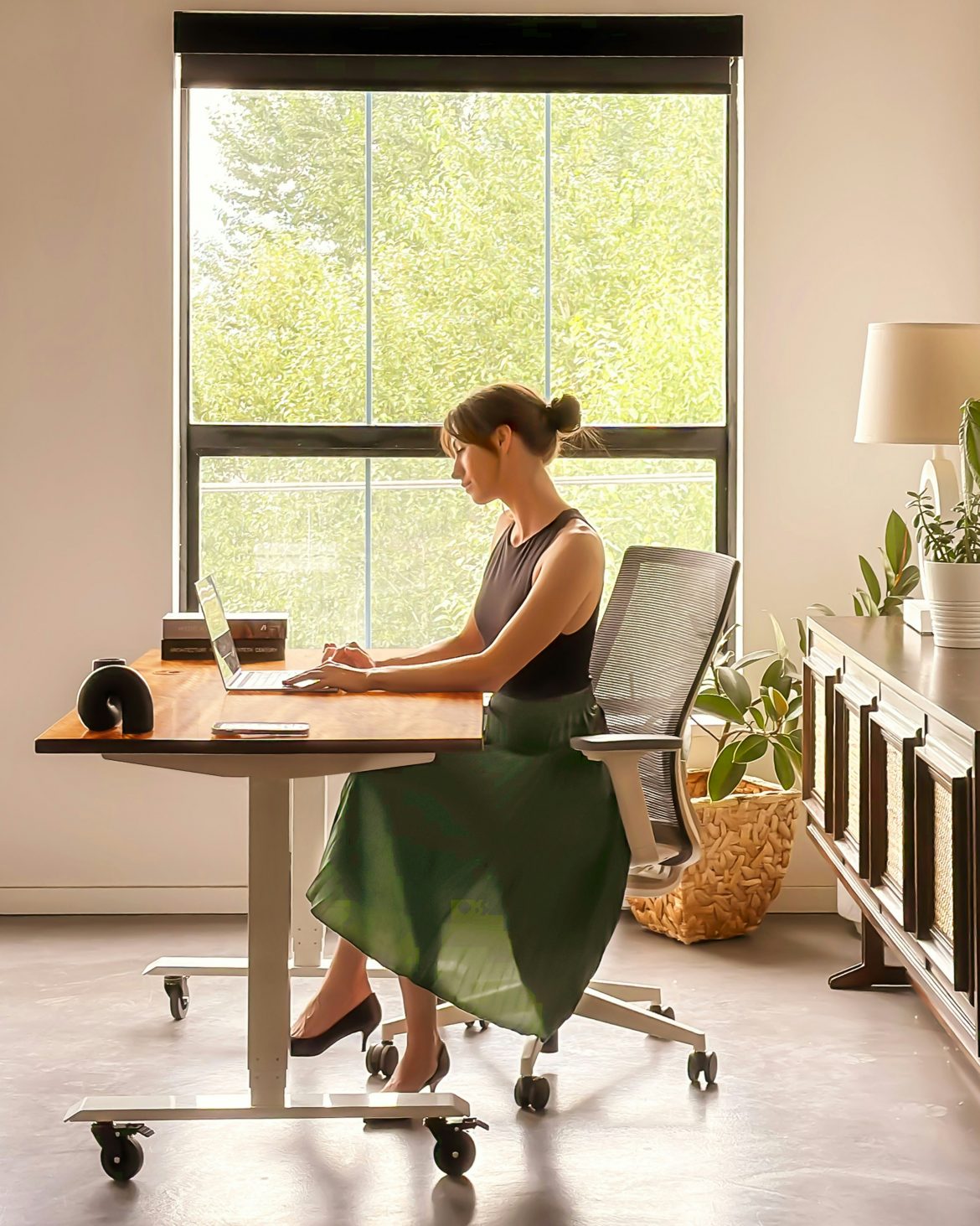
Bad posture is linked to a range of health challenges, from joint pain to tension headaches. Learn why good posture matters and how a few simple habits can improve alignment and support long-term wellbeing.
ALSO SEE: Callisthenics for beginners: the basic 6 moves that can help you get stronger
In the past, people balanced books on their heads to practise posture. The method is dated, but the principle holds. Good posture is about maintaining the spine’s natural curves to reduce wear and tear and to support healthy function. In a world of laptops and phones, paying attention to alignment has never been more important.
Why it matters
The spine has a natural S-shape curve that keeps the body balanced and mobile. When any part of this curve is over- or under-pronounced due to bad posture, the risk of injury increases. This can affect mobility, core strength and joint health, all of which become more significant as we age.
Risks of poor posture over time
Slouching might feel comfortable but can lead to quite serious long-term problems:
- Incontinence: Slouching puts pressure on the bladder and weakens pelvic floor muscles.
- Headaches: Tightness in the neck and upper back can trigger tension headaches.
- Indigestion: Compression in the abdomen can slow digestion.
- Back pain: Poor posture can flatten the back muscles and strain the spine.
What good posture looks like
Good posture isn’t about stiffness, but rather alignment. When the chin is parallel to the floor, your head is stacked above the shoulders, and the top of the shoulders are over the hips. The spine is neutral so that the natural curves – neck, mid-back and lower back – are perfectly aligned. The abdominal muscles are braced, body weight is evenly distributed and hips are not tilted forward. The good news? Even if you’ve had poor posture for some time, it can be improved.
Practical ways to improve posture
It’s never too late to start. Ease discomfort and protect your spine with these habits:
- Stretch: Loosen tight muscles that cause misalignment.
- Keep chin up: Lift your devices instead of tilting head forward.
- Try physical therapy: It can undo years of bad posture.
- Move often: Get up every 20 minutes for a reset.
- Support spine: Place a rolled towel behind your mid-back when sitting.
- Exercise abs: A strong core is key.
Modern life has made slouching almost normal – from long hours at a desk to looking down at a phone, or carrying heavy bags. These habits can compress the spine, contribute to conditions like Dowager’s hump (hunched back) and cause chronic pain. By supporting your spine, you support every other aspect of your well-being.
ALSO SEE: