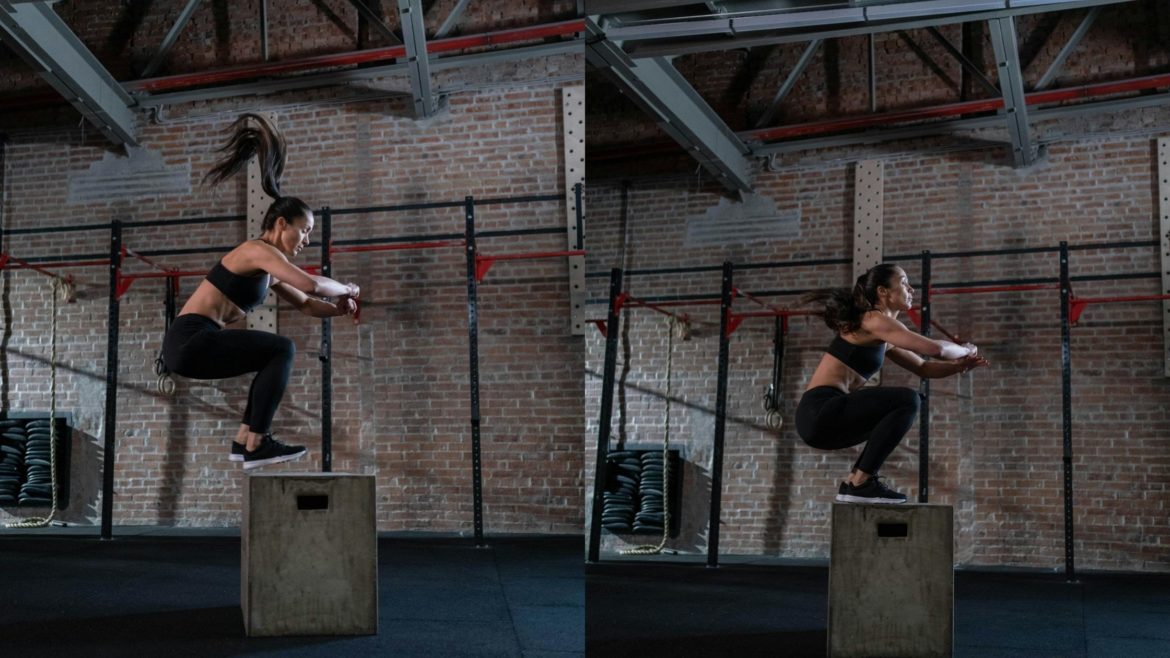
There is a widely held assumption among women over 40 that jumping and high-impact exercise are off the table. It is framed variously as a joint concern, a pelvic floor issue, or a general sense that bones become more fragile with age and should be protected from impact. The assumption is understandable. It is also, for most healthy women, incorrect.
A growing body of research is making a compelling case that plyometric exercises, movements that require the body to produce force quickly through jumps, bounds and hops, are among the most effective tools available for building and maintaining bone density in women, particularly those navigating perimenopause and beyond. The same demographic most inclined to avoid this type of training is the one with the most to gain from it.
What plyometrics do to bone
Bone is living tissue that responds to the demands placed on it. When a bone is subjected to rapid, high-impact loading, sensor cells within it detect the force and signal the bone-building cells to lay down new bone in response. This process is how bone density is maintained and, to a degree, increased over time.
The key variable is the speed and sharpness of impact. Bone responds best to forces that arrive quickly, like the landing phase of a jump, rather than slow, sustained loading. This is why plyometrics produce bone benefits that steady-state aerobic exercise and even traditional strength training cannot fully replicate. A jump squat, for example, requires the muscles and skeleton to absorb and generate force far more rapidly than a conventional goblet squat, producing a stimulus that drives more pronounced bone adaptation.
A review published in Current Osteoporosis Reports found plyometrics to be among the most effective interventions for improving bone density and reducing fracture risk in post-menopausal women. A separate 2025 review in BMC Musculoskeletal Disorders found that adding plyometrics to an existing exercise routine produced measurable improvements in bone mineral density at the spine and hip, two of the sites most vulnerable to osteoporotic fracture in women.
Why women are particularly at risk
Women face significantly higher lifetime risk of osteopenia and osteoporosis than men. Eighty per cent of all people with osteoporosis are women. The primary driver is hormonal: oestrogen plays a direct role in bone formation, and the sharp decline in oestrogen levels during perimenopause and menopause causes a corresponding acceleration in bone loss that has no male equivalent of the same speed or severity.
Women also reach lower peak bone mass in early adulthood than men, which means the skeletal reserve available to draw on as age-related loss begins is smaller from the outset. Smaller frames and thinner bone cortices compound the effect. And because women live longer than men on average, they spend more years in a low-oestrogen state, accumulating the cumulative effects of reduced bone density over a longer period.
The spine and hip are the two sites where osteoporotic fractures most commonly occur in women, and both are highly responsive to plyometric training because they absorb the most impact force during landing. The implication is that the exercises most avoided by the demographic at greatest risk are also the ones most directly targeting the areas of greatest vulnerability.
What about the joints?
The persistent belief that jumping damages joints, worsens arthritis or increases fracture risk is not supported by current evidence. When performed with proper technique and appropriate progression, plyometric training does not cause the wear-and-tear it is commonly assumed to. The real risks are improper landing mechanics, inadequate preparation and progressing too quickly, none of which are inherent to the exercises themselves.
Plyometrics are also not a replacement for traditional strength training but a complement to it. Strength work builds the muscle and connective tissue health that makes high-impact training safe and effective. Impact loading provides the specific stimulus that bone responds to most powerfully. Used together, the two approaches support both the skeleton and the surrounding soft tissue in ways that neither achieves alone. A study published in Applied Sciences found that adding twice-weekly jump training to an existing exercise routine improved lower-limb joint health in just twelve weeks.
How to start
Anyone with existing bone density concerns, joint conditions or pelvic floor dysfunction should consult a doctor or physiotherapist before introducing plyometrics. For women with pelvic floor symptoms such as leakage or heaviness during high-impact activity, working with a pelvic floor physiotherapist first is the sensible approach.
For those cleared to begin, the starting point is small and the volume is deliberately low. One or two plyometric exercises per session, eight to twelve repetitions each, with at least twenty to thirty seconds between reps. This is not a high-volume protocol; it is a quality stimulus. Two-foot takeoffs and soft, controlled landings with slightly bent knees, hips pushed back and core engaged distribute impact safely through the lower body and protect the joints while still delivering the bone-building stimulus.
Simple calf raises and small pogo hops, where both feet leave and return to the ground in a controlled rhythm, build the Achilles tendon resilience that makes higher-impact work safe. Spending two to three weeks here before progressing gives the tendons and joints time to adapt. From there, staggered-stance jumps, which require more balance and mid-line strength, prepare the body for more demanding variations like broad jumps and eventually tuck jumps, each of which demands more force production and delivers a correspondingly stronger bone-building signal.
The principle throughout is quality over quantity. A small number of well-executed jumps produces better outcomes, and better safety, than a larger volume of poorly controlled ones. And the evidence is clear that even modest, consistent doses of this kind of training, accumulated over months and years, produce meaningful results for bone health in the women who need it most.
ALSO SEE:
Featured Image: Pexels