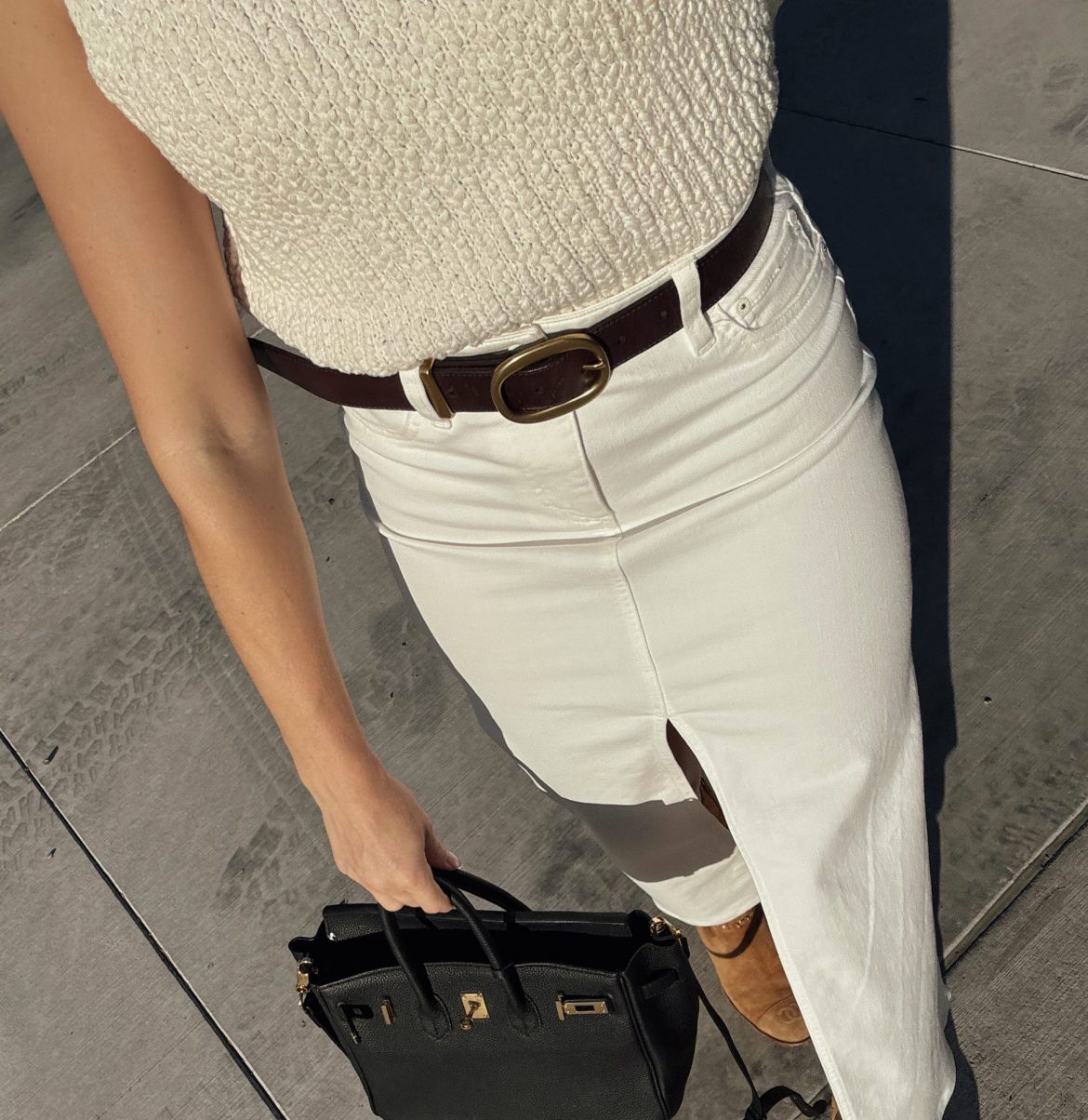
For the past few seasons, the fashion industry has whispered instead of shouted. Logos shrank. Hems lengthened. Colour drained from our wardrobes until everything felt like oat milk, limestone and sand.
The rise of quiet luxury taught us that wealth (or at least the aesthetic of it) no longer needed to announce itself. It was refined. Understated. Elevated. And for a while, it felt like relief.
But now? There’s a fatigue settling in. Not because minimalism is inherently flawed — but because when everyone is dressed in the same shade of mushroom, individuality starts to blur.
So what comes after minimalism… when the answer isn’t maximalism?
The end of the beige era
Minimalism gave us structure. It gave us capsules and clarity. It encouraged investment dressing and longevity over trend-chasing. In a chaotic world, it offered visual calm.
But fashion is cyclical, and aesthetic dominance always creates its own rebellion.
Maximalism — bold prints, clashing colours, Y2K excess — feels too reactionary. Too loud. Too try-hard in a moment where many women are craving softness, ease, and authenticity. The industry doesn’t need more noise.
It needs nuance.
The rise of personalism
Personalism is about:
- Keeping the tailoring, but adding texture.
- Keeping the neutral base, but introducing one intentional colour.
- Wearing the blazer — but pairing it with something lived-in.
- Choosing quality — but refusing uniformity.
It’s less about aesthetic allegiance and more about emotional alignment.
Instead of asking, “Does this look expensive?”
We’re starting to ask, “Does this feel like me?”
And that shift is powerful.
Texture over trend
Where minimalism relied heavily on silhouette and palette, the next phase is about dimension.
Think butter-soft leather against crisp cotton, sheer layering over structured tailoring, matte fabrics mixed with subtle sheen and knitwear that looks touched, not sterile.
The focus moves from colour story to sensory story.
This is where confidence lives — not in beige, but in how something moves with you.
Soft statements
The in-between era embraces what I like to call soft statements.
A red flat under an otherwise neutral outfit.
An heirloom ring stacked with clean tailoring.
A sculptural bag with an otherwise simple dress.
It’s not about being seen from across the room.
It’s about being remembered up close.
Comfort as the new status symbol
After years of aspirational dressing — and then algorithm-driven dressing — comfort is becoming the ultimate quiet flex.
Not sloppy comfort. Not gym-wear as evening wear (unless that’s truly you). But, considered comfort.
Clothes that allow you to sit cross-legged.
Shoes you can walk 10,000 steps in.
Fabrics that breathe.
Waistbands that don’t punish you.
The next evolution of luxury isn’t louder or more dramatic.
It’s embodied.
Confidence isn’t aesthetic
Here’s the truth the industry doesn’t always want to admit:
No aesthetic guarantees confidence.
Not minimalism.
Not maximalism.
Not quiet luxury.
Confidence comes from congruence — when what you’re wearing aligns with who you are becoming.
For some women, that might still be head-to-toe neutrals.
For others, it might mean reintroducing colour slowly.
For many, it means letting go of dressing for the algorithm.
The in-between era invites us to remember:
- You don’t need a uniform to be taken seriously.
- You don’t need chaos to feel creative.
- You don’t need beige to look elevated.
- You don’t need boldness to be interesting.
Dressing beyond trends
The quiet luxury fatigue isn’t really about colour palettes.
It’s about identity exhaustion. We tried dressing like old money. We tried dressing like Pinterest boards. We tried dressing like the girl who has it all together.
Maybe what comes next is dressing like ourselves.
Less performance.
More presence.
And perhaps the most radical thing we can wear right now isn’t maximalism or minimalism — but intention.
Because when you’re comfortable and confident in what you wear, it stops being about the trend cycle altogether.
It becomes style.
ALSO SEE:
How social media changed the way we dress — and the way we see fashion
Featured Image: DupePhoto