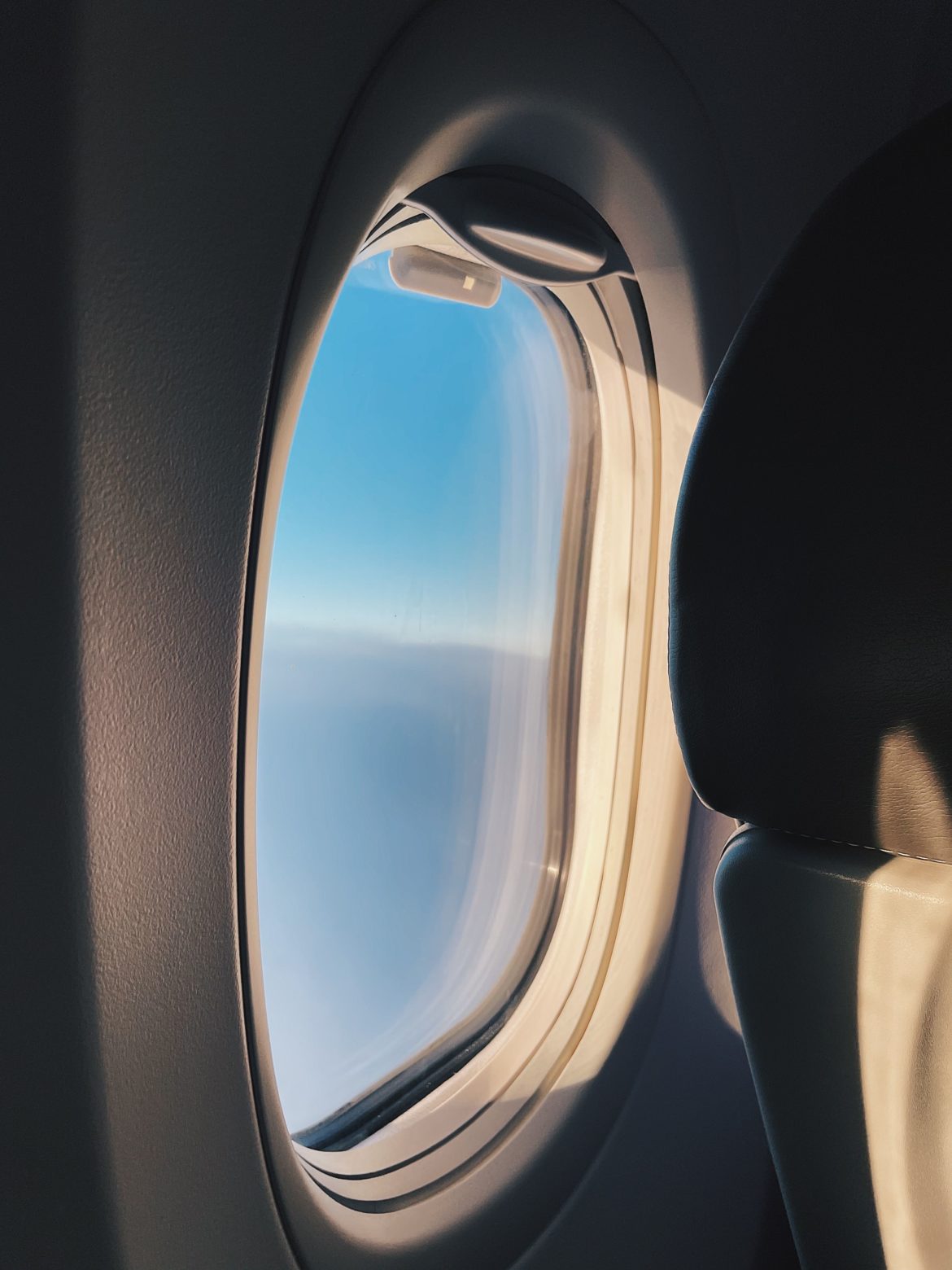
There is something undeniably romantic about a window seat at flight. From watching clouds drift beneath you to tracing unfamiliar landscapes from above, the simple act of looking out seems to make travel feel more meaningful. But why are some of us so drawn to that particular view?
There are few travel rituals quite as universal as choosing the window seat. Whether you’re flying over a coastline you’ve never seen before or watching city lights flicker below as the sun disappears, sitting beside the window gives you something more than a view — it gives you perspective.
Perhaps that is why, even after countless flights, we still find ourselves looking out.
A different kind of escape
Travel is, by its very nature, an escape from the familiar. The window seat heightens that feeling.
From several thousand metres above the ground, the everyday world suddenly looks completely different. Roads become delicate lines, buildings resemble miniature models and mountains stretch across the horizon in ways that make our usual sense of scale feel almost irrelevant.
This change in perspective can create a psychological sense of distance from everyday responsibilities. For a little while, emails, errands and deadlines are literally far below us.
The window becomes a boundary between two worlds — the one we have temporarily left behind and the one waiting to be discovered.
The comfort of watching without participating
There is also something deeply soothing about being able to observe without having to engage.
A window seat offers a rare opportunity to simply watch. We can follow the movement of clouds, observe changing landscapes or notice the gradual transformation of the sky without needing to do anything about it.
In a world that constantly encourages us to respond, post, answer and multitask, this kind of passive observation can feel wonderfully restorative.
It is one of the few moments in modern life when doing absolutely nothing can feel like the point.
Why the view makes us feel small — In a good way
Looking at the world from above can also trigger something psychologists describe as awe — the feeling we experience when confronted with something vast or beyond our ordinary understanding.
Awe has a way of shifting our attention away from ourselves. When we look at endless clouds or an expansive landscape, our individual worries can suddenly seem smaller.
That doesn’t mean our problems disappear. Instead, our relationship with them can change.
A missed deadline may still matter when we land, but from 35,000 feet, it can be easier to remember that life exists on a much larger scale.
The nostalgia of the journey
The window seat is also closely connected to anticipation.
Unlike arriving at a destination, looking through an aeroplane window lets us experience the journey itself. We see the landscape changing beneath us and are reminded that we are physically moving from one place to another.
There is something almost childlike about it.
It taps into the same fascination many of us had when travelling by car as children — watching houses, fields and towns pass by the window, wondering who lived there and where the road might lead.
Perhaps our love of the window seat is partly a love of possibility.
A little space to daydream
There is a reason some of our best thoughts seem to arrive while travelling.
Being physically removed from our usual environment can interrupt familiar patterns of thinking. Add a constantly changing view outside the window and the mind has plenty of stimulation without becoming overwhelmed.
The result is an unusual mental space between concentration and distraction.
We daydream. We remember. We imagine. We pray. We plan. We manifest.
We might think about the trip ahead, replay a conversation, consider a decision we’ve been avoiding or simply stare at the clouds with no particular thought at all.
And sometimes, that is exactly what we need.
The window seat as a form of control
Choosing a seat on a flight can also provide a small sense of control during an experience where much of our environment is predetermined.
We cannot choose the route, the altitude or the weather. We are carried by someone else’s schedule, travelling at extraordinary speed inside a machine we have no control over.
But we can choose where we sit.
The window gives us a point of orientation. We can see where we are going, watch the aircraft approach its destination and maintain a visual connection with the world outside.
It’s a small thing, but psychologically, small things can matter.
Why we keep looking, even when we’ve seen it before
Perhaps the most interesting part is that the window seat doesn’t lose its magic simply because we’ve taken the same route before.
We know what clouds look like. We’ve seen a coastline from above. We’ve watched a sunset through an aeroplane window countless times.
And yet, we look again.
Because the view is never exactly the same. The light changes. The weather changes. The landscape changes. More importantly, we change.
The same view can feel entirely different depending on where we are in our lives.
A flight taken for work might feel exhausting one year and liberating the next. A familiar city appearing beneath the clouds might bring nostalgia after years away. A sunset seen on the way to a holiday might feel like the beginning of something new.
The window doesn’t simply show us the world. It reflects something back to us.
The beauty of seeing the bigger picture
Perhaps our fascination with the window seat ultimately comes down to perspective.
Travel already encourages us to step outside our routines, but seeing the world from above takes that idea literally. It reminds us that there is more beyond the immediate moment — more places, more people, more possibilities and more life happening beyond whatever occupies our attention today.
So the next time you’re offered the choice between an aisle and a window, consider choosing the view.
Put your phone away for a while. Rest your head against the glass. Watch the clouds roll past and the landscape transform beneath you.
You may not discover anything new about the destination.
But you might return to it — and to yourself — with a slightly different perspective.
ALSO SEE:
The places we travel to when we want to feel like ourselves again
Featured Image: Pexels