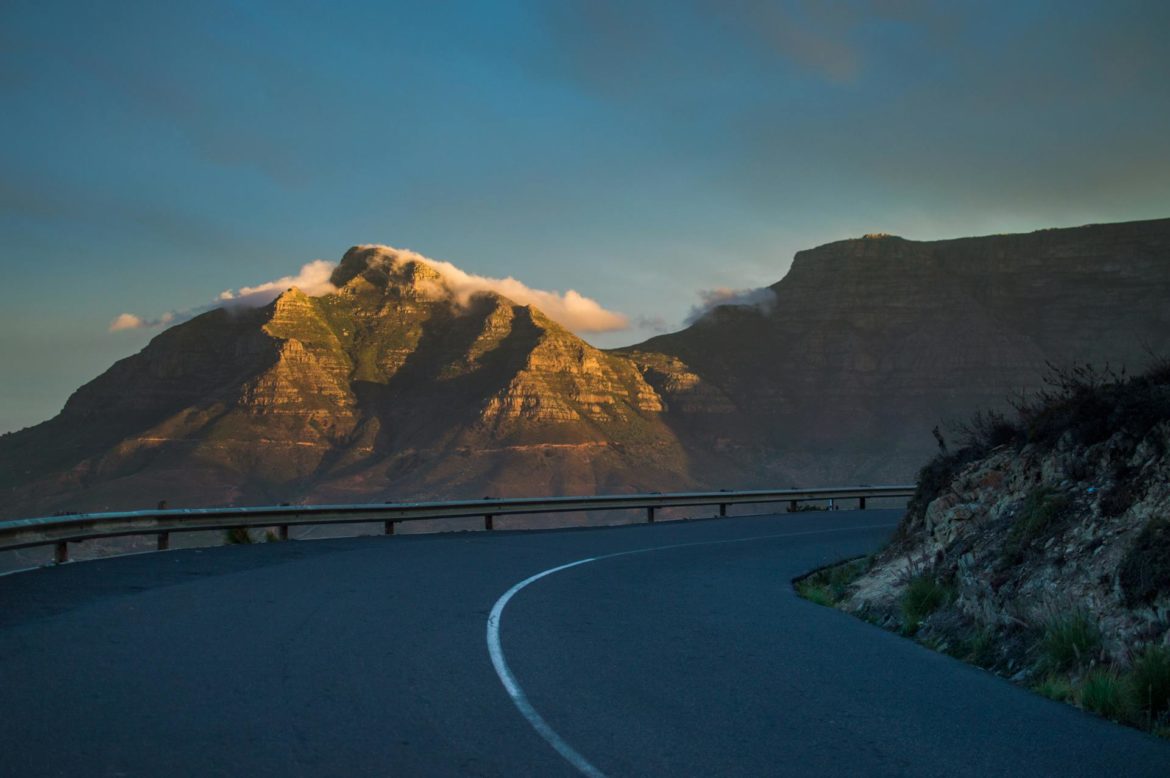
South Africa offers one of the most varied riding landscapes in the world. Within a single journey, motorcyclists can move from coastal cliff roads to high-altitude mountain passes and into wide, open semi-desert. This diversity makes the country particularly well suited to scenic touring, where the route itself becomes the main attraction rather than simply a means of getting somewhere.
Coastal routes are often the most recognisable starting point, but a well-rounded motorcycle trip benefits from including inland regions and mountain passes too. Each brings its own road conditions, climate considerations and visual character.
Coastal routes: consistent scenery and accessible riding
Chapman’s Peak Drive in the Western Cape remains one of the most technically engaging short coastal routes in the country. Spanning roughly nine kilometres between Hout Bay and Noordhoek, it features tight bends and notable elevation changes on a well-maintained surface suitable for most road bikes. Wind conditions and peak-season traffic are worth factoring into your timing.
Heading eastward, the Garden Route offers a longer multi-day option, linking towns and natural attractions via a mix of national and secondary roads in generally good condition. Forested stretches, coastal viewpoints and lagoon landscapes keep the scenery varied, and fuel stops and accommodation are easy to find along the way.
The Wild Coast is a different proposition altogether — more remote, with road conditions shifting between tar and gravel and infrastructure that is far less developed. It suits dual-sport or adventure bikes better than road motorcycles, but rewards riders with uninterrupted coastal scenery and very little traffic. Further north, KwaZulu-Natal’s South Coast offers straightforward, mostly tarred riding with a subtropical climate that makes it a practical year-round option.
Mountain passes: technical riding and elevation gain
For those seeking more of a challenge, the Sani Pass is among the most demanding routes in the country. It climbs from around 1,500 metres to over 2,800 metres above sea level, crossing into Lesotho on an unpaved road with loose gravel, steep gradients and sharp switchbacks. Weather can change rapidly at altitude, and prior off-road experience is strongly recommended.
Swartberg Pass offers a more moderate technical challenge, connecting Oudtshoorn and Prince Albert through striking Karoo scenery on a generally well-maintained gravel surface. Bainskloof Pass, between Wellington and Ceres, provides a tarred alternative with sweeping bends and good viewing points — accessible to a wide range of motorcycles and a popular choice for shorter regional rides.
Inland routes: distance and open road
Inland routes are often overlooked, but they offer real advantages for long-distance touring. The Karoo’s extended straight roads, minimal traffic and expansive landscapes make for a particular kind of riding — less technically demanding, but rewarding in its own right. Fuel planning is essential here, as service stations can be far apart, and both summer heat and winter cold require preparation.
Clarens in the Free State makes a useful base for exploring the surrounding region, with rolling terrain, moderate curves and low traffic volumes. In Mpumalanga, the Panorama Route connects key viewpoints including the Blyde River Canyon and God’s Window via well-signposted tarred roads, though it can get busy during peak travel periods.
Before you go
Road surfaces in South Africa can vary significantly even within a single region, so thorough route research is important. Weather shifts quickly in mountainous areas, and fuel availability becomes less predictable the further off the beaten track you venture. A basic toolkit, hydration supplies and a navigation backup are sensible additions to any longer journey.
South Africa’s greatest strength as a motorcycle destination is its range. A well-planned itinerary that draws from coastal, mountain and inland routes will deliver the most complete and memorable riding experience.
A version of this article was first published by Miriam Kimvangu for Getaway.
ALSO SEE:
Featured Image: Pexels