There is something comforting about stepping into a warm bakery on a cold winter’s morning. The scent of freshly baked bread hangs in the air, trays of pastries tempt from every corner, and behind the scenes, an intricate process unfolds long before the first customer arrives.
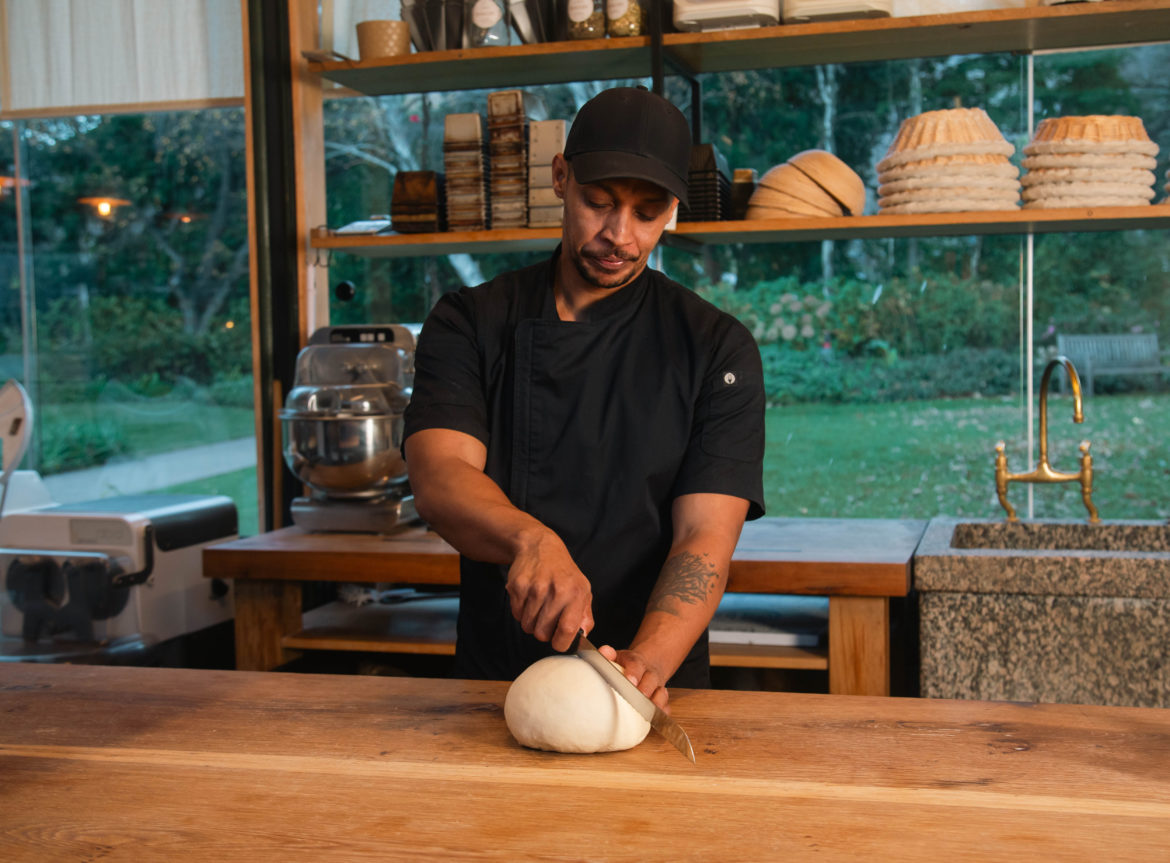
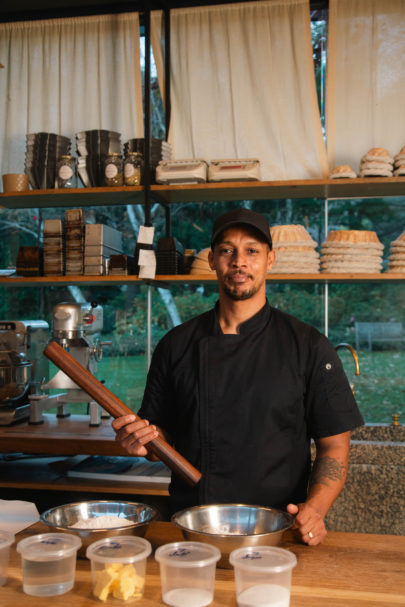
That was exactly the experience awaiting us at La Motte Bakery in Franschhoek, where Head Baker Ricardo Slawers opened the bakery doors and gave us an inside look at how one of the Cape Winelands’ most sought-after croissants comes to life.
Even in the heart of winter, La Motte’s picturesque grounds are as inviting as ever. While the croissants may have been the stars of the day, the bakery shelves were equally impressive, lined with sourdoughs, baguettes, ciabattas, seed loaves, buttery pasteis de nata, and plenty of other artisanal treats that make it almost impossible to leave with just one purchase.
But first, the croissants.
A day begins when most people are asleep
For Ricardo, who has spent 13 years at La Motte Bakery, the workday starts while the rest of Franschhoek is still fast asleep.
“I start my day at 12 o’clock in the evening, three other guys and I as bakers. We start working through our daily production, which consists of our breads, sourdough, ciabattas, croissants, seed loaves and more.”
The production follows a carefully choreographed rhythm.”We start with mixing the ciabattas first, then the baguettes, then the brioche. After that, I start with the croissants.”
Those buttery pastries alone demand patience. “The croissants take about four hours from start before putting them into the prover, and then another two and a half hours of proving before we bake them.”
Supplied
Bringing back the original butter croissant
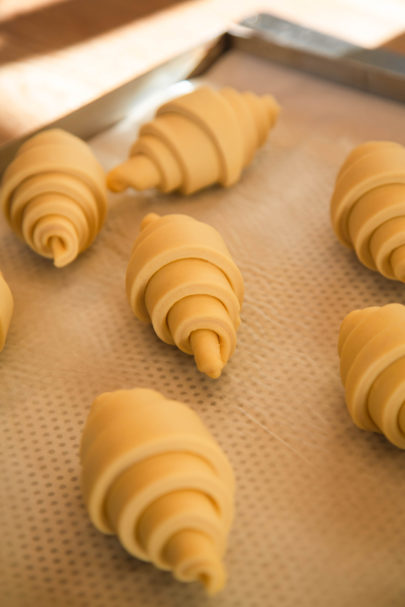
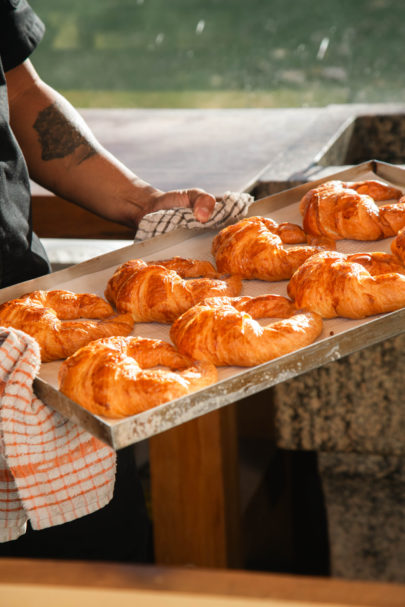
One of the most fascinating parts of Ricardo’s demonstration wasn’t just how croissants are made – it was why La Motte makes them the way they do. Unlike the straight croissants seen in many bakeries today, La Motte shapes theirs into a classic crescent moon. “We do a crescent moon croissant. The reason for that is we’re doing the old version of croissants.”
Ricardo explained that the croissant’s story dates back to the 1800s. “The history of croissants starts in 1837 when an Austrian soldier opened up a bakery in France where they did the crescent moon croissant.”
Over time, however, manufacturers began finding cheaper ways to produce them. “As years went by, people found different ways of making croissants cheaper. That’s why we got the short croissant with the long tail. Basically, they started making them with margarine.”
At La Motte, they’re intentionally turning back the clock. “We try to get the butter croissants back. That’s why we do a proper butter croissant.”
Supplied
Butter makes all the difference
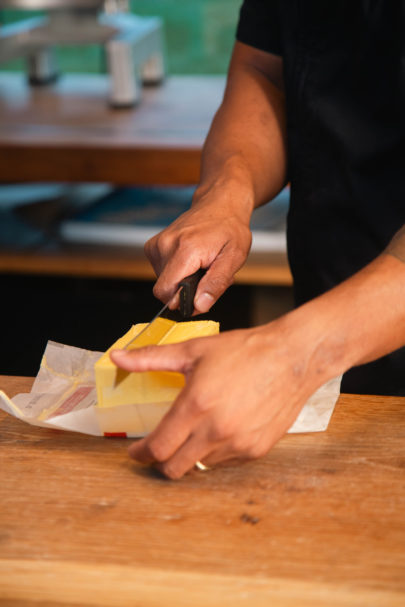
Ask Ricardo what separates an exceptional croissant from an average one, and his answer comes quickly: butter. Lots of it. “Our croissants are very flaky. It’s about 35.7% butter. Really buttery and also very flaky.”
The generous butter content also creates the signature layers that define an outstanding croissant. “The croissant is basically a layered pastry. As you layer the croissant, you’re building character.”
During baking, those delicate layers separate, producing the airy honeycomb interior every baker hopes to achieve. “As you bake it, all that butter stays in there, and then you get nice, proper holes. You also want the taste. You want a butter croissant, not a margarine croissant.”
Ricardo is equally particular about the type of butter they use. “We use unsalted butter because it doesn’t have a lot of moisture in it.” Excess moisture can ruin the lamination process, as he explains: “If the butter contains too much moisture, as you laminate it, the butter will crack. That leaves little cracks in the croissant, and you’ll see it in the finished product.”
Supplied
The hardest part? Lamination
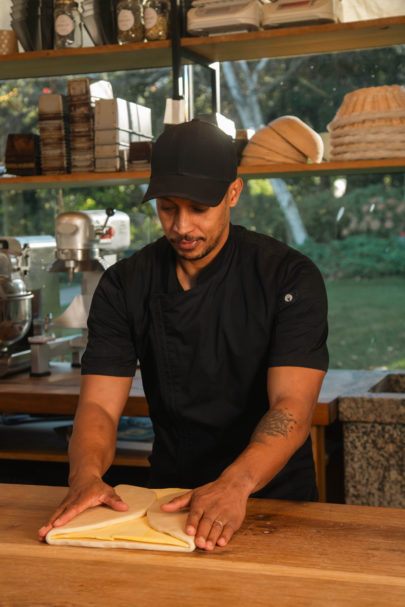
Watching Ricardo expertly feed dough through the pastry sheeter made the process look deceptively simple.
It isn’t. According to him, lamination (the repeated folding and layering of butter into dough) is where most home bakers struggle. Without professional equipment, consistency becomes difficult. “At home, you have to laminate with a rolling pin, and that takes a lot of time. Your layers won’t be as perfect as you do in the bakery.”
Temperature is equally important. “The colder the dough, the better the laminating process.”
Once shaped, the croissants aren’t ready for the oven just yet. They need time to proof. “The croissants at La Motte take about two and a half hours to proof.”
Supplied
Even the egg wash matters
It turns out that achieving that glossy golden finish isn’t as simple as brushing on a beaten egg. Ricardo has his own formula. “A lot of people get the egg wash wrong.”
His preferred mixture includes cream and a pinch of salt. “The salt is basically to break down the protein in the egg. Then you add a little bit of cream, brush that onto the croissant and bake it.”
From plain to pistachio
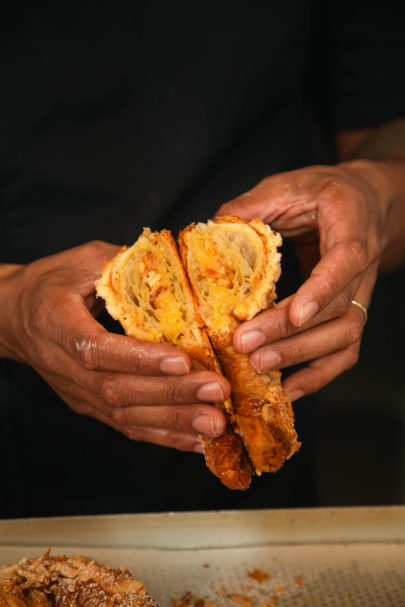
La Motte’s pastry team also transforms these buttery croissants into favourites like chocolate, almond and pistachio.
Ricardo explained that chocolate croissants are assembled before baking. “You take the dough, add the chocolate sticks, roll it, prove it and bake it.”
Almond croissants, however, get a second life. “You take a day-old croissant, cut it open, dip it into a little bit of syrup, add almond cream in the middle and on top, then bake it for about 14 minutes.”
When asked about his own favourite? “I prefer the almond, to be totally honest with you.”
Supplied
Rolling croissants with the master baker
Of course, the highlight of our visit wasn’t simply watching Ricardo work – it was getting to join him.
Under his guidance, we rolled a few croissants ourselves. While ours certainly didn’t look quite as neat as the bakery’s perfectly shaped crescents, it quickly became clear just how much precision, patience and practice go into every single one.
And then came the reward: fresh from the oven, we were handed La Motte’s pistachio croissants while they were still warm.
Every single one of us agreed: it was, without question, the best croissant we’d ever eaten.
The pastry shattered into delicate, buttery flakes with every bite before giving way to a rich, velvety pistachio filling that melted in the mouth. Crisp on the outside, feather-light within and wonderfully indulgent without being overly sweet, it was the kind of croissant that instantly ruins ordinary croissants forever.
If there is one thing to order at La Motte Bakery, make it the pistachio croissant. Better yet, order two. Because one simply won’t be enough.
Supplied
ALSO SEE:
Featured Image: