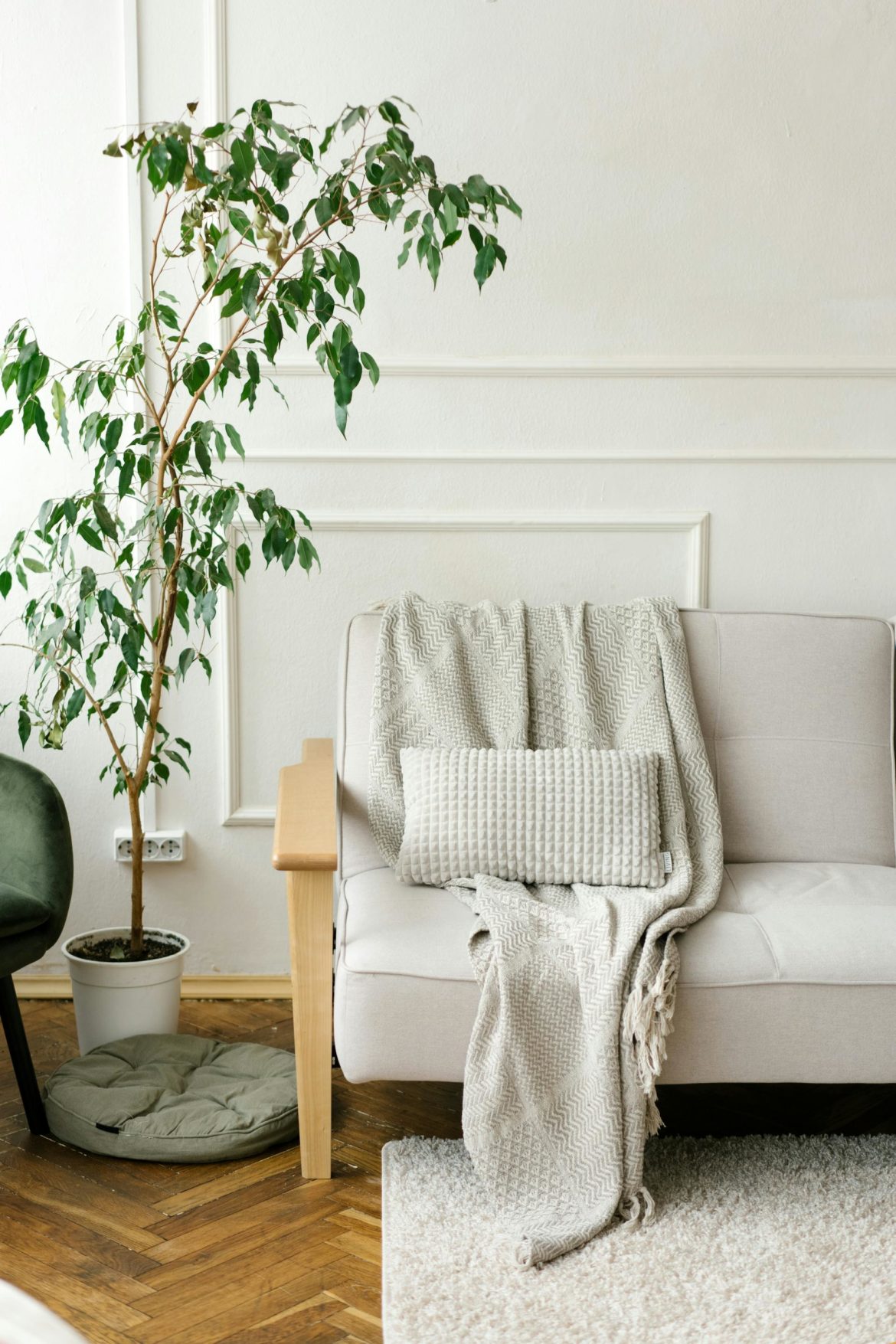
There is a version of winter decorating that involves throwing everything you own at the problem: blankets draped over every surface, candles clustered on every ledge, seventeen cushions on the sofa. It looks warm in photographs and chaotic in person. The rooms that feel genuinely inviting in winter tend to look the opposite: considered, edited, intentionally layered.
The difference is the distinction between adding things and adding the right things. A small number of well-chosen changes to texture, light and warmth does far more for a room than volume alone. Here is what actually works.
Start by editing, not adding
The counterintuitive first step to a cosier home is to remove things rather than add them. Winter rooms feel cluttered when the surfaces are already full before you start. Put away any summer accessories, lightweight decorative items and anything that reads as seasonal to the wrong season. What remains as the base layer should feel clean and grounded. From there, additions feel intentional rather than accumulated.
This does not require a full overhaul. A clear coffee table receives a single candle and a stack of books beautifully. That same table covered in eight objects receives them chaotically.
Layer texture, not just colour
The quality that makes a winter room feel warm is primarily textural rather than chromatic. Soft, heavy, tactile fabrics do the work that extra colour cannot. A chunky cotton-knit throw, a wool-blend cushion, a sheepskin draped over a chair: these things invite touch and suggest warmth before anyone has sat down.
The most effective approach for 2026 is to mix two or three different knit weights or fabric textures within the same neutral colour family. A waffle-weave cotton alongside a brushed mohair alongside a heavier wool knit creates depth without colour clash or visual noise. The room feels rich rather than busy.
One good throw is worth five cheap ones. The investment in a single quality textile that will look better with age consistently outperforms a pile of fast-furnishing blankets that look tired within a season.
Rethink your lighting
Nothing transforms a room’s atmosphere more efficiently than lighting, and most homes are significantly underlighting their evening spaces. Overhead ceiling lights create a flat, functional quality that works against warmth. The winter living room needs layers: ambient light from a central source, task light for reading and focused activity, and accent light for atmosphere.
Lamps, rather than overhead lights, should be doing most of the work after 5pm. If you do not have enough lamps, adding one or two is a far more effective investment than any amount of decorative accessories. Warm-toned bulbs in the 2 700 Kelvin range provide the most flattering and cosy effect. Candles, particularly in larger pillar or column formats, add the final layer of atmosphere that no electric light quite replicates.
Bring in natural elements
Organic materials have a grounding quality that manufactured decor rarely achieves. A few stems of winter foliage from the garden, a bundle of dried grasses, a wooden bowl, a piece of unglazed terracotta: these things bring texture and life into a winter room without adding weight or clutter.
In South Africa, winter is not a stripped-bare season. Depending on your region, salvias, aloes, ornamental grasses and various succulents are still performing. Cutting a few stems or branches and placing them somewhere they catch the light costs nothing and does a great deal for the feel of a room.
Use scent deliberately
Scent is one of the most effective atmospheric tools available and one of the most frequently overdone. A single well-chosen candle or diffuser in a room is evocative. Multiple competing scents are simply confusing. Winter calls for warmer, deeper fragrance profiles: cedar, sandalwood, vetiver, amber, clove. These carry more presence in a room than the light florals that suit summer, and they register as warmth even before anyone has consciously noticed the smell.
The bedroom is its own project
Winter bedroom decorating follows the same logic as the rest of the house but with particular attention to bedding. Layering is more effective than simply switching to a heavier duvet: a base sheet, a mid-weight duvet, a folded throw at the foot of the bed and one or two additional cushions gives the bed a pulled-together, deeply inviting quality that a single heavy duvet alone does not. The layered bed also allows each person to adjust their warmth level independently, which is a practical as well as an aesthetic point.
A bedside lamp rather than an overhead light, a small stack of books and a glass of water: these things make a bedroom feel lived in and warm in a way that is much harder to achieve with decor alone.
ALSO SEE:
Featured Image: Pexels