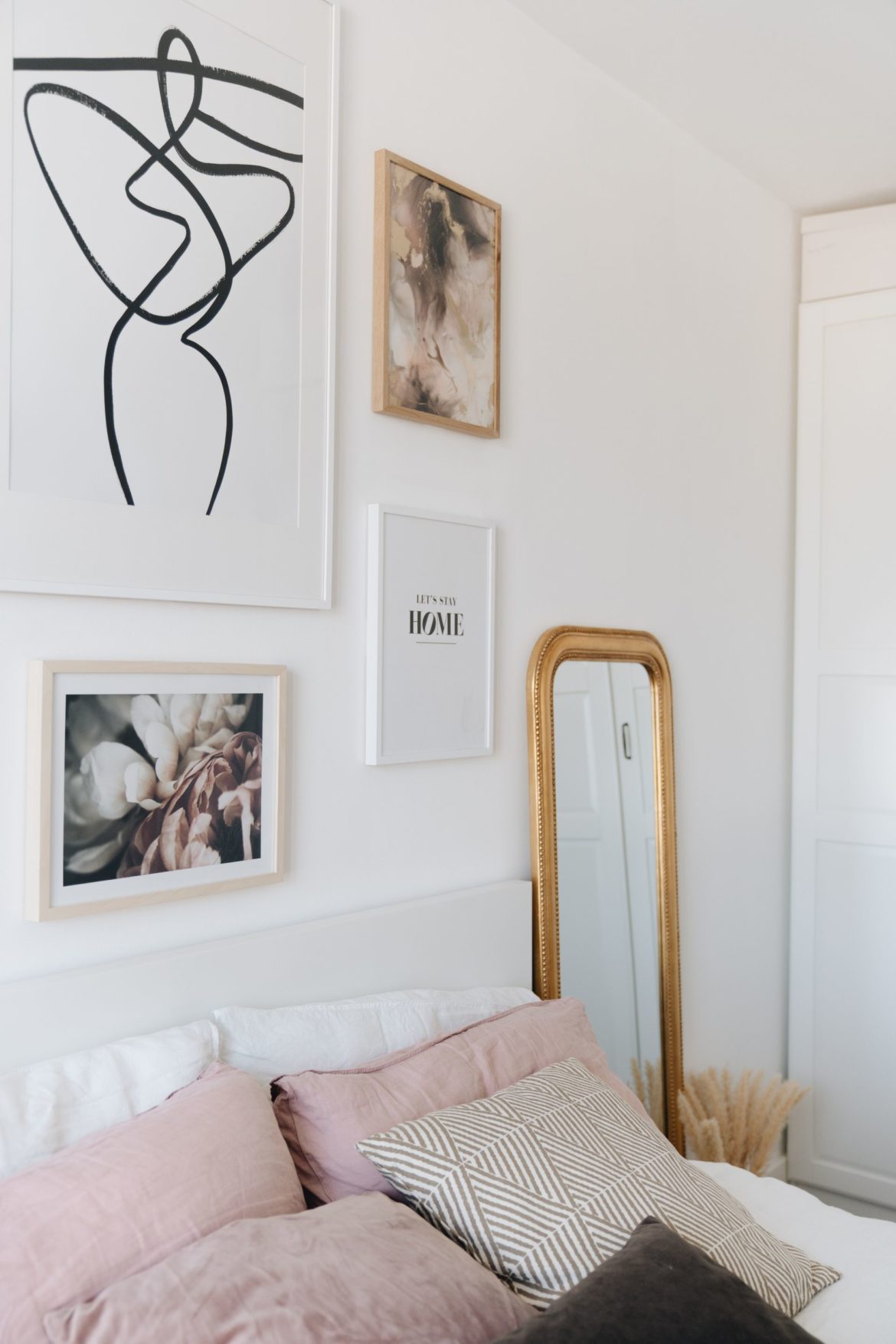
There is a quality that the best rooms share that is difficult to name until someone points it out: they feel as though they have been lived in. Not cluttered, not messy, not obviously styled, but inhabited. Things have arrived over time, from different places and at different prices, and somehow they hold together. That quality is almost always the result of deliberate layering rather than a decorating approach that treats each item as a standalone decision.
Layering is not about adding more. It is about creating depth by introducing contrast: between textures, between scales, between periods, between materials. A room that has been layered well has visual movement. It invites the eye to travel rather than settle in one place.
Start with the base layer
Everything that follows depends on this. The rug, the wall colour, the architectural details and the dominant upholstery are the foundation that gives all subsequent decisions a clear direction. A base that is undecided forces every layer that comes after it to work harder. When the foundation is right, even imperfect additions tend to land.
The base does not need to be loud. It needs to be considered. A neutral ground can be as richly textured and deliberate as any bolder choice. What matters is that it sets a tone that everything else can respond to.
Use textiles to soften hard surfaces
Textiles are what temper architecture. They bring warmth into a space and keep a room from feeling severe, however clean its lines. The key is thinking beyond a single fabric moment: layering a wool rug over a sisal base, or mixing linen, wool and cotton across the cushions and throws in the same space creates a richer result than any single beautiful textile choice on its own. Mixing patterns and textures here is not a risk. Matching them too precisely is.
Contrast materials, not just objects
A metal lamp with a linen shade is interesting not because of its shape but because of the contrast between its components. The intrigue comes from materials that behave differently in light, temperature and to the touch. Stone, metal, wood, glass and textiles each bring something distinct. Balancing warm and cool materials in the same space creates the kind of tension that makes a room compelling rather than comfortable in a flat way.
This principle is especially useful in rooms where textiles are naturally limited: kitchens and bathrooms can achieve depth through material contrast, using unlacquered brass alongside matte stone, or raw timber alongside polished surfaces, when soft layering isn’t available.
Layer your lighting
Overhead light alone flattens a room. Layered lighting creates range: a ceiling fixture provides ambient light, wall sconces or picture lights draw attention to specific surfaces, lamps in corners introduce warmth and shadow, and art lighting gives important pieces their own considered presence. The transformation when a room’s overhead light is dimmed and the secondary layers are activated, is usually immediate and dramatic.
Play with scale and shape
Mixing large-scale pieces with smaller ones prevents a room from feeling stiff or symmetrical in the wrong way. The pairing of a heavy, deep sofa with a more architectural, lighter-framed chair is a basic example of how scale contrast creates visual balance rather than visual monotony. In the same way, pairing curvy forms with linear ones, or rounded objects with angular ones, introduces movement and prevents the eye from settling too quickly.
Mix high with low
A well-edited room does not announce its budget. An inherited piece of furniture, a considered secondhand find or a carefully chosen affordable item can sit alongside something significantly more expensive, and the mixing is often what makes both pieces more interesting. A precious thing displayed among more accessible ones gains context. An everyday object elevated by its company gains significance.
Let older pieces push back against newer ones
Rooms that feel too current tend to age quickly. A space that includes something from a different era, a genuinely antique piece, an inherited object, a vintage find with its own visible history, has a quality that new things alone cannot produce. The contemporary reads more grounded when it is in conversation with something older. The vintage item reads more alive when it is not grouped only with its own period.
Books, objects and personal things last
The final layer is where the room becomes yours. Books, ceramics, things brought back from trips, pieces with stories attached: these are the lightest touches in a room’s visual weight, but they carry the most emotional resonance. Layering is ultimately permissive. It allows personal things to arrive as they naturally do, alongside what is already there, rather than waiting for a perfect moment that rarely comes. A room that has been layered over time, piece by piece and decision by decision, tends to feel more honest than one that was completed all at once.
ALSO SEE:
Featured Image: Pexels