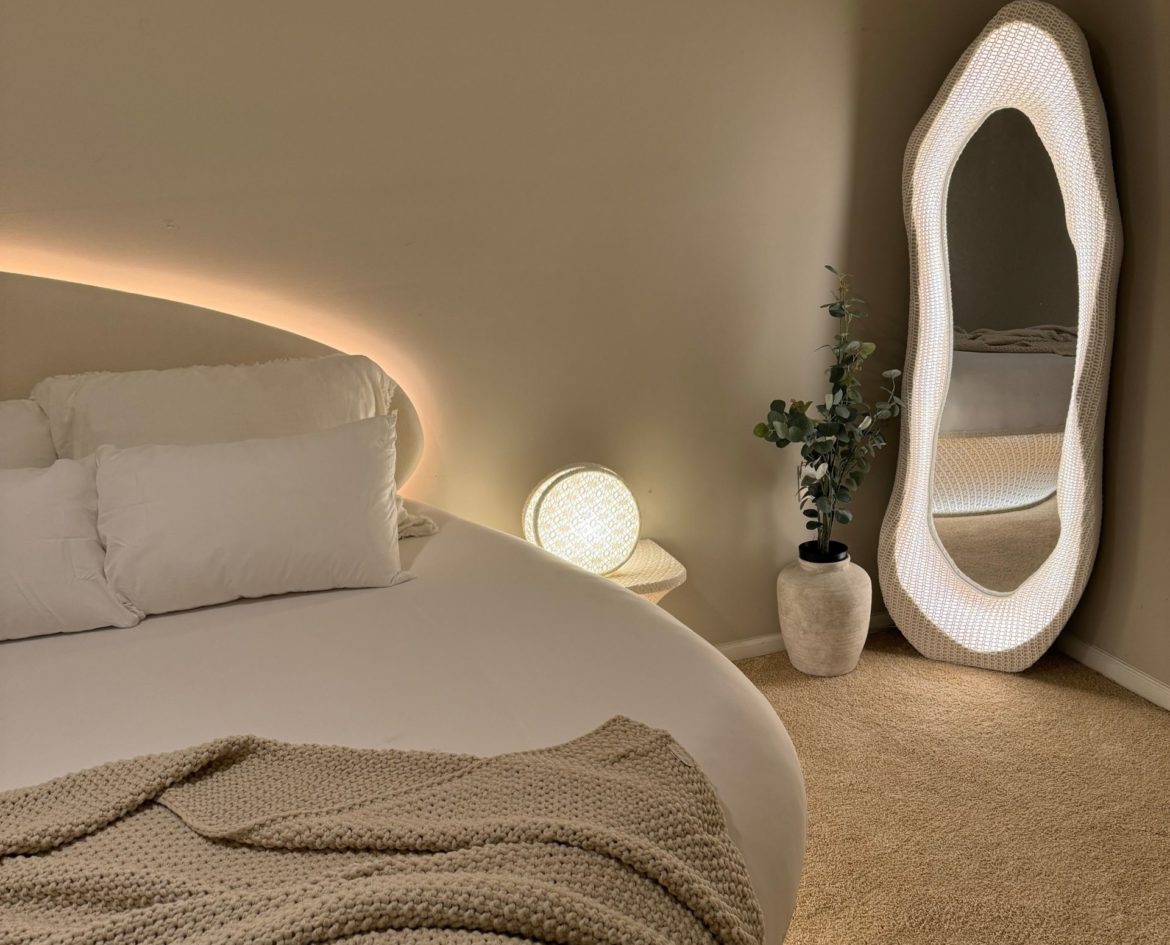
Your bedroom should do more than look beautiful. Here’s how to turn it into a calming sleep sanctuary that helps you switch off, slow down and rest more deeply.
There is something to be said for a bedroom that makes you want to exhale the moment you walk through the door. Soft lighting, fresh sheets, a clutter-free bedside table and a room that feels distinctly separate from the rest of the day can all change the way you approach bedtime.
While a beautiful bedroom cannot solve every sleep problem, your environment can influence how easily you wind down. Think of it as creating the conditions for rest rather than chasing the perfect night of sleep.
Start with the clutter
A bedroom doesn’t need to be minimalist to be restful, but excessive visual clutter can make it harder to feel like the day is over.
Start small. Clear your bedside table, put away clothes that have accumulated on a chair and find a home for anything that doesn’t belong in the room. Keep surfaces relatively clear and make your bed each morning so that returning to it at night feels like a reset.
The goal isn’t perfection. It’s creating a space that doesn’t ask anything of you.
Keep your bedroom cool, dark and quiet
Your bedroom environment matters when it comes to sleep. Aim for a comfortably cool temperature, minimise unnecessary light and reduce noise where possible.
Blackout curtains or blinds can help keep unwanted light out, particularly if you live in a brightly lit area. If outside noise is an issue, earplugs, a fan or gentle background noise may help create a more consistent environment.
And don’t underestimate the effect of tiny lights. Digital clocks, chargers and electronics can add unnecessary brightness to an otherwise dark room.
Rethink your lighting
Bright overhead lighting has its place, but bedtime is not it.
Instead, introduce softer sources of light as evening approaches. Bedside lamps, warm-toned bulbs and dimmable lighting can create a gentler atmosphere and help signal that the active part of your day is winding down.
Think of your bedroom lighting as a transition: brighter during the day, softer at night.
Make your bed the star
Your bed should be the most inviting thing in the room.
Choose breathable bedding that feels comfortable against your skin and suits the season. Layering can make a bed feel luxurious without making it overly complicated – crisp sheets, a lightweight duvet, a textured blanket and a few carefully chosen pillows can be enough.
Don’t overlook your mattress and pillow, either. If you’re regularly waking up uncomfortable, your bedroom may look beautiful but still isn’t doing its most important job.
Keep technology at a distance
Your phone may be the last thing you look at before falling asleep and the first thing you reach for in the morning, but creating some distance between your bed and your screen can make your bedroom feel considerably more restful.
If possible, charge your phone away from your bed. Consider using a traditional alarm clock and resist turning your bedside table into a mini command centre of cables, notifications and devices.
Your bedroom should remind you to rest, not respond.
Be thoughtful with scent
Scent can become part of your bedtime routine because familiar sensory cues can help create a sense of ritual.
If you enjoy fragrance, consider keeping your bedroom lightly scented with something calming and subtle. A linen spray, diffuser or candle used before bedtime can create an inviting atmosphere.
Just remember that fragrance preferences are highly individual. Your sleep sanctuary should smell comforting to you, not like a department-store fragrance counter.
Give everything a place
One of the easiest ways to make a bedroom feel calmer is to reduce the number of decisions you have to make in it.
Keep a laundry basket nearby. Have a designated place for jewellery. Store books neatly. Keep your skincare together. Put tomorrow’s outfit somewhere other than the bed.
Small systems prevent everyday mess from becoming visual noise.
Create a bedtime ritual
Your bedroom becomes even more powerful as a sleep cue when you consistently associate it with winding down.
Perhaps your evening ritual involves showering, changing into comfortable pyjamas, making a cup of caffeine-free tea, reading a few pages or writing in a journal. The specifics matter less than the consistency.
Over time, these small actions can become a signal that the day is coming to an end.
Make it a room you actually want to spend time in
Finally, don’t confuse a sleep-friendly bedroom with a sterile one.
Include the things that make the space feel like yours: a favourite photograph, a beautiful piece of art, fresh flowers, a stack of books or a sentimental object. A calming bedroom should still have personality.
The best sleep sanctuary isn’t necessarily the most perfectly styled one. It’s the room that makes you feel safe, comfortable and ready to let the day go.
Because better sleep doesn’t always start when your head hits the pillow. Sometimes, it starts with the room around you.
ALSO SEE:
Featured Image: Pexels