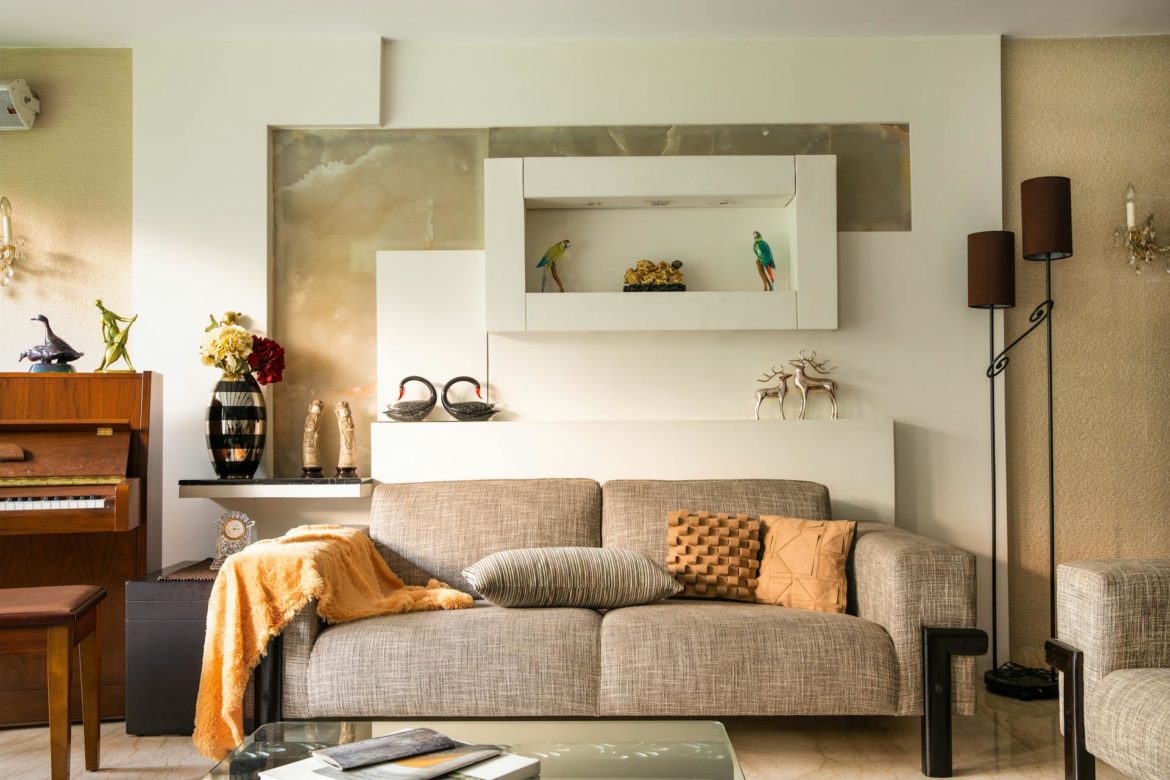
Grey had a remarkable run. For the better part of two decades it was the safe, versatile, contemporary choice for walls, kitchens, bathrooms and sofas. It photographed well, it worked with almost anything and it felt reliably modern. Then, gradually and then all at once, it started to feel cold, dated and somewhat joyless.
The shift away from millennial grey is not really about grey falling out of fashion in the way that a colour trend does. It is about a broader change in what people want from their homes: warmth, groundedness, a sense of natural connection. Cool grey, with its industrial associations and emotional detachment, sits on the wrong side of all of these desires. What is replacing it is not a single colour but a family of warmer, more complex neutrals that offer the same versatility with considerably more personality.
Warm whites and creamy tones
The cleanest break from grey is not a dramatic colour choice but a shift to warm white. The key distinction from the stark, cool whites of the minimalist era is undertone: the whites gaining traction in 2026 carry subtle warm undertones, not yellow, which reads as cheap, but brown, pink or a very soft peach. These tones register as cream or ivory in certain lights and remain cleanly white in others.
In south-facing rooms in South Africa, which receive the most direct, warm sunlight, a warm white performs particularly well because the undertone prevents the room from feeling bleached out. North-facing rooms, which receive cooler, more indirect light, benefit from slightly warmer undertones still to compensate for the quality of the light.
Greige: the sophisticated middle ground
Greige, the blend of grey and beige, has been the most successful transition colour from the grey era because it offers much of what people loved about grey, particularly its neutrality and flexibility, with additional warmth. The critical distinction is undertone: the greiges that are working in 2026 have brown or taupe backing rather than the pink or purple undertones that gave earlier greiges their slightly mauve character.
A well-chosen greige reads differently throughout the day, shifting between a warm neutral in direct light and a softer, more atmospheric tone in lower light. This dynamic quality, the way it changes with the conditions rather than sitting flat and static, is part of why it feels more interesting to live with than cool grey.
Green-toned neutrals
The most significant new arrival in the neutral category is earthy, muted green: shades that sit in the space between grey-green, sage and khaki. These tones bring a sense of the natural world into a room that cool grey never could, and their connection to organic and botanical references aligns well with the broader design mood of 2026.
At the lighter end, a soft sage with warm undertones provides a fresh, slightly botanical backdrop that works in almost any room and with almost any furnishing style. Deeper, more saturated grey-greens read as atmospheric and sophisticated, particularly in dining rooms, studies or rooms where a stronger sense of character is appropriate. Both ends of the spectrum pair easily with natural materials: timber, stone, linen, terracotta and rattan all sit well against green neutrals in a way they sometimes struggle to against cold grey.
Plaster pinks and dusty mauves
What was once called millennial pink has matured considerably. The saturated rose tones of the mid-2010s have given way to something quieter and more complex: dusty, plaster-like pinks and mauves that read almost as neutrals in certain light conditions. These tones carry a warmth and femininity that is notably absent from grey, and they have found favour as both full-room colour choices and as accent walls in otherwise neutral schemes.
Their particular appeal is their flattery of both natural light and the people within the room. They reflect warmth rather than absorbing it, and they make faces glow rather than wash out.
Warm caramel, tan and tobacco
At the deeper end of the new neutral spectrum, caramel, tan, honey and tobacco tones are providing the rich, enveloping quality that dark grey once offered but with significantly more warmth. These colours work best in rooms where the goal is atmosphere rather than brightness: a sitting room used primarily in the evenings, a study or library, a bedroom where cocooning rather than waking up is the priority.
The approach that works best is full immersion rather than accent: painting walls, ceiling and woodwork in the same or tonal colour produces a wrapped, considered effect. Natural materials, leather, wool, dark timber and brass, all sit exceptionally well in these schemes.
ALSO SEE:
Featured Image: Pexels