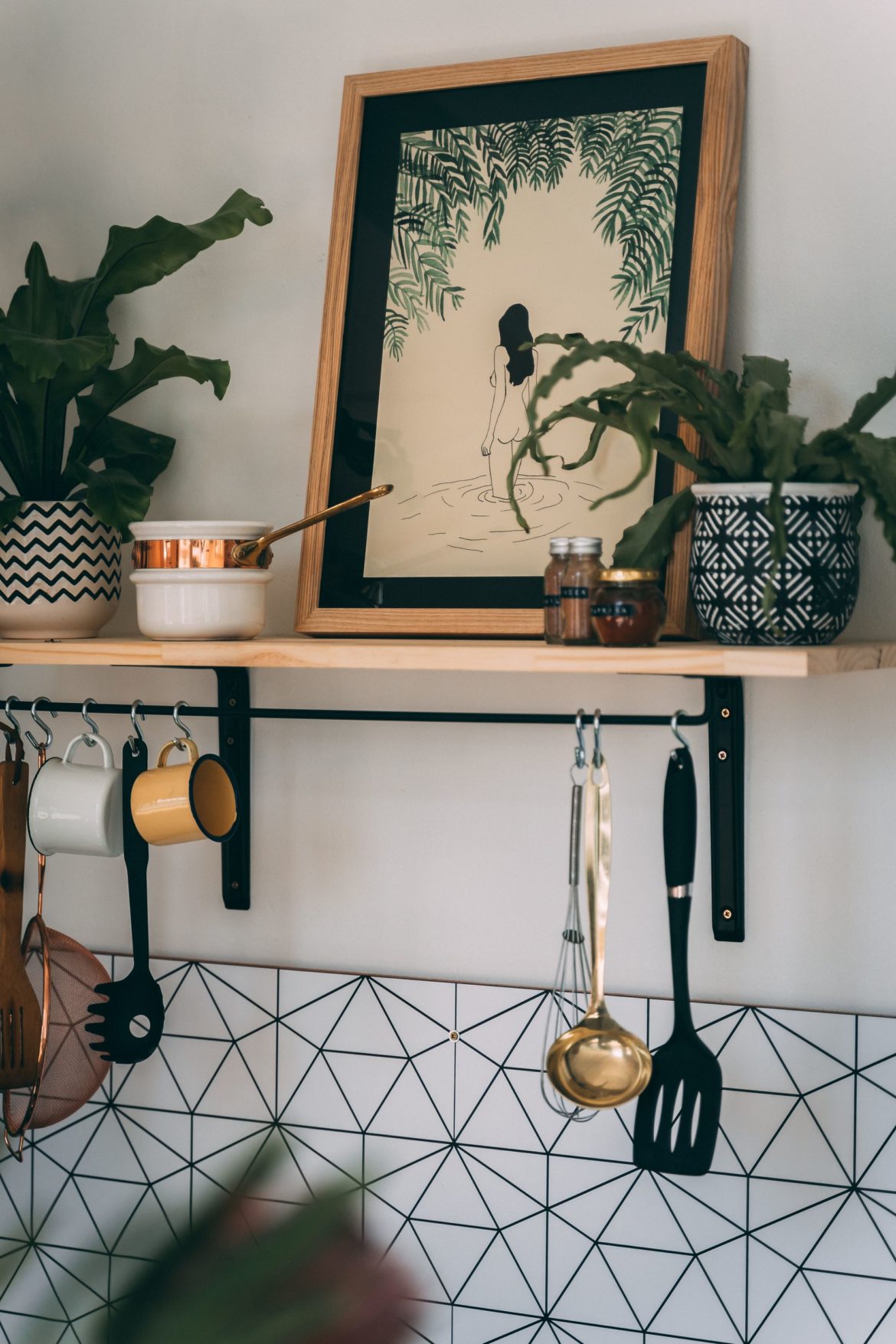
The neglected corner of a kitchen tends to collect whatever doesn’t have a home elsewhere: a stray appliance, an unopened piece of post, last month’s shopping list. The botanical corner trend is a direct response to this kind of kitchen drift. It suggests that this underused real estate deserves intention, and that a small corner, treated right, can change the entire mood of a room.
The idea has been gathering momentum on social media and in interior circles, and its appeal is straightforward: it turns the kitchen into something more relaxing without a renovation. Plants are the starting point, but the best versions of this look go significantly further.
Plants are the anchor, but not the whole story
A single trailing pothos or a compact fern in a terracotta pot is a start. But what distinguishes a botanical corner from a pot of plants that ended up in a corner is the layering around it. Think of the plants as the anchor of the arrangement, the living element that grounds everything else, and build outward from there.
In a South African kitchen, where light tends to be good most of the year, north-facing corners are an excellent choice for plants that want a little more warmth and indirect light. Herbs that double as decoration and practical ingredients, such as rosemary, basil and lemongrass, earn their place in a kitchen corner both visually and practically.
Spice jars and pantry items as display
The botanical corner invites you to treat the everyday things in your kitchen as objects worth looking at. Decanting spices, dried chillies, loose-leaf teas and whole grains into glass jars and arranging them on a small shelf or tray near the plants brings warmth and colour without any additional purchase. The visual consistency of a grouped collection of glass jars reads as intentional rather than cluttered.
Dried botanicals, seed pods, cinnamon sticks and dried orange slices are all easy additions that extend the natural palette without needing to be replaced. They’re also particularly good in a South African context, where winters are dry enough to preserve dried botanicals well.
Vintage prints and framed art add character
A small framed botanical print, a vintage seed packet or an antique illustration of a medicinal herb hung above the arrangement pulls the corner upward and makes it feel considered rather than accidental. You don’t need original art for this: reprints of botanical illustrations are widely available and bring a warmth that a plain wall cannot.
The style works best when prints share something with the living plants beside them: a sprig of rosemary growing in a jar, for instance, echoed by a framed illustration of the same plant above it. That kind of quiet repetition is what makes a corner feel curated.
A small shelf changes everything
If your corner has no existing surface, a small floating shelf or a tiered plant stand creates the vertical layers that distinguish a styled corner from a flat display. Height difference between elements, a tall plant beside a shorter jar arrangement beside a small framed print, creates a composition that naturally draws the eye.
Keep it edited
The botanical corner earns its calming reputation only when it’s kept edited. It is not a place for every plant that needs a home or every jar that has outgrown a cupboard. Choose five to eight elements that work together in colour, material and purpose, and let the rest of the kitchen breathe around them. The goal is a pocket of calm, not another surface to manage.
ALSO SEE:
Forget the trends – Why texture is the secret to a luxurious winter home
Featured Image: Pexels