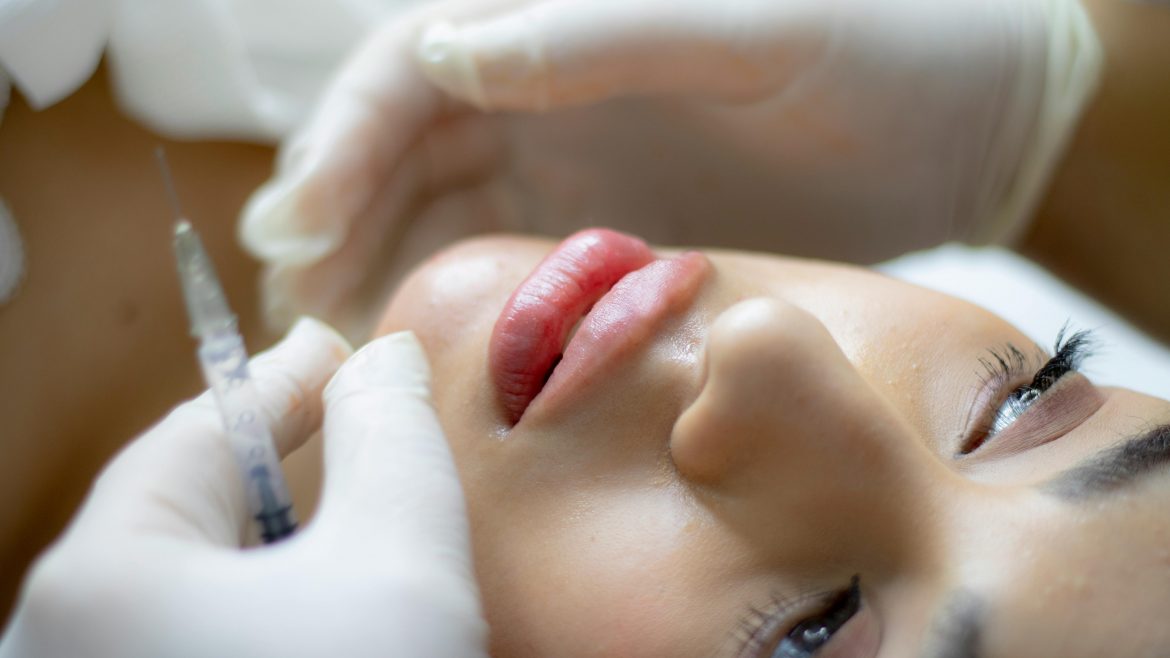
Once considered a niche cosmetic procedure, the lip lift has entered the mainstream of aesthetic surgery. Promising a permanently fuller upper lip and a shorter philtrum without the maintenance of injectables, it is often positioned as a refined, long-term solution to volume loss or facial imbalance.
Yet, behind the carefully curated before-and-after images lies a procedure that carries nuanced, often under-discussed risks. While a lip lift can produce elegant results in the right candidate, it is far from a one-size-fits-all intervention.
Here are the realities that are less frequently addressed.
A scar might be part of the procedure
A lip lift is, first and foremost, surgery. It requires an incision beneath the nose, typically hidden within the natural crease. While many surgeons minimise and meticulously place the scar, healing varies widely.
For some patients, the scar remains discreet. For others, it may appear raised, pigmented, or uneven for months – or indefinitely. Those with a predisposition to hypertrophic or keloid scarring face an elevated risk, yet this is not always emphasised during consultations focused on aesthetic outcomes.
Millimetres matter more than marketing suggests
The success of a lip lift depends on an exceptionally precise removal of skin. Even minor overcorrection can significantly alter facial expression.
Excessive shortening of the philtrum may result in:
- Constant upper teeth exposure
- A strained or “pulled” appearance
- Loss of softness around the mouth
Unlike dermal fillers, a lip lift offers no margin for reversal. Once tissue is removed, the change is permanent.
Changes to facial movement are possible
The upper lip plays a central role in facial expression and speech. Following a lip lift, some patients notice alterations in how their mouth moves when smiling or talking.
These changes can include stiffness, asymmetry, or reduced mobility. While many improve as swelling subsides, others may persist, particularly if nerve pathways are affected during surgery.
Sensory changes are underreported
Temporary numbness is widely acknowledged. What is less openly discussed is the possibility of long-term sensory change.
Some patients report diminished sensation, prolonged tingling, or a persistent feeling of tightness. Given the mouth’s sensitivity and functional importance, these changes can have a greater impact on daily comfort than anticipated.
Recovery is longer than the narrative suggests
Despite its growing popularity, a lip lift is not a “quick fix.” Initial swelling and bruising may resolve within weeks, but full healing is a slower process.
Scar maturation alone can take up to a year. During this time, the appearance of the upper lip may fluctuate, requiring patience that is often absent from social media portrayals of cosmetic procedures.
Facial balance can be compromised
When performed without careful consideration of overall facial proportions, a lip lift can unintentionally age the face. Over-shortening the philtrum may accentuate nasolabial folds, draw attention to perioral lines, or disrupt the natural harmony between facial features.
In aesthetics, enhancement is less about trend adoption and more about proportion—and not every face benefits from a lifted upper lip.
The psychological adjustment is rarely addressed
Beyond the physical risks lies a subtler consideration: identity. The lips are integral to how we recognise ourselves, and even well-executed changes can require emotional adjustment.
Post-procedural dissatisfaction is not always linked to surgical error. Sometimes, it stems from the difficulty of adapting to a permanent alteration—particularly when expectations were shaped by idealised imagery rather than informed discussion.
A procedure that demands discernment
Lip lifts can be transformative when approached with restraint, expertise, and realistic expectations, so they are not inherently bad. However, their permanence demands a level of consideration that exceeds trend-driven decision-making.
In an industry increasingly shaped by immediacy and visual impact, the most responsible aesthetic choice is often the most deliberate one. Not every enhancement needs to be permanent – and not every option suits every face.
Before considering a lip lift, ask yourself:
- Am I prepared for a permanent change?
- Have I explored less invasive options first?
- Do I trust this practitioner beyond their social media results?
ALSO SEE:
How to find wellness without restriction implementing “everything in moderation”
Featured Image: Pexels