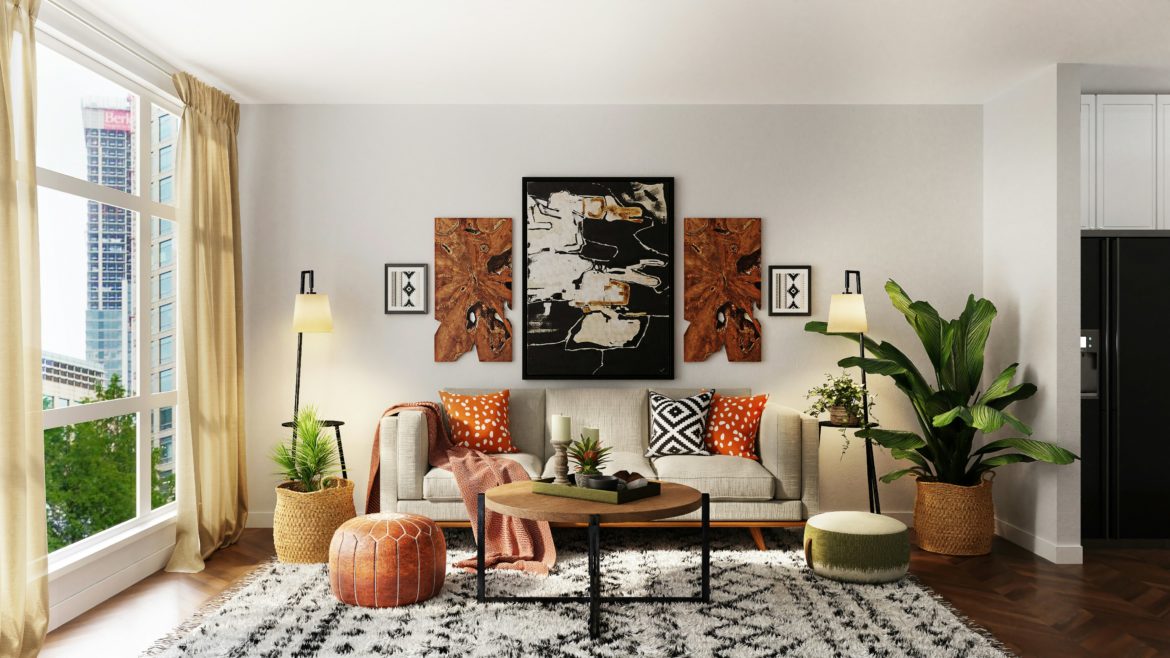
The spaces we live in shape our nervous systems more than we realise. When daily life feels overstimulating, turning your home into a quiet retreat is one of the most reliable ways to find your footing again. This is the core idea behind nature-inspired design — weaving natural elements into your interior so the space itself supports focus, lowers stress, and feels grounded.
ALSO SEE: Decorate for energy, not aesthetics: What makes your home feel safe
You don’t need a full renovation or a green thumb to feel the benefits. A handful of deliberate changes can soften a room significantly.
1. Layer in natural textures
Move away from glossy, synthetic finishes and toward materials with real tactile warmth — raw wood, brushed linen, woven jute, matte ceramic, rattan. These bring a bit of organic imperfection that makes a space feel settled rather than staged. Try linen cushion covers instead of synthetic ones, or a jute rug to anchor a room.
2. Let in light and views
Natural light supports circadian rhythm and mood. Open the curtains during the day and let sunlight move through the space. If you have a window with greenery in view, orientate your favourite chair or coffee spot toward it.
3. Lean into an earthy palette
Colour sets the tone fast. Trade bold primaries for shades pulled from the outdoors — sage, terracotta, oatmeal, sandy beige, soft sky blue. Used on a feature wall or in larger pieces, these tones bring an outdoor calm inside without needing actual foliage.
4. Add living plants
Beyond cleaner air, houseplants give you something living to look at, which has a measurable calming effect. Stick to easy, forgiving varieties — peace lily, snake plant, pothos, fiddle-leaf fig — so upkeep doesn’t become another source of stress.
5. Engage scent
A calming home works on every sense, not just sight. Swap artificial air fresheners for natural diffusers or oil burners. Eucalyptus, cedarwood, sandalwood, and sweet orange bring a forest-walk quality to a room almost instantly.