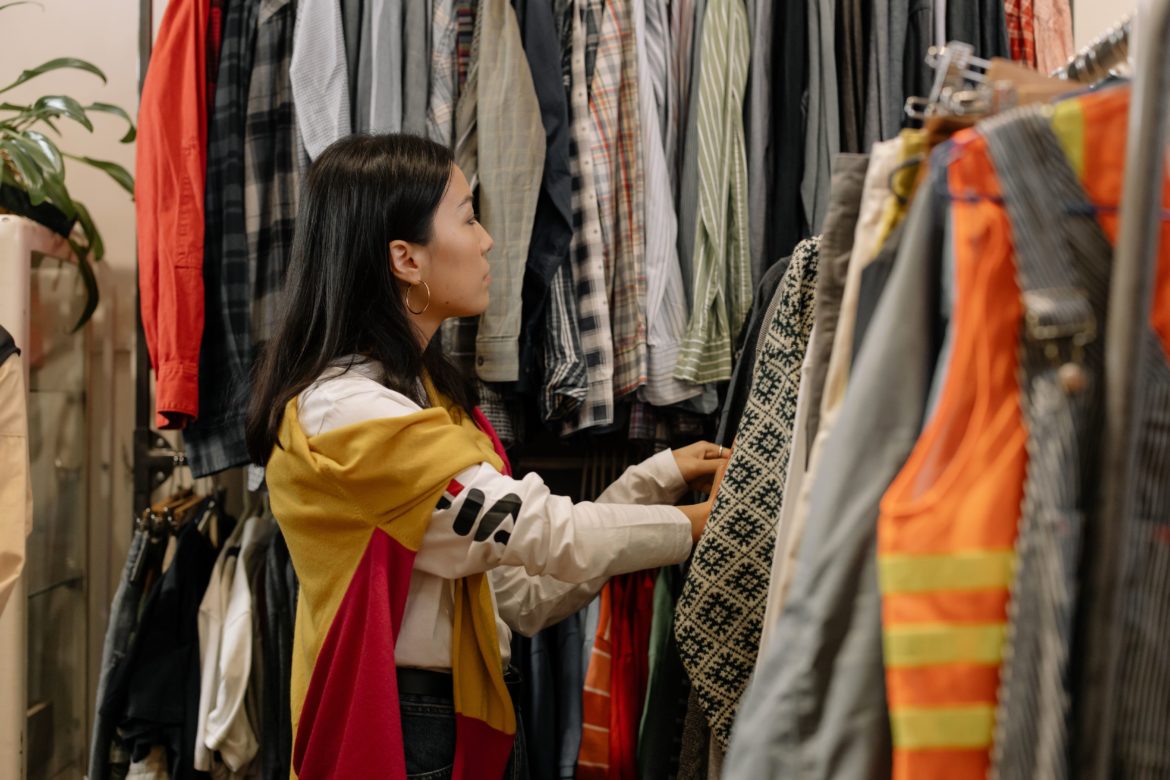
There was a time when thrifting felt like a little secret. You’d spend a lazy Saturday morning flipping through crowded racks at your local charity shop. And then, just like that, you’d walk out with a pure wool coat or a real silk blouse for less than the price of a cappuccino.
ALSO SEE: How fashion lovers can make more sustainable shopping choices
It was the best of both worlds. First, there was the money you saved. A working mom could dress her kids in good-quality school clothes. A student could build a stylish wardrobe on a tight budget. A retired couple could find beautiful furniture for their home without spending their pension. Then there was the quality aspect. Go into any charity shop ten or fifteen years ago, and you’d find clothes that were made to last. These were pieces made before fast fashion took over—when clothes were meant to be worn for years, not thrown away after a season. Thrifting made quality clothes affordable for everyone.
How online shopping changed everything
The biggest shift happened when thrifting went digital, with apps like Yaga and Instagram stores making it incredibly easy to buy and sell second-hand clothes. Suddenly, someone in Cape Town could sell to someone in Joburg. This gave us more access and more choice, but it also brought a downside. What was once a quiet Saturday morning activity became a busy online marketplace. And with that came higher prices and more competition for the best finds.
The rise of the professional reseller
This shift to online thrifting created a new type of shopper: the professional reseller. These are people who visit charity shops and flea markets regularly to find the best pieces. They then sell these items online at much higher prices. Even charity shops have had to adapt. Some now have staff who check online prices before pricing their donations. While this helps charities raise more money, it does mean that families who depend on affordable second-hand clothes are finding it harder to shop.
The fast fashion problem
There is another layer to this problem. As thrifting became more expensive, many shoppers started looking for cheaper alternatives, and that’s exactly where fast fashion stepped in. Over the last decade, cheap, mass-produced clothes flooded the market, and thrift stores started filling up with synthetic, low-quality garments that just don’t last. A few years ago, second-hand shopping almost guaranteed you’d find well-made pieces, but today you have to be careful. You could easily end up spending good money on a thin polyester dress made just a couple of seasons ago.
The new vs. second-hand dilemma
This shift creates a strange problem. When second-hand items cost almost the same as buying new, the money-saving reason for thrifting disappears. It is easy to see why someone would ask: why pay R300 for a used dress when a brand-new one costs the same? Fast fashion relies on this exact thinking. They offer cheap prices and a constant stream of new styles. But the hidden cost to your wallet and the planet is huge. We buy cheap, wear something a few times, and donate it. Then it ends up back on the thrift rack, priced higher than before. It is a cycle that is hard to break.
How to thrift smart and still save money
Despite these changes, thrifting is still very much worth it if you adjust how you shop. Focus on natural fabrics like wool, silk, linen, pure cotton, and leather. These offer real long-term value that fast fashion simply cannot match. To find the best prices, skip the heavily curated online shops and trendy boutiques. Instead, head to smaller neighbourhood charity shops, community bazaars, or hospital outlets in suburban areas. Always take a moment to inspect garments properly before buying. Check for loose seams, discolouration, or missing buttons so you do not end up spending extra on repairs.
ALSO SEE:
How to build an easy skincare routine for a natural glow after 30
Featured Image: Pexels