There is a specific feeling that comes with a new space before it has fully become yours: a slight echo underfoot, surfaces without character, light that lands on nothing particular. It passes, but it does not pass on its own. The shift from a space that is merely occupied to one that actually feels like home is a deliberate process, and it has far more to do with texture, warmth and intention than it does with how much you spend.
Start with the floor
Bare floors, particularly hard ones, are the single biggest contributor to the cold, unfinished feeling of a new space. A rug changes everything: it absorbs sound, adds warmth underfoot, and visually anchors the furniture into a zone that reads as a defined room rather than furniture adrift in a space. In a living area, choose a rug large enough that the front legs of all the main seating pieces sit on it. A rug that is too small looks like an afterthought.
Layer textiles
Cushions on the sofa, a throw draped over an armchair or the end of a bed, curtains that fall to the floor rather than stopping mid-window: all of these add the kind of softness and depth that an otherwise empty-looking room lacks. Mix fabrics and textures within the same colour tone, a wool cushion next to a linen one next to a knitted throw, rather than matching sets. The variety reads as collected and considered rather than bought all at once.
Warm the lighting
Most rental apartments and newly built homes have overhead ceiling fixtures that produce bright, flat light. This is enormously unflattering and goes a long way toward making a space feel institutional rather than domestic. Add lamps: a floor lamp in a corner, a table lamp on a side table or a bedside table. Warm-toned bulbs, around 2700K, produce the honey-coloured light that makes a room feel wrapped rather than examined. Candles add another layer entirely. In winter, particularly, the quality of light in a room determines its warmth more than almost any other factor.
Add at least one plant
A living plant introduces life, colour and a quality of organic presence that no object can replicate. It does not need to be elaborate: a single well-positioned plant in a pot that suits the space is enough to shift the feeling of a room. Snake plants, pothos and ZZ plants are all low-maintenance options that tolerate indoor light conditions. If the apartment gets very little natural light, a large-leafed fake plant does some of the same visual work without the maintenance.
Create a corner with intention
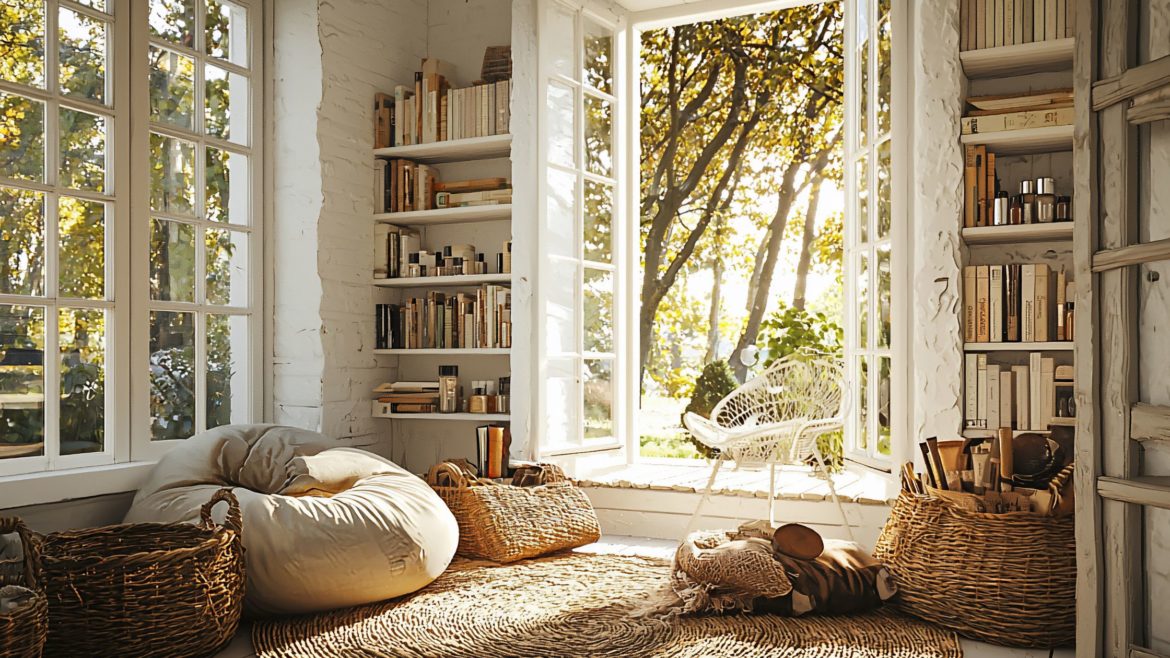
One of the most effective things you can do in a new space is to create a single corner or spot that is specifically composed for one activity: reading, coffee in the morning, or working. A chair, a small side table, a lamp, a stack of books. It does not need much. The presence of one intentionally composed area gives the room a sense that someone lives in it with purpose, and it gives you somewhere to return to that feels specifically yours.
Use scent
The sense of smell is more directly connected to comfort and memory than almost any other sensory input. A space that smells pleasant feels like home in a way that a visually identical but scentless space does not. Candles, a diffuser, fresh herbs on the kitchen windowsill, or simply the smell of something cooking: these are inexpensive and immediate. In winter especially, a warm, subtle scent in a room changes its quality significantly.
Put things on the walls
Bare walls are the most reliable indicator of a space that does not yet feel inhabited. You do not need to spend much or wait until you have the perfect gallery planned. A single print or photograph, framed or even just tacked to the wall, begins the process. Build it over time. Meaningful things, a postcard from a trip, a page torn from a magazine, a photograph with someone in it, carry more warmth than perfectly curated prints that mean nothing to you personally.
Accept that it takes time
The homes that feel most alive are the ones that have been added to over the years rather than completed in a weekend. The most important thing you can do in a new space is start: put the rug down, bring in the plant, hang the first thing on the wall. Each small decision adds a layer of habit that accumulates into somewhere that genuinely feels like yours.
ALSO SEE:
Featured Image: Canva Stock Images