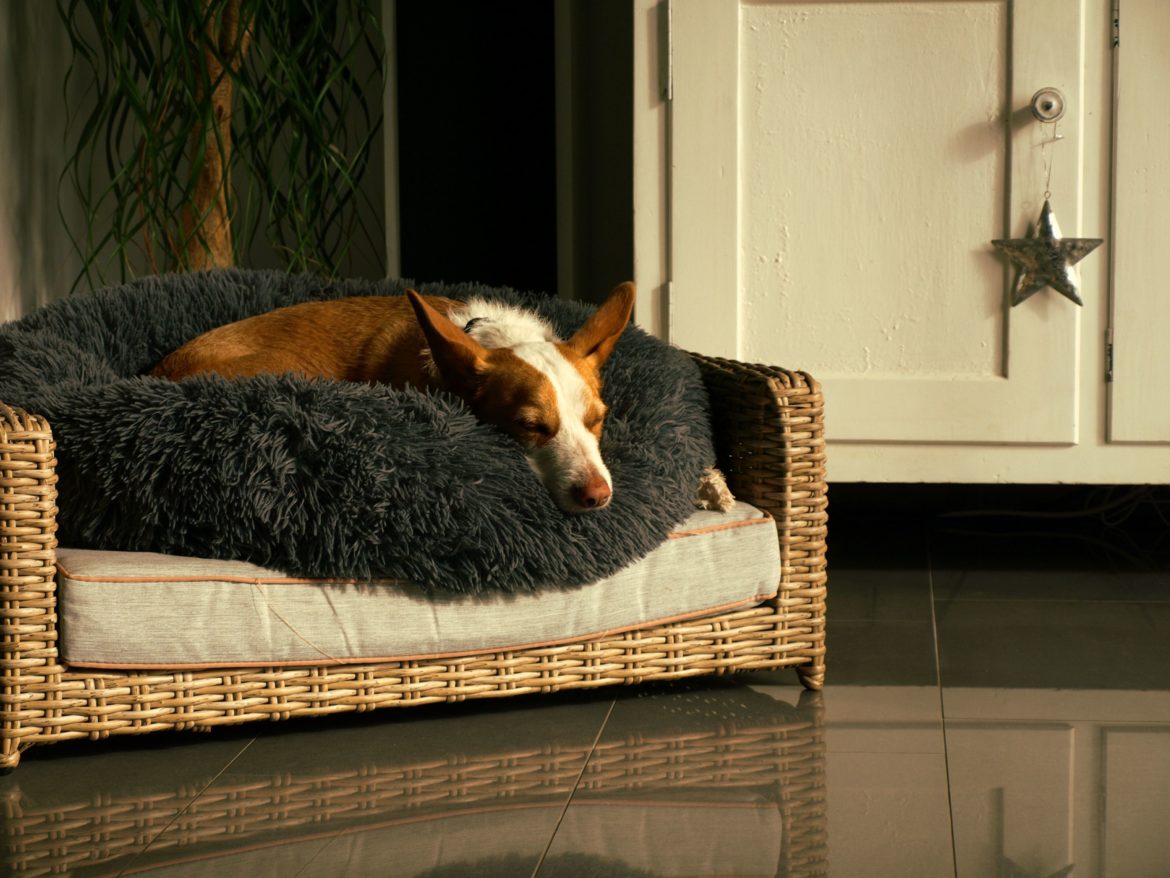
Sharing a home with animals is an exercise in accepting certain realities: fur will appear on upholstery, walls will take the occasional scuff at ankle height, and at least one sofa cushion will almost certainly bear the impression of an animal who was absolutely not supposed to be on it. None of this means that good design is off the table. It means that good design in a home with pets starts with different decisions than it might otherwise.
Choose the right flooring first
Flooring is the hardest-working surface in any home, and in a household with dogs or cats, it absorbs more than most. Engineered wood is one of the better options: it offers the warmth and appearance of timber with greater stability and resistance to moisture. Matte, brushed or lightly textured finishes are significantly more practical than high-gloss surfaces, which highlight every scratch, paw print and dust particle. Mid-toned finishes, such as a natural or honey oak, tend to disguise the inevitable evidence of daily animal life better than very dark or very light options.
Luxury vinyl tiles and porcelain tiles both handle pet traffic well and are easier to keep genuinely clean. Porcelain is particularly durable and scratch-resistant, which makes it well-suited to high-traffic areas: hallways, utility rooms, kitchens and any room where animals spend significant time. Wool carpet is not necessarily the enemy in a pet household: a well-chosen, tight-cut-pile or twist wool option resists snagging and has natural stain-resistant properties that give you a window for cleaning up spills before they penetrate the fibre.
Use paint that can actually handle being cleaned
Pet-friendly paint starts with a high scrub resistance rating. Look for a Class 1 scrub rating, which indicates the surface can withstand thousands of cleaning passes without the finish deteriorating. Beyond durability, low-VOC formulations are worth seeking out: the paints that off-gas fewer volatile organic compounds create a healthier indoor environment for animals, whose respiratory systems are more sensitive to airborne chemicals than most owners realise.
A two-tone wall treatment, one colour on the lower half and a different tone on the upper half, is both a current design trend and an unexpectedly practical choice. Scuffs, paw marks and the splatter that follows a vigorous post-walk shake tend to collect at lower wall levels, and a contrasting or darker tone at that height simply makes them far less visible.
Pexels
Design the kitchen with animals in mind
Modern bespoke kitchen design increasingly incorporates pet infrastructure from the outset rather than adding it as an afterthought. Built-in feeding stations, nooks sized for a dog bed, low-level storage drawers for treats and leads, and elevated pet dining areas finished in the same stone or timber as the kitchen worktops are all approaches that make an animal’s presence functional without being intrusive. Engraved cabinet fronts personalised with a pet’s name are a charming touch that adds character rather than clutter.
Create a layout that works for everyone
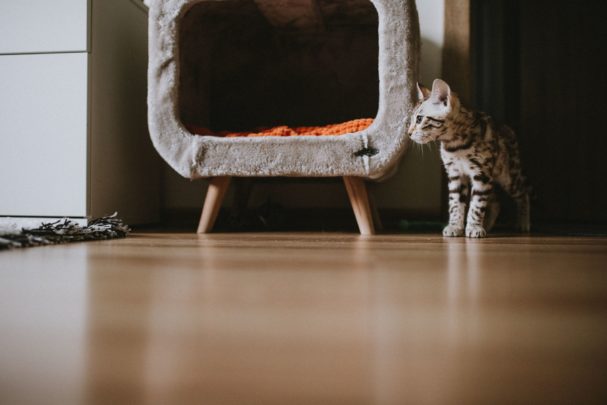
Dogs tend to position themselves where they can observe the household’s movement, which means layouts with clear sightlines between the kitchen, dining and living areas suit them well. A dog who can see what everyone is doing from one spot is a calmer dog. Cats, characteristically, prefer the opposite: elevated perches from which to observe the room from above, retreat spots at lower levels for moments when they want to disappear, and shelving or window seats that give them options throughout the day. Knowing this before you place furniture saves significant rearranging later.
Give pets their own defined spaces
A dedicated space for a pet, a bed in a consistent corner, a crate built into cabinetry, a shelving unit with a specifically positioned blanket, signals to the animal that they have a secure place in the household and reduces the impulse to claim all of the human furniture instead. Crate furniture, where a dog’s crate is contained within a proper piece of cabinetry, solves the aesthetic problem of a metal cage in the middle of the room while maintaining the security that dogs who are crate-trained genuinely need.
Choose soft furnishings that can take it
Tightly woven, performance fabrics are the most practical option for sofas, armchairs and anything else an animal is likely to use. Avoid loose knits and open weaves, which snag easily and, if a cat or dog gets a claw caught, can cause the animal distress. Velvet, while lovely, traps fur and pills under repeated contact. Patterned fabrics and textured weaves are forgiving in a way that plain, flat upholstery is not: they disguise the marks, hair and general wear of shared use considerably better.
Make storage work for pet life
Dedicated storage for pet-related items reduces both clutter and the low-level friction of everyday pet ownership. A designated drawer or cupboard for leads, collars, towels and grooming kit in the hallway or utility room means nothing gets lost and nothing ends up draped over a radiator. Food and treat storage in airtight containers keeps smells contained and curious noses out. Discretely placed solutions for water stations, robotic vacuum storage and litter tray housing can make daily life significantly more streamlined without requiring any of it to be visible.
Keep safety as part of the design brief
A thoughtfully designed pet-friendly home accounts for hazards that a pet-free home does not need to consider. Medications, cleaning products and toxic foods, including chocolate and grapes for dogs, require properly secured storage rather than accessible shelving. Electrical cords left accessible become chewing hazards, particularly for young animals. Houseplants need to be checked against pet toxicity lists: many common indoor plants, including peace lilies, pothos and certain succulents, are toxic to cats and dogs. Ensuring that a pet always has a clear route to their safe space and that heat sources such as fireplaces have appropriate barriers in place rounds out a home designed to work for everyone in it.
ALSO SEE:
Featured Image: Pexels