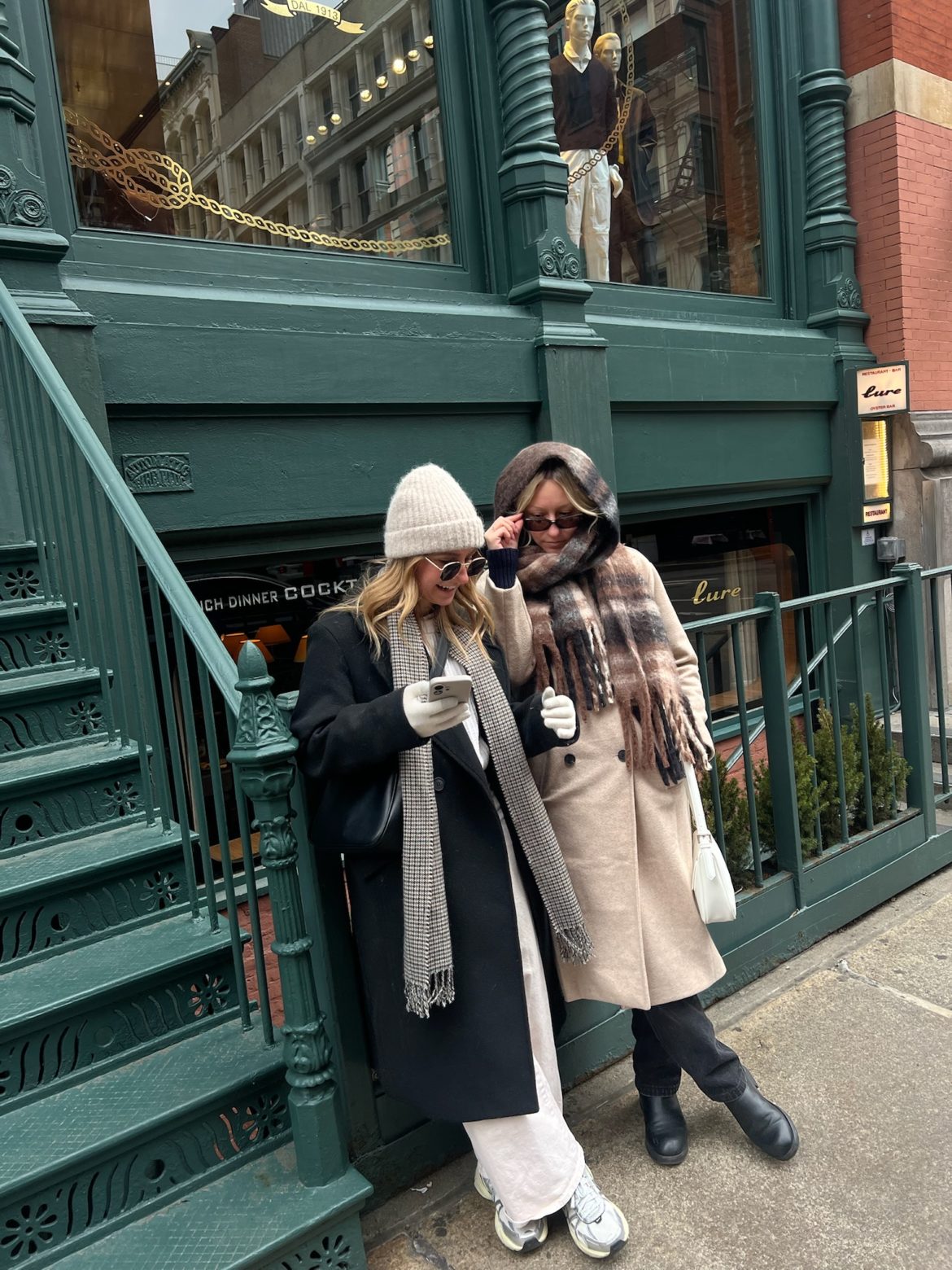
The scarf has a flexibility problem, which is a strange way to describe something this flexible. Most people wear theirs in one or two ways and leave it at that: a loop around the neck, maybe a tuck into the coat. It solves the cold. It does not necessarily do much else. Which is a genuine waste, because a scarf is one of the few accessories that can completely change the character of an outfit, add colour without committing to a new piece, and double as decoration, warmth and structure simultaneously.
Dupe Photos
The French tuck
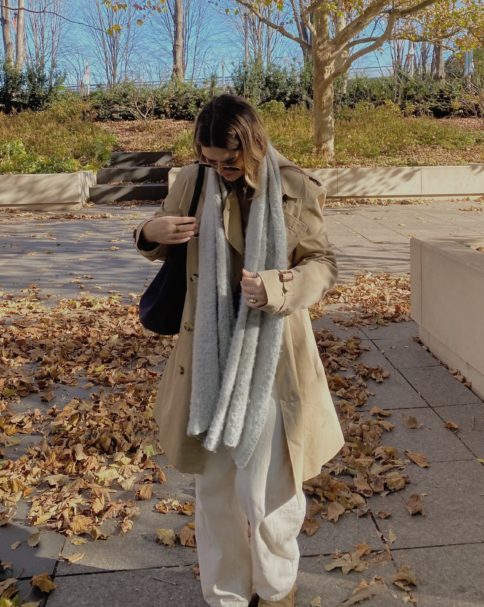
Drape the scarf around the neck and pull both ends to the front, leaving them uneven. Allow one end to hang significantly lower than the other. The asymmetry is the point: it creates a relaxed, unstudied quality that looks deliberate without being fussy. This is the most universally flattering way to wear a long scarf with a coat, blazer or heavy knit, and it works in almost any fabric weight from silk to chunky wool.
The loose loop
Fold the scarf in half lengthwise, drape it around the neck, and pull the two loose ends through the loop created by the fold. Leave it loose rather than tightening it against the throat. This creates gentle volume around the neck and collar area without restricting movement, and it holds significantly better than an untucked drape through a long day.
The crossover knot
Drape the scarf around the neck with one end shorter than the other, then cross the longer end over the shorter and tuck it upwards through the neck gap, the way you would tie a casual version of a knot. This is tidier and more polished than a loose drape, suits structured coats and a more put-together aesthetic, and keeps the scarf in place through a windy day without needing to be adjusted.
Pexels
The head wrap
A silk or lightweight scarf folded diagonally and tied under the chin, or knotted at the nape of the neck, is a classic styling move that has been cycling through fashion for decades without ever fully leaving. For everyday wear, a slightly loosened tie with the knot at the side rather than the centre looks less structured and more current. Pair with an oversized coat and a simple outfit beneath for maximum impact.
The belt over a coat
A wide woven scarf placed across the waist of a long, unbuttoned coat and tied in a loose knot at the front functions as a sash-belt, adding definition and visual interest to what might otherwise be a very straightforward silhouette. This works particularly well with long wool coats in neutral tones, where the scarf adds colour and shape simultaneously.
The bag accessory
A silk scarf tied around the handle of a structured bag, either in a bow or wrapped and tucked, is one of the more elegant and underused scarf applications. It adds a flash of colour or pattern to a neutral bag and costs nothing beyond the scarf you already own. If the scarf is long enough, drape the remaining length so that it hangs alongside the bag rather than tying it tightly, which creates a more relaxed effect.
Layered under a coat collar
Rather than wearing the scarf over the coat, tuck it inside the collar so that just a few centimetres of fabric are visible around the neck above the coat’s lapels. This keeps the warmth without adding external bulk, maintains the line of the coat, and creates a neat, layered effect. A fine-knit scarf in a contrasting colour works particularly well for this, since it shows enough to register without disrupting the coat’s silhouette.
ALSO SEE:
5 fashion hacks Fashion Editors swear by to look effortlessly chic
Featured Image: Pexels