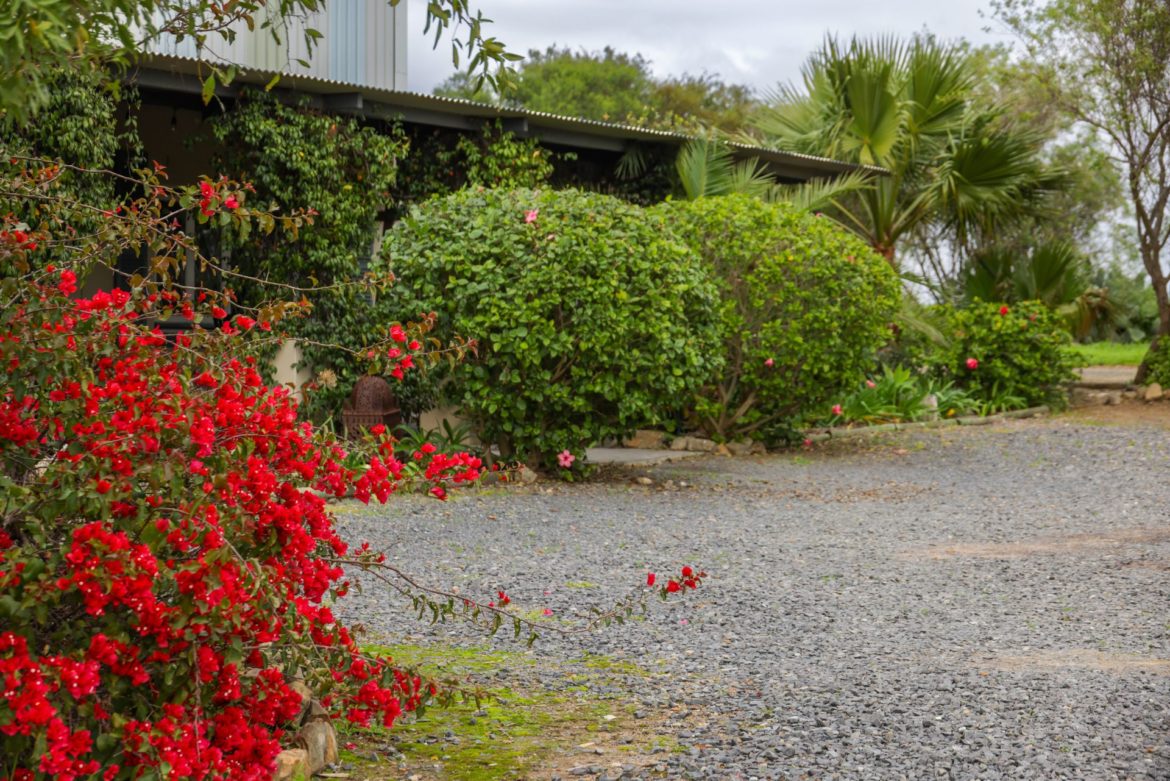
A gravel driveway does the functional work well: it drains better than concrete, handles weight without cracking and costs considerably less to install. What it sometimes lacks is the finish that makes it feel like a designed feature rather than a practical afterthought. The fix is almost always in the edging, and specifically in the choice to replace a vague, shifting boundary with something that holds the gravel in place, defines the line and gives the whole approach a considered quality it didn’t have before.
Adding a plant bed alongside gravel edging is the combination that tends to do the most. You get structure from the hard material and softness from the planting, and the result reads as genuinely designed rather than simply tidy.
Pavers or bricks for a permanent, polished edge
Concrete, clay or natural stone pavers laid flush with the gravel surface create the cleanest, most permanent edge available. They provide a hard barrier that resists displacement during heavy rain, can be colour-matched or contrasted with the house’s exterior, and give the driveway an elegance that gravel alone tends not to project. Bricks offer a very similar result with a slightly softer, more traditional quality that suits older architecture and cottage-style homes particularly well. Both require a shallow trench dug around the driveway perimeter and a sand or concrete base to ensure they sit level and stay there.
Natural stones for an organic look
For a home surrounded by natural landscape, large rounded river rocks or varying-sized local stones create an edging that feels as though it belongs to the environment rather than having been placed against it. Stones can be laid individually in a single border or grouped into a wider arrangement that blurs the line between driveway edge and garden feature. The same shallow trench and sand base applies to ensure stability.
Adding a plant bed alongside the edge
This is where the upgrade becomes an actual garden feature rather than a boundary marker. A simple paver or brick edge, with a planted bed of around 40 to 60 centimetres wide installed on the inner side, turns the driveway approach into something with real character. The planting can be as simple as a single row of lavender or rosemary for scent and soft texture, or more considered with a mix of ornamental grasses, low-growing groundcovers and seasonal bulbs.
In a South African context, this is an opportunity to use indigenous drought-tolerant plants that look after themselves with minimal intervention: Agapanthus for bold vertical structure, low-growing Plectranthus for ground coverage, or a mass planting of African daisy for seasonal colour. The north-facing side of a driveway will receive the most sun and suits more sun-loving plants; a south or east-facing boundary has more shade and needs plants selected accordingly.
Treated hardwood or pine beams
Landscape timbers, thick beams of treated hardwood or pine laid horizontally alongside the gravel, offer a more rustic and cost-effective edging that suits contemporary or farmhouse-style properties particularly well. They are less suitable for curved or winding driveways since the rigidity of the beam creates awkward joints around corners, but for a straight driveway approach they provide a satisfying, solid definition. The typical installation involves digging a shallow channel and bedding the beam into it with the top sitting at or slightly below gravel level.
Pound-in and rubber edging for flexible curves
For driveways that curve or wind, the most practical edging options are those that flex. Rubber landscape edging and metal or plastic pound-in strips can follow curves without the sectioning required by rigid materials, and neither requires significant digging, the spikes along the bottom are simply hammered into the soil at the edge of the gravel. These options are less decorative than stone or brick, but used as a base below a plant bed, they become invisible and do the practical work of containing the gravel cleanly while the plants provide the visual interest.
The maintenance consideration
A planted bed alongside a gravel driveway requires more attention than a stone or brick edge alone. Plants need seasonal trimming to keep the edge clear and prevent growth creeping into the gravel. Using a weed membrane beneath the planting soil, with a gravel or bark mulch on top, reduces the maintenance load considerably and keeps the bed looking intentional rather than overgrown. The investment in bed preparation at the outset saves significantly more time and effort than attempting to maintain a poorly prepared border later.
ALSO SEE
How to create a spa-inspired bathroom you’ll want to spend time in
Featured Image: pexels