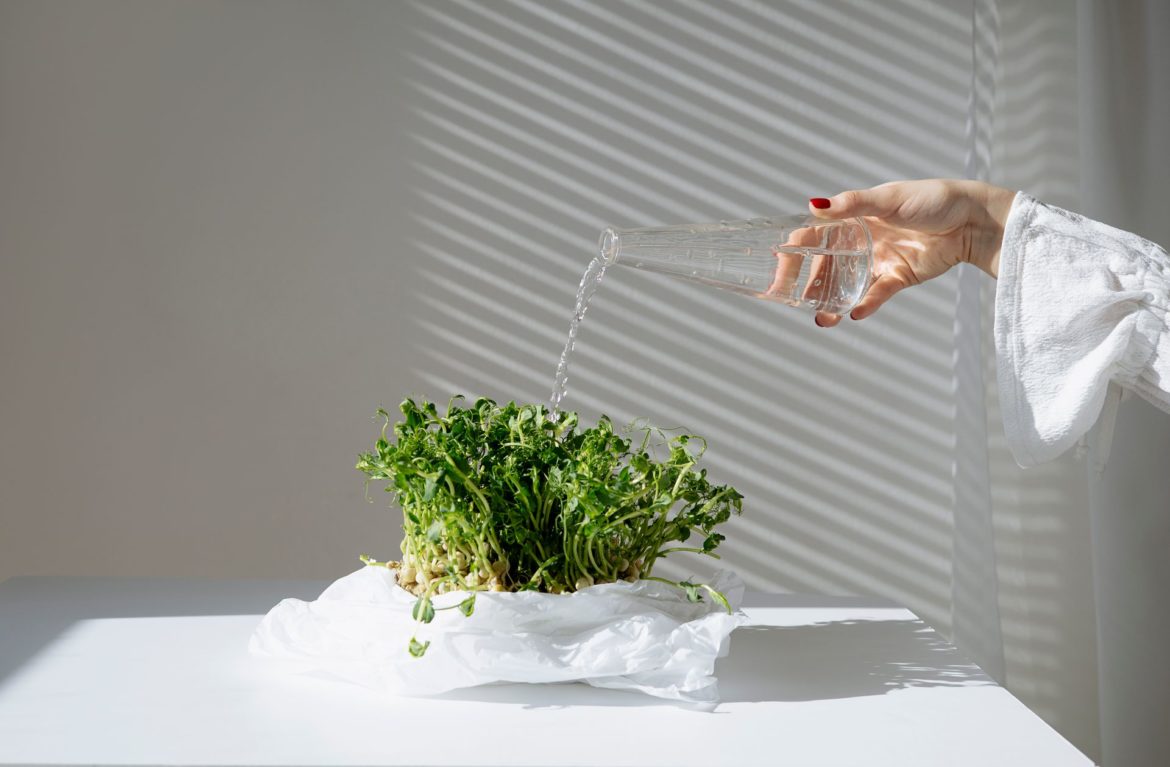
They show up as a garnish on almost everything at a certain kind of restaurant, they feature prominently in wellness-adjacent social media content, and they have been quietly appearing in the fresh produce section for the past few years. Microgreens are, at this point, unavoidable. But are they actually better for you than a leaf of mature spinach, or is this a case of something small and pretty being assigned more nutritional credit than it deserves?
What microgreens actually are
Microgreens are the young seedlings of vegetables and herbs, harvested anywhere between seven and twenty-one days after germination, once the first true leaves have appeared but well before the plant has reached anything close to maturity. Almost any vegetable can be grown as a microgreen: sunflower, pea shoots, radish, red cabbage, broccoli, coriander, basil, beetroot, kale and many others are commonly available.
They are not the same as sprouts, which are germinated seeds eaten whole, roots and all, without any soil or growing medium. Microgreens are grown in soil or a similar substrate, cut just above the surface, and contain only the green shoot and leaves. The distinction matters practically as well as botanically: sprouts carry a slightly higher food safety risk because of the conditions in which they germinate, whereas microgreens, harvested and handled properly, do not.
What the research actually says
Here is where it gets genuinely interesting. Research conducted at the United States Department of Agriculture and published in the Journal of Agricultural and Food Chemistry found that, for the twenty-five varieties tested, microgreens contained significantly higher concentrations of vitamins and other phytonutrients than their mature counterparts. Depending on the variety, the differences ranged from roughly four times higher to as much as forty times higher for certain nutrients.
Red cabbage microgreens showed particularly high levels of vitamin C. Garnet amaranth was among the richest in vitamin K1. Coriander microgreens carried high levels of lutein and beta-carotene. Sunflower microgreens are a good source of zinc and B vitamins. The critical caveat from the same research is that not all microgreens are equally nutritious. The nutrient density varies considerably between varieties, and the growing conditions, light exposure and how quickly they are consumed after harvest all affect how much of that nutritional value is actually present by the time they reach a plate.
A meaningful addition, not a miracle
What the evidence supports is that microgreens are a genuinely useful source of concentrated nutrients, not a marketing fiction. Adding a handful to a salad, blending a portion into a smoothie, or scattering them over eggs or soup introduces a range of vitamins, antioxidants and phytonutrients in a compact, flavourful package.
What the evidence does not support is the idea that microgreens can meaningfully replace a varied, balanced diet or compensate for poor nutritional habits elsewhere. The serving sizes are realistic for most people, and while the nutrient concentration is impressive relative to the plant’s size, absolute quantities depend on how much you actually eat.
Which ones to choose and how to use them
Pea shoots are mild, sweet and extremely versatile, working well in salads, stir-fries and as a topping for almost anything savoury. Radish microgreens have a pleasantly sharp, peppery flavour that holds its own in a strong salad or on an avocado toast. Sunflower microgreens have a light, nutty quality that suits both sweet and savoury applications. Red cabbage microgreens are visually striking, with deep purple stems and green leaves, and carry a mild flavour that makes them easy to add without changing the character of a dish.
If you can access them fresh, locally grown and recently harvested, they are worth using. Store them in the fridge, use them within a few days, and add them at the end of cooking rather than subjecting them to heat, which degrades both texture and the nutrients that make them worth eating in the first place.
ALSO SEE:
Featured Image: Pexels