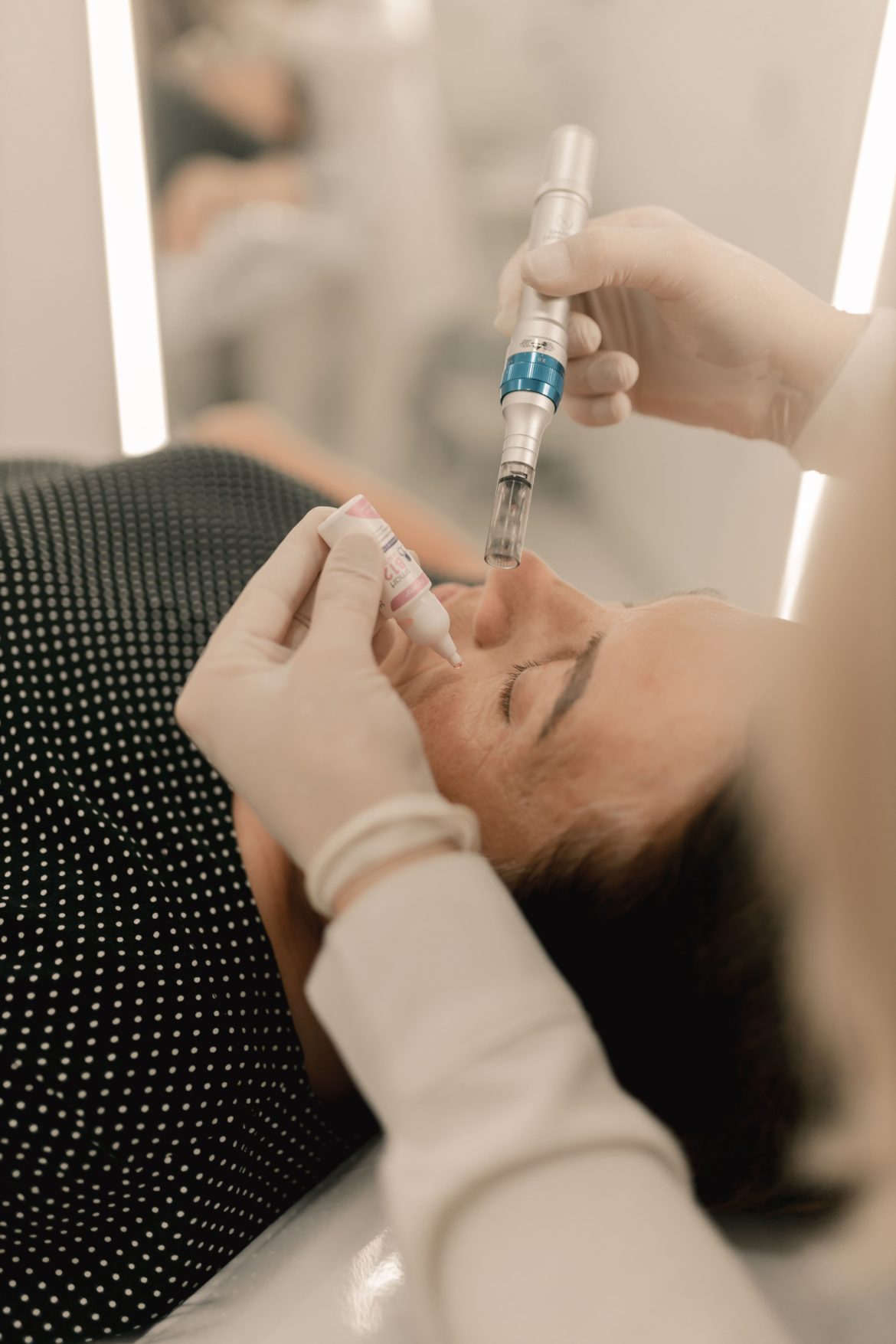
Derma-stamping has emerged as a popular option for those looking to improve skin texture, reduce scars, and stimulate collagen production. While it is often compared to microneedling, the two treatments are not exactly the same.
If you’ve been wondering whether dermastamping is worth considering, here’s everything you need to know about how it works, its benefits, and how it differs from traditional microneedling.
What is derma-stamping?
Dermastamping is a cosmetic skin treatment that uses a handheld device fitted with fine needles arranged in a stamp-like pattern. Unlike a roller that glides across the skin, a dermastamp is pressed vertically into targeted areas, creating controlled micro-injuries in the skin.
These tiny punctures trigger the body’s natural healing response, encouraging the production of collagen and elastin—two proteins responsible for keeping skin firm, smooth, and youthful-looking.
The treatment can be used on the face and body and is commonly recommended for:
- Acne scars
- Fine lines and wrinkles
- Enlarged pores
- Stretch marks
- Hyperpigmentation
- Uneven skin texture
- Hair thinning and scalp concerns
How does derma-stamping work?
When the tiny needles penetrate the skin, the body interprets the micro-injuries as wounds that need repair. This stimulates a healing process that includes increased collagen production and cell turnover.
As new skin cells develop, the treated area may gradually appear smoother, firmer, and more even in tone and texture.
Because the needles enter the skin vertically, dermastamping allows practitioners to focus on specific problem areas without dragging or pulling the skin.
The benefits of derma-stamping
Improved scar appearance
Dermastamping is particularly effective for targeting acne scars and surgical scars because it can precisely treat individual areas without affecting surrounding skin.
Boosted collagen production
Collagen naturally declines with age. By stimulating collagen synthesis, dermastamping can help improve skin firmness and elasticity.
Reduced fine lines and wrinkles
Regular treatments may soften the appearance of fine lines and improve overall skin texture.
Better product absorption
Following treatment, skincare products may penetrate more effectively, allowing active ingredients to reach deeper layers of the skin.
Suitable for sensitive areas
Because the device can target specific spots, it may be more suitable for delicate or hard-to-reach areas compared to other needling treatments.
Derma-stamping vs Microneedling: What’s the difference?
Although both treatments use tiny needles to stimulate collagen production, the application method differs significantly.
Derma-stamping
With dermastamping, the device is repeatedly pressed straight into the skin.
Key characteristics:
- Vertical stamping motion
- Targets specific areas with precision
- Less dragging of the skin
- Often preferred for individual scars and smaller treatment zones
- Can be more comfortable for some patients
Microneedling
Traditional microneedling typically uses a pen-like device that glides across larger areas of the skin while the needles rapidly move in and out.
Key characteristics:
- Continuous treatment across larger areas
- Ideal for overall skin rejuvenation
- Treats the entire face more efficiently
- Commonly used for anti-ageing concerns and texture improvement
Which treatment is better?
The answer depends on your skincare goals.
If your primary concern is a specific acne scar, stretch mark, or isolated area of pigmentation, dermastamping may offer greater precision.
If you’re looking to improve overall skin texture, reduce signs of ageing, and stimulate collagen across the entire face, microneedling may be the better option.
Many skincare professionals combine both techniques depending on the condition being treated.
What can you expect post treatment?
Immediately after dermastamping, the skin may appear red and feel slightly sensitive, similar to a mild sunburn. Most people experience:
- Mild redness
- Slight swelling
- Skin tightness
- Temporary sensitivity
Recovery time is generally short, with redness subsiding within a few days.
To support healing, it’s important to:
- Wear sunscreen daily
- Avoid harsh skincare products immediately after treatment
- Stay hydrated
- Follow your practitioner’s aftercare instructions
Is derma-stamping safe?
When performed by a qualified skincare professional using sterile equipment, dermastamping is considered safe for most skin types.
However, it may not be suitable for individuals with active acne, skin infections, eczema flare-ups, or certain medical conditions. A professional consultation is always recommended before undergoing treatment.
Derma-stamping and microneedling share the same goal – stimulating the skin’s natural repair process to create smoother, healthier-looking skin. The main difference lies in how the needles interact with the skin.
While microneedling is often chosen for full-face rejuvenation, dermastamping offers a more targeted approach that can be especially beneficial for scars, stretch marks, and specific areas of concern.
If you’re considering either treatment, consult a qualified dermatologist or aesthetic practitioner who can recommend the best option for your unique skin needs and goals.
ALSO SEE:
Glass skin decoded: The science behind the glow everyone wants
Featured Image: Pexels