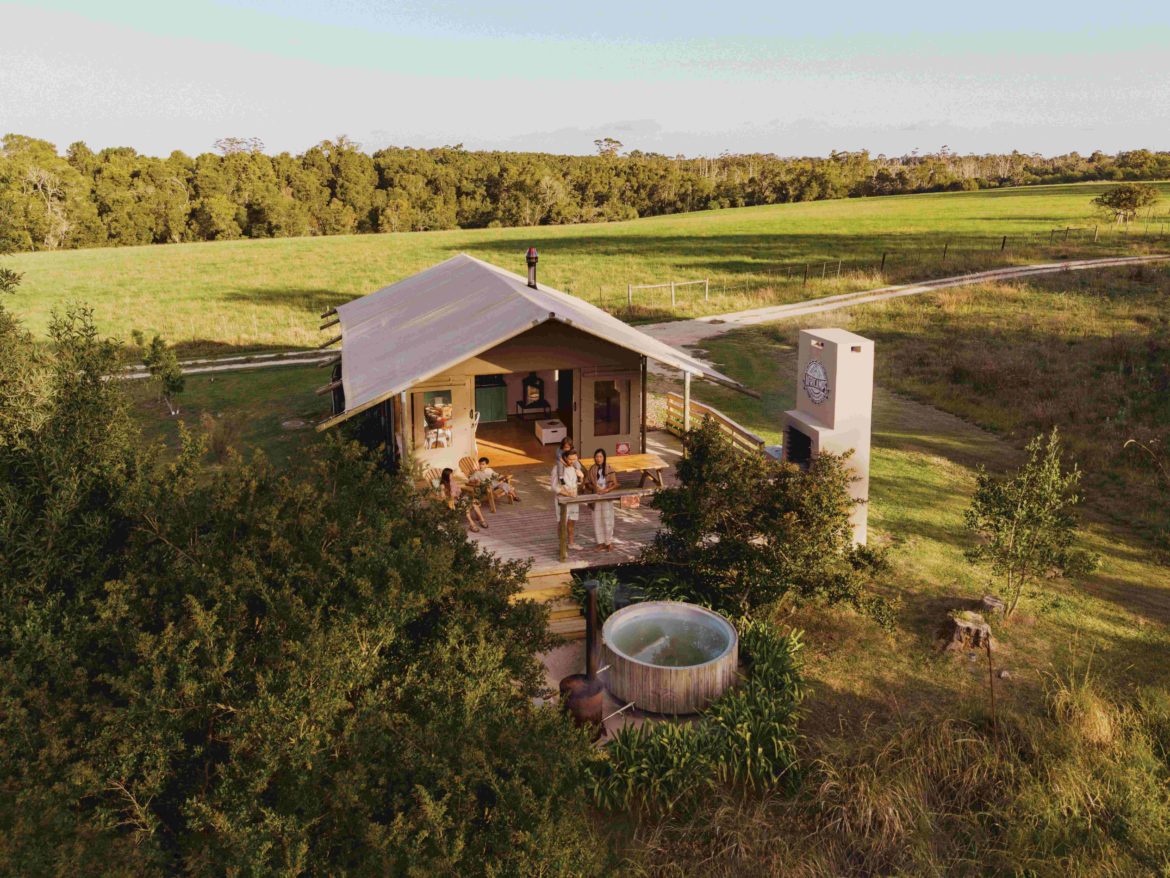
There is a particular kind of tired that no amount of annual leave seems to fix. The kind that comes from screens and schedules and the low hum of being permanently reachable. Winter, more than any other season, makes you feel it most acutely. And if you have children, you know that the ideal family getaway needs to do two things at once: give you proper rest while keeping them genuinely, happily occupied.
Glamping has quietly become one of the most compelling answers to that problem. Not the all-inclusive, fully-catered version with a luxury price tag attached, but the self-catering, kids-roasting-marshmallows-while-you-soak-in-a-hot-tub kind. The kind where dinner is something you cook together, bedtime is negotiated around a sky full of stars, and the morning alarm is replaced by birdsong. AfriCamps Boutique Glamping has built its name on exactly this experience, and with 19 locations across South Africa, it has quietly become the go-to for families who want something more than a hotel room.
Nature as a teacher
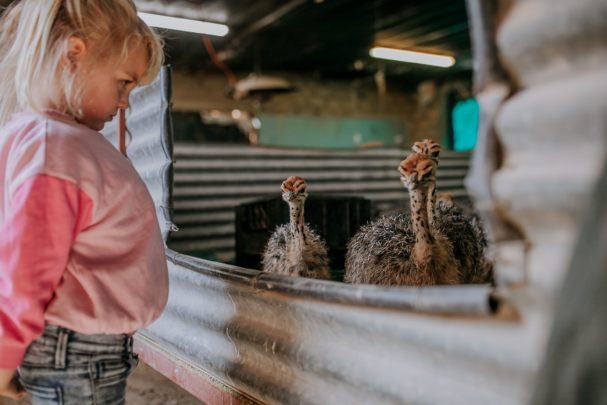
What sets AfriCamps apart from a conventional getaway is how naturally it turns travel into something educational, without it ever feeling like a lesson. Set on working farms, private estates and nature reserves, each of the 19 locations places children inside environments that urban life rarely offers.
At AfriCamps at Oakhurst in Wilderness, kids collect eggs, meet farm animals, and watch calves being fed. At AfriCamps Waterberg, families join guided tracking adventures in the bush, identifying signs that buffalo or rhino passed through hours earlier. Birdwatching, insect spotting, stargazing and exploring indigenous flora fill the gaps between. These are the kinds of experiences that tend to stick, precisely because they are immersive and rooted in the real world in a way that no classroom can replicate.
The surrounding regions add another layer. Depending on which AfriCamps location you choose, the wider landscape might include the Cango Caves, the Drakensberg mountains, or the drama of the Panorama Route. South Africa’s backyard is extraordinary, and AfriCamps positions families right inside it.
Conservation up close
For families who want something with even more depth, several AfriCamps locations sit near South Africa’s most significant conservation areas, including private game reserves and regions close to Kruger National Park. Guided game drives, bush walks and time spent with knowledgeable rangers bring conservation to life in a way that is hard to forget. Watching elephants move through the bush, spotting hippos on a river cruise, or ticking off Big Five sightings transforms wildlife protection from an abstract concept into something children carry with them long after the holiday is over.
Comfort that does not compromise on adventure
AfriCamps has built its reputation on the understanding that roughing it and genuine comfort are not mutually exclusive. Spacious canvas tents, fully equipped kitchens, cosy living areas and private outdoor spaces make up the standard offering, with the wood-fired outdoor hot tub a particular highlight at several locations. It is, by most measures, the best of both worlds: the stillness of nature paired with the ease of a well-considered self-catering stay.
One stop or a full route across the country
AfriCamps works just as well as a single-destination weekend escape as it does the foundation of a longer, multi-stop family adventure. With 19 locations spread across the country, families can design their own glamping route: starting in the Winelands, moving through the Karoo, weaving along the Garden Route, and ending with a safari-style stay near Big Five territory. Each location is a different chapter, different scenery, different activities, and fresh reasons to keep exploring.
10 things kids can do at AfriCamps
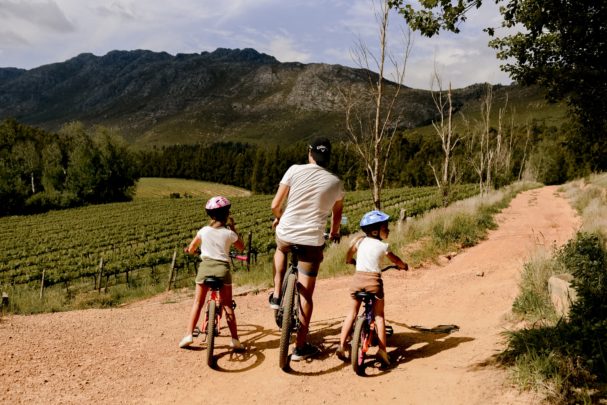
Across all 19 locations, AfriCamps offers no shortage of experiences for younger travellers. A few standout activities worth knowing about: feeding and interacting with farm animals in Wilderness; horse riding through scenic landscapes in Stanford; game drives around Kruger, Addo or Hluhluwe; chasing waterfalls and swimming in streams in the Cederberg or the KwaZulu-Natal Midlands; fishing in farm dams in Swellendam, Hoedspruit, Pongola or Hazyview; stargazing in the Waterberg or Hex Valley; meeting ostriches and spotting meerkats in Oudtshoorn; exploring indigenous plants and birdlife in Robertson, Magaliesberg or the Drakensberg; cycling on open trails in Wellington and Magoebaskloof; and beach adventures in Plettenberg Bay.
For more information and bookings, visit africamps.com.
ALSO SEE:
Featured Image: Supplied