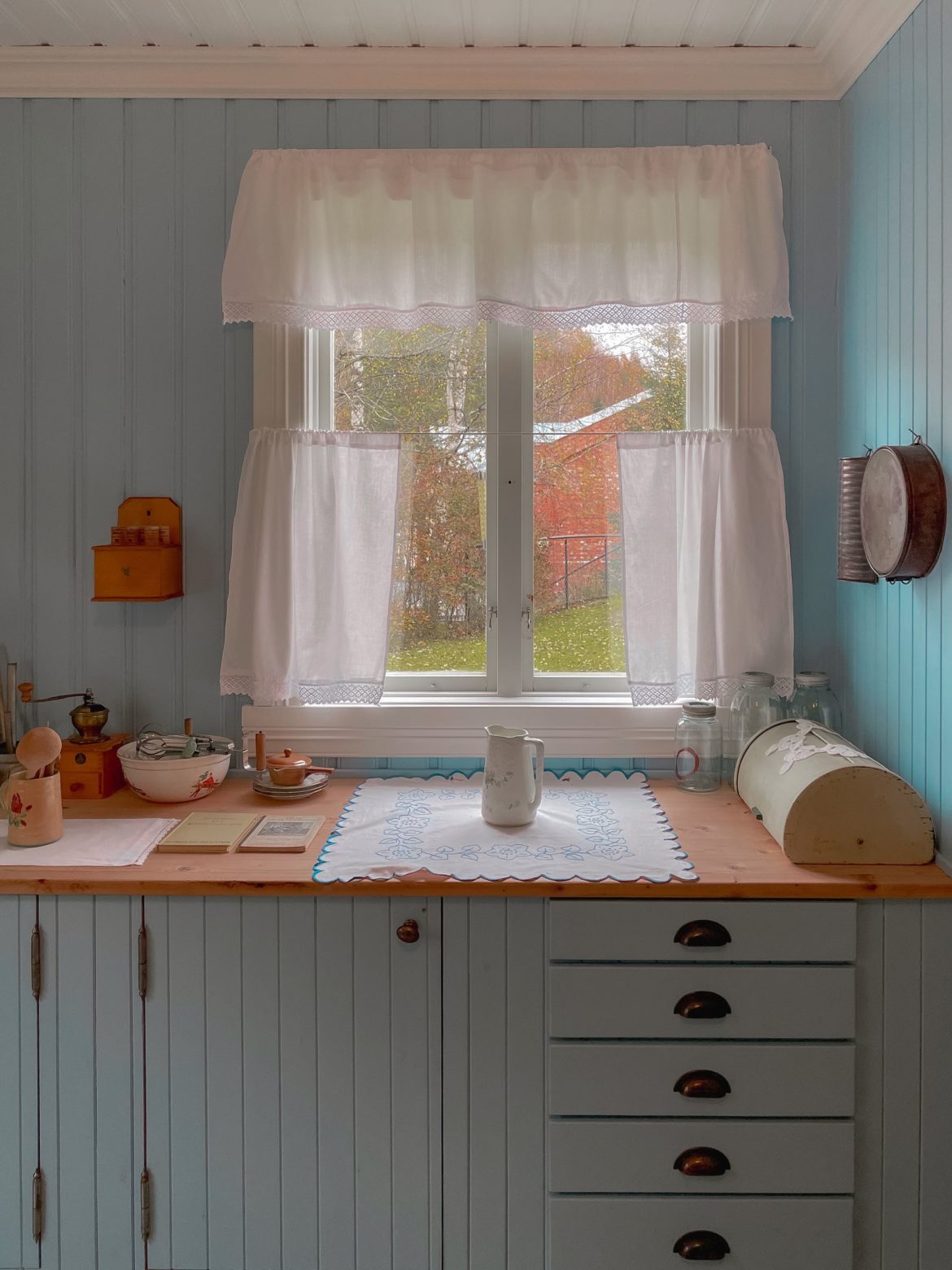
The kitchen window is a surprisingly consequential design decision. It’s one of the first things you see when you walk into the room, it frames your view while you’re cooking, and it determines how much privacy and light control you have during the hours you spend most in the house. The choice between cafe curtains and a kitchen blind isn’t simply aesthetic, though the aesthetic dimension is real enough. It’s also about how the room actually functions and what kind of kitchen atmosphere you’re trying to create.
What cafe curtains bring to a kitchen
Cafe curtains cover only the lower half of a window, leaving the upper portion exposed and uninterrupted. The effect is softness, both visually and in terms of light: the top of the window remains bright and open, while the lower half offers privacy from street level or from neighbouring properties. The light that enters is filtered and warm rather than harsh.
Stylistically, cafe curtains belong to a cottage, farmhouse or vintage-inspired kitchen. They work beautifully with open shelving, painted cabinetry, terracotta or ceramic tiles, and the kind of kitchen that already has some warmth and personality. In a very clean, modern kitchen they can feel slightly at odds with the overall palette.
The practical consideration is fabric care. Kitchen curtains live in an environment with steam, cooking smells and the occasional grease splash. Linen, cotton and cotton blends work best because they’re washable and they hang well even after repeated washing. Heavier fabrics that require dry cleaning are a poor choice for this application.
What kitchen blinds offer instead
Kitchen blinds, whether roller, Roman or slatted, offer full window coverage and significantly more control over both light and privacy. A roller blind can be pulled down to completely block a view in the evening, raised to let in a wash of morning light, or stopped at any point in between. That flexibility matters in a room that gets used at different times of day in different ways.
Blinds sit flat against the window frame, which means they don’t intrude into the kitchen space at all. In a smaller kitchen or an open-plan layout where the window is adjacent to a work surface, this is a genuine practical advantage. They’re also straightforward to wipe down, which matters in a cooking environment where surfaces near the hob or sink accumulate grease and moisture.
Modern kitchen blinds have improved enormously in terms of aesthetic range. Linen-look rollers, Roman blinds in warm neutrals and woven natural blinds all work in kitchens where the goal is a polished but warm result.
The case for combining both
One of the most considered kitchen window treatments involves using both elements together: a simple roller or Roman blind for light control and practicality, with cafe curtains or a short fabric valance added below for texture and warmth. This approach gives you the functional advantages of a blind with the visual softness of fabric, and it’s particularly effective in kitchens that have character in the architecture but need both practicality and personality in the window treatment.
How to decide
The starting point is the kitchen itself. A modern, minimal kitchen leans toward blinds. A kitchen with painted cabinetry, stone surfaces and some existing warmth can carry cafe curtains beautifully. Kitchens that get a lot of morning light and have windows close to a hob should prioritise wipe-clean practicality over fabric softness. Kitchens that face a neighbouring building or a street where privacy is important should prioritise full coverage that a blind provides over the partial coverage of a cafe curtain.
If you’re still genuinely undecided, choose the blind first and add the curtain later. It’s significantly easier to add fabric than to remove it when you’ve changed your mind.
ALSO SEE:
Is your home environment helping or hurting your mental health?
Featured Image: Pexels