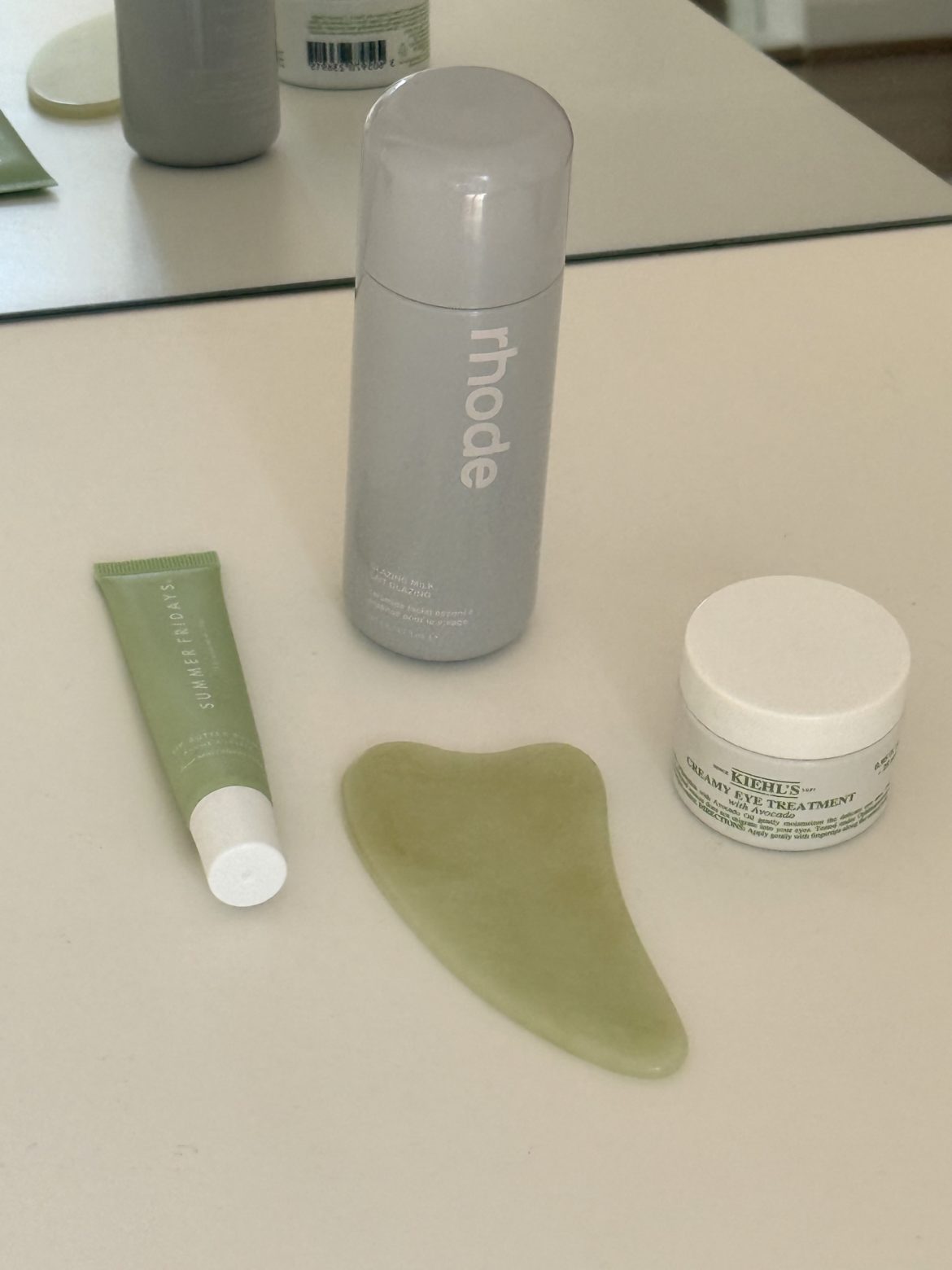
At some point in the last few years, a smooth stone or a jade roller became as standard on the bathroom shelf as moisturiser. Both gua sha tools and face rollers have had their moment in the spotlight on TikTok, with before-and-after videos promising sculpted jawlines, deflated under-eyes and a luminosity that no serum could apparently match. The questions are reasonable: do they actually work? And if so, which one works better?
The honest answer, as with most things in beauty, is: it depends on what you are expecting them to do. Some of the benefits attributed to these tools are supported by real physiological evidence. Others belong firmly in the category of wishful marketing. Here is a clear-eyed look at both.
What the research actually shows
A 2025 randomised controlled trial published in the Journal of Cosmetic Dermatology is the most rigorous head-to-head comparison of the two tools to date. Researchers assigned thirty-four women to either a facial roller or a gua sha routine for eight weeks, with participants completing ten-minute sessions five times a week. Both groups showed measurable improvements in facial contour, but through different mechanisms: gua sha produced changes primarily through improvements in muscle tone, while the facial roller group showed improvements in skin elasticity.
These are meaningful findings. Measurable reductions in facial surface distances, essentially a modest improvement in jawline definition and facial contour, were observed in the gua sha group after consistent, prolonged use. Skin elasticity improvements in the roller group suggest enhanced circulation and potential support for the skin’s structural properties over time. Neither outcome is dramatic, and neither happens after a single session, but both are real and measurable.
What gua sha can genuinely do
Gua sha has roots in traditional Chinese medicine, originally used as a therapeutic technique on the body to stimulate circulation. The facial adaptation is considerably gentler, using smooth-edged stones to apply targeted pressure across the face and neck. What the evidence supports is this: regular facial gua sha improves localised blood and lymphatic circulation, helps release muscular tension in the face and jaw, and with consistent practice over weeks, can produce modest improvements in facial contour by reducing fluid retention and improving muscle tone.
The immediate effect after a gua sha session, the temporarily lifted, brighter and slightly more defined appearance, is largely the result of increased blood flow and reduced localised puffiness. It is real, but it is also temporary. The cumulative effects, supported by the 2025 trial, require commitment: ten minutes a day, five days a week, for at least eight weeks before meaningful changes are observable.
What gua sha cannot do, despite frequent claims, is stimulate collagen production, detoxify the skin or produce permanent structural change. No study has demonstrated collagen synthesis from facial gua sha. The skin does not accumulate toxins requiring manual drainage. These claims have no basis in current physiology.
What face rollers can genuinely do
The face roller, whether jade, rose quartz, stainless steel or any other material, works through a different mechanism. The rolling action promotes lymphatic drainage, which reduces puffiness, and the consistent pressure and movement support microcirculation, delivering more oxygen and nutrients to skin cells. The 2025 study found that roller users showed improvements in skin elasticity after eight weeks, suggesting that regular use may support the skin’s structural resilience over time.
The cooling effect of stone rollers, particularly when refrigerated, provides additional benefit for morning puffiness, especially around the eyes. The gentle pressure and repetitive motion also have a measurable tension-releasing effect on facial muscles, which can soften the appearance of expression lines caused by habitual tension rather than volume loss.
What rollers cannot do is physically reshape bone structure or produce the more targeted muscle-release effects that gua sha’s scraping technique achieves. They are gentler tools with gentler results.
Which one is better for you
The answer depends on your primary concern. If you are after improved facial contour, muscle relaxation and a more defined jawline over time, gua sha is the more targeted choice, provided you are willing to put in the technique and consistency it requires. Done carelessly or too aggressively, gua sha can cause irritation or broken capillaries, so technique matters.
If your primary concerns are puffiness, dull skin, lack of elasticity and a gentle daily ritual that requires minimal technique, the face roller is more forgiving and equally effective for those specific outcomes. The two tools are also genuinely complementary: beginning with gua sha for targeted muscle work and following with a roller to soothe and finish is a combination that addresses different things simultaneously.
The one thing both tools require
Neither tool produces meaningful results without a serum or oil applied first. Dragging either a gua sha stone or a roller across dry skin creates friction, risks irritating the skin barrier, and significantly reduces the effectiveness of the technique. A few drops of facial oil or a hydrating serum provide the slip both tools need to glide correctly. Think of the tool as the vehicle and the serum as the delivery mechanism: the combination works considerably better than either would alone.
Consistency, realistic expectations and proper cleansing of the tools between sessions round out what makes these rituals genuinely useful rather than expensive shelf decoration. Used correctly and regularly, both tools deliver real if modest, benefits. Used once or twice after a persuasive TikTok video, they deliver a temporarily nicer bathroom counter and not much else.
ALSO SEE:
Confidence in a compact: How healing can start with a brush stroke
Featured Image: Dupe Photo