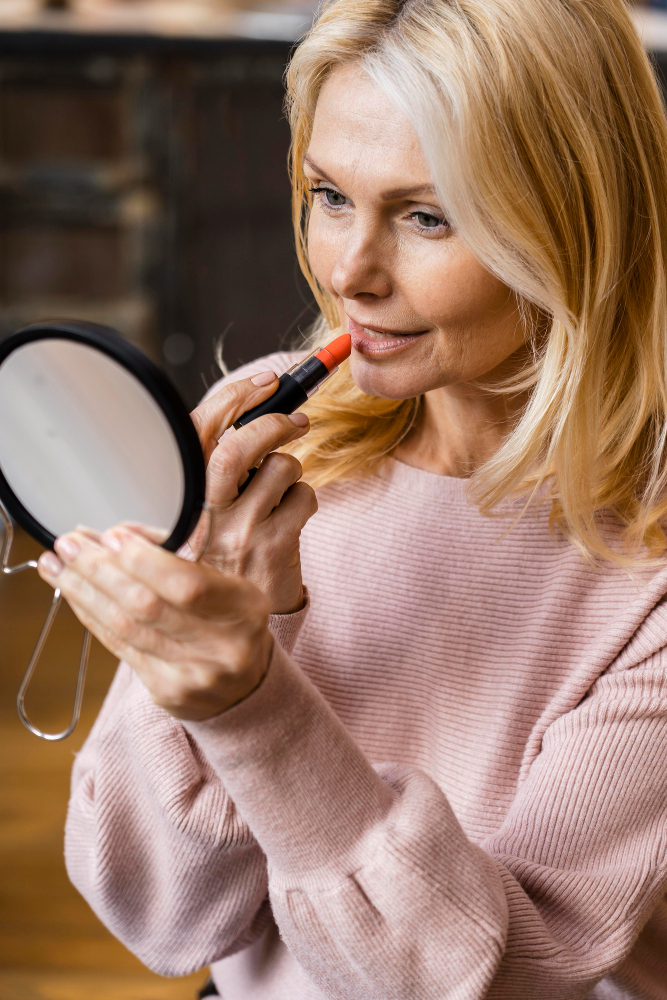
In a fast-paced world where women are constantly balancing responsibilities, expectations and personal goals, moments of self-connection can be hard to come by. While make-up is often dismissed as purely cosmetic, for many it serves a deeper purpose. It becomes a tool for grounding, a spark for creativity and a quiet but powerful way to reclaim confidence.
Far from being superficial, make-up can act as a form of therapy – one that fits neatly into a compact. Here’s how:
ALSO SEE: Over 30? Here’s a skincare and make-up routine for you
The mirror as a mood booster
For many women, make-up isn’t just about appearance – it’s a ritual. Sitting down in front of a mirror, blending foundation or perfecting eyeliner, creates a moment of pause in an otherwise busy day. It’s a chance to check in with yourself, focus on something creative and set the tone for how you want to feel.
Psychologists often point to the value of routine in managing stress and anxiety. Repetitive, intentional actions – like applying make-up – can provide a sense of stability and predictability. In this way, a daily beauty routine becomes less about aesthetics and more about grounding yourself before stepping out into the world.
Small acts, big confidence
There’s something powerful about small transformations. A swipe of lipstick or a touch of mascara can shift not only how you look, but how you carry yourself. It’s not about hiding flaws – it’s about highlighting what makes you feel good.
Research in behavioural psychology suggests that when we perceive ourselves as more put-together, we’re more likely to engage confidently in social and professional situations. This phenomenon – sometimes called ‘enclothed cognition’ – highlights how external presentation can influence internal mindset. Make-up, in this sense, becomes a tool for stepping into a more assured version of yourself.
Creativity without rules
Unlike many areas of life, make-up has no strict rulebook. Want bold glitter at 9 am.? Go for it. Prefer a barely-there natural glow? That’s just as valid. This freedom makes make-up a unique form of self-expression. It allows you to experiment with identity, mood and style – all without long-term commitment. One day you’re soft and subtle; the next, dramatic and daring. For many, this creative exploration can be deeply therapeutic – similar to painting or journalling – offering an outlet for emotion that doesn’t rely on words.
A form of self-care, not obligation
It’s important to draw a line: make-up should never feel like a requirement. Its therapeutic value lies in choice, not pressure. When used as a tool for self-care rather than a mask to meet expectations, it becomes empowering.
The beauty industry can sometimes blur this boundary, promoting perfection as the goal. But real self-care isn’t about covering up, it’s about tuning in. That might mean a full glam routine one day, and a completely bare face the next. Both are equally valid expressions of confidence.
The science of feeling good
There’s also a sensory element at play. The textures, scents and tactile experience of applying make-up can stimulate the senses in a comforting way. Similar to skincare routines, these small sensory pleasures can trigger positive emotional responses and even reduce cortisol levels over time.
Additionally, taking time for yourself – even just ten minutes in the morning – can reinforce a sense of self-worth. It sends a subtle but important message: I’m worth this time and care.
More than skin deep
Make-up won’t solve everything – but it can be a surprisingly powerful ally. It offers a moment of creativity, a boost of confidence and a reminder that self-expression matters.
At the end of the day, confidence doesn’t come from a compact – but sometimes, it helps you find it. And in a world that constantly demands so much, those small, intentional moments of self-connection can make all the difference.
ALSO SEE:
Featured Image: Freepik