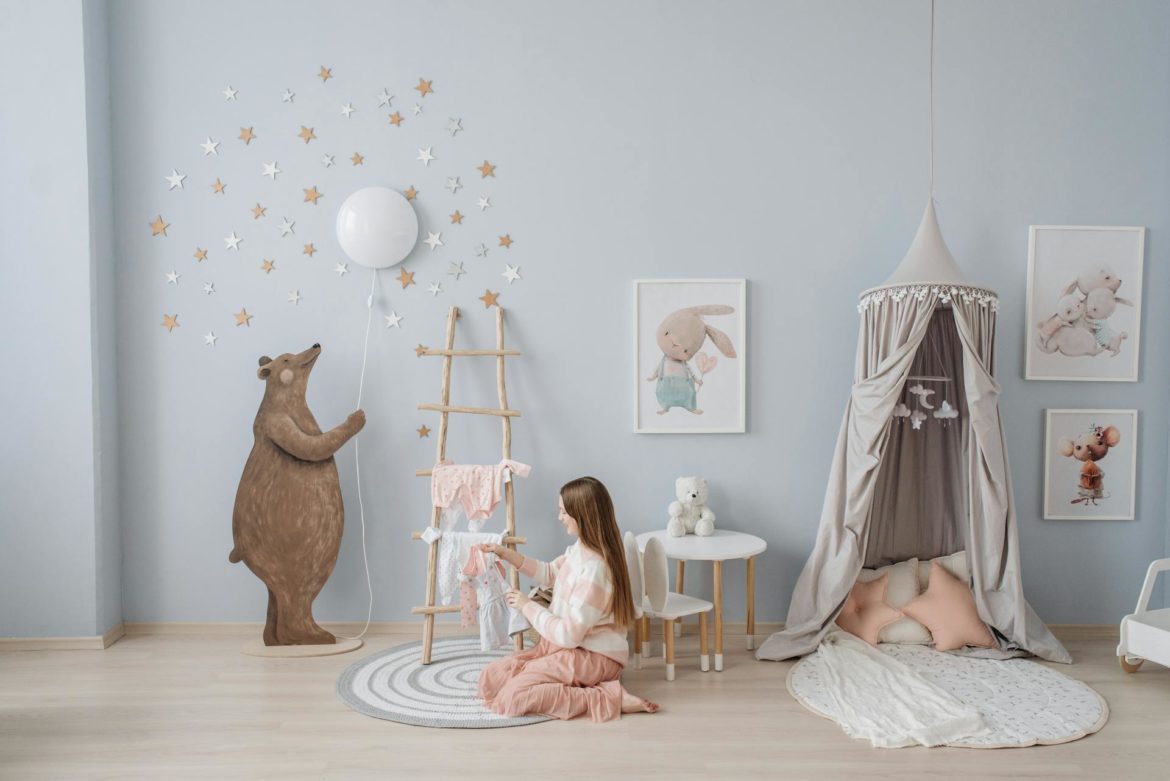
Choosing a colour for a nursery feels like an aesthetic decision, but the research suggests it is also a physiological one. Colour influences mood, alertness, heart rate and sleep quality in measurable ways, and those effects are relevant in a room where a child will spend a significant portion of their early development. The science does not produce a single right answer, but it does offer a framework that is considerably more useful than choosing between pink and blue.
How colour affects the body
Warm colours, spanning reds, oranges and yellows, are physiologically activating. They raise heart rate and blood pressure, stimulate the mind and create a sense of energy and warmth that can feel welcoming in small doses. In a nursery, this activation quality is a double-edged quality: it supports engagement and development during waking hours but works against the calm that sleep requires. Bold, saturated versions of these colours used across entire walls are the most likely to overstimulate; softer, more muted expressions are more manageable.
Cool colours, including blues, greens and soft purples, work in the opposite direction. They lower physiological arousal, reduce blood pressure and heart rate, and create a sense of spaciousness and calm. For sleep-challenged households, the case for a cool-toned nursery has genuine physiological backing. The risk with cool palettes is that they can feel stark or impersonal if not balanced carefully with warm textiles, natural wood and soft lighting, which address the coldness without undermining the calming effect.
What the research says about specific colours
Blue has the most robust research support for calming effects. It measurably reduces anxiety and aggression and has a slightly cooling effect on body temperature, which is useful in warm climates. For children who struggle with settling, or who are prone to overstimulation, a blue environment provides physiological support that goes beyond decoration.
Green sits at the centre of the visible spectrum and is consistently rated as the most restful colour. Its associations with nature make it feel simultaneously calming and alive, and some research suggests it supports concentration and may benefit reading development in older children. Sage, mint and olive are all warmer, more liveable expressions of green that avoid the clinical quality of saturated versions.
Yellow in soft, muted tones supports concentration and is associated with optimism and mental clarity. In its brighter, more saturated forms, it can tip into overstimulation, particularly for babies, who tend to find high-contrast, high-saturation environments harder to settle in. The difference between a soft warm cream-yellow and a bold sunflower yellow is significant in a nursery context.
Pink in its softer expressions creates a genuinely calming atmosphere and has broad appeal across early childhood. The caution with pink is longevity: it can become irritating with extended exposure, and children’s colour preferences shift considerably as they grow, which means a room painted entirely in saturated pink may require repainting sooner than a more neutral choice.
The case for neutrals
Warm neutrals, soft whites, creams, warm greys and muted taupes impose very little on the developing sensory environment and age considerably better than more specific colour choices. They allow other elements in the room, such as textiles, artwork, natural light, and furniture tone, to do the work of creating warmth and character, and they can be updated with accessories as the child’s preferences emerge without requiring a full repaint.
A neutral base with deliberate accent colour, a painted alcove, a coloured wardrobe, a set of cushions, gives the flexibility to introduce colour psychology intentionally without committing the whole room to it. This approach also allows the palette to shift gradually as the child moves from infancy through toddlerhood and beyond, where the requirements of the space change considerably.
Where instinct fits in
Colour psychology describes tendencies rather than universal rules. Cultural associations, personal history and individual temperament all shape how a colour is experienced, and these factors are as real as any physiological effect. A child who clearly thrives in a warm orange environment is not an anomaly: their nervous system is telling them something accurate about what they need.
The research is most useful at the margins, when choosing between a highly stimulating option and a calmer one for a child who already struggles with sleep, or when considering how a colour will serve the room across several years rather than just the first few months. Used alongside observation and instinct rather than in place of them, it makes the decision considerably more informed without making it prescriptive.
ALSO SEE:
Featured Image: Pexels