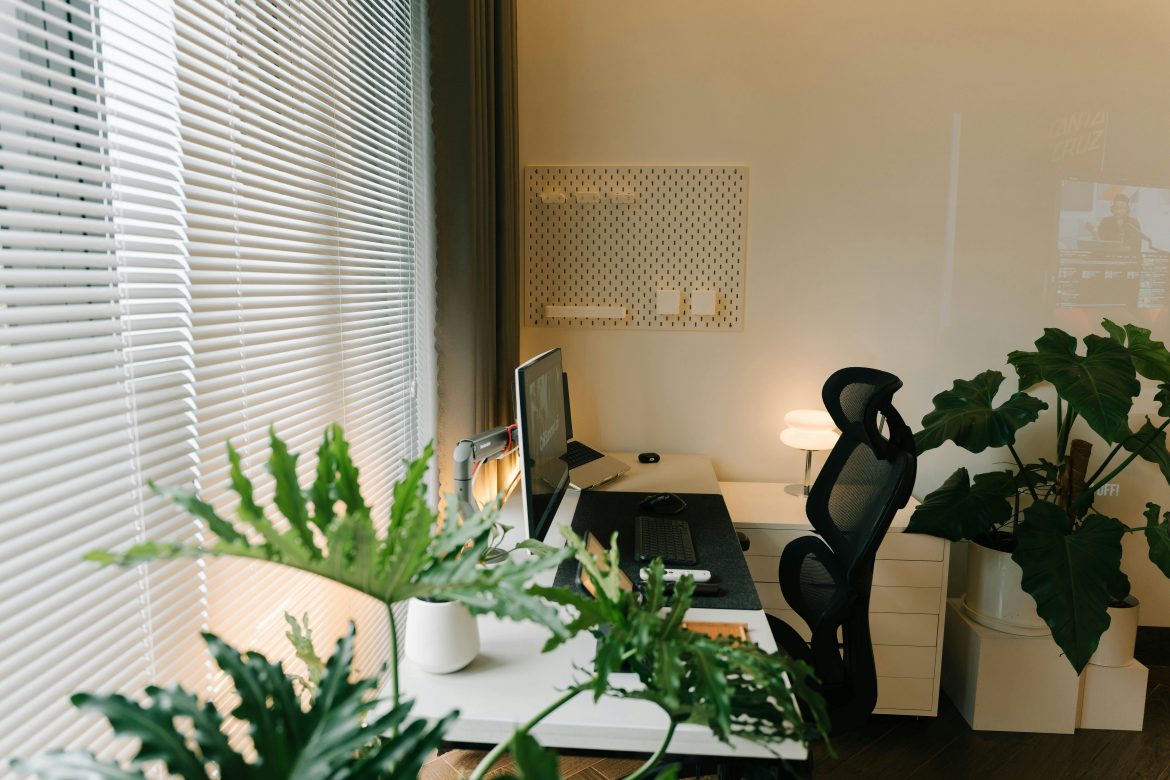
A good home office does three jobs at once: it keeps you comfortable for long stretches, it looks professional on camera, and it helps you focus. You do not need a spare room or designer budget to get there. You do need a plan for layout, light, sound and storage that works with how you actually work.
Start with purpose and placement
Decide what this space must do every day. If you mostly take calls, prioritise an uncluttered backdrop and soft acoustics. If your work is deep-focus writing, put the desk where you get the least interruption and fewest visual distractions. In a small flat, carve out a corner with a slim desk facing a wall or window, then turn your chair ninety degrees for meetings so your background is calm and consistent.
Get the camera view right
Your background reads as part of your CV. Aim for simple and neutral: a plain wall, a bookcase with breathing space, one framed print or a plant. Avoid beds, TVs and laundry piles in the shot. Position your webcam a touch above eye level and sit about an arm’s length away. Natural light in front of you is flattering; if you work after dark, add a small key light angled slightly to one side to avoid glare.
Light in layers
Relying on a single overhead fitting tires the eyes and washes you out on calls. Give yourself three sources: a task lamp on the desk, soft ambient light behind the monitor or on a shelf, and a touch of natural light if you have it. Use warm to neutral bulbs around 3000–4000K to keep skin tones natural on video and reduce strain.
Sort the ergonomics once
Comfort is productivity. Your screen top should sit roughly at eyebrow height, shoulders relaxed, forearms parallel to the desk. If your chair is basic, upgrade the surface you sit on with a thin seat cushion and add a small lumbar pillow. A footrest can be as simple as a sturdy box. A separate keyboard and mouse let you place the laptop higher without wrecking your neck.
Tame cables and tech clutter
Visual mess equals mental mess. Route leads down the back leg of the desk, gather them with Velcro ties, and stick a small power strip underneath so only one cable drops to the wall. Hide the printer on a low shelf. Keep only the devices you use daily within reach. Spare phones, tablets and chargers live in a labelled tray so they are not creeping into frame.
Storage that earns its keep
Think vertical first. Floating shelves above the desk keep reference books and storage boxes off the worktop. A shallow pedestal or trolley takes paper, stationery and tech bits. Use closed storage for anything scruffy and open storage for things you are happy to see. If your office shares a room, a closed cabinet also acts as a visual boundary so work does not spill into evening.
Calm colour, soft sound
Mid-tone neutrals and soft greens are easy to live with on long days and read well on camera. Add life with texture rather than bright splashes. A rug, curtains, upholstered chair or even a pinboard will cut echo and make calls clearer. In very hard-sounding rooms, stick a felt panel or cork board behind the screen and park a plant nearby to break up sound.
Scale for your space
In a compact home, choose a narrow desk with rounded corners so it feels lighter. Shallow shelves keep the floor clear. If you must work from a bedroom, set a low bookcase or folding screen behind the chair so the bed never makes an appearance. In a larger room, float the desk with space to walk around it, and create a second perch for reading or planning so you can change posture without losing focus.
Give everything a home
Keep what you touch every day on the desk: laptop, lamp, notebook, pen pot, water. Weekly tools live in the top drawer. Monthly or project items go on a shelf. Clear the surface at the end of the day in under two minutes. A small catch-all tray for keys, lip balm and earbuds stops the slow creep of clutter that makes you look unfocused on video.
Add cues that help you work
A small plant improves mood and softens the frame. A diffuser with a single calm scent can mark the start of the day. A wall clock stops you from checking your phone. These are tiny, but they turn the space into a routine you can trust.
A five-point check before your next call
-
Background neutral, tidy and the same every time
-
Camera at or just above eye level, light in front not behind
-
Desk clear except essentials, no spare screens in view
-
Chair height set for relaxed shoulders, feet supported
-
Door or boundary set, notifications off
The takeaway
The best home offices look effortless because every choice pulls in the same direction: clear view, kind light, quiet sound, comfortable body and tools within reach. Design for how you work on your best days, then make it easy to maintain on your busiest ones.
ALSO SEE:
Featured Image: Pexels