Once upon a time, travel meant keyrings, fridge magnets and “I ❤️ Paris” tote bags stuffed into an already overpacked suitcase – all for family and friends back home. Today, travellers are craving something different. Something lighter. Something more meaningful. And that’s why experiential travel is quietly replacing traditional souvenir shopping.
Instead of collecting things, people are collecting feelings, moments and memories — the kind that linger long after the trip is over.
From objects to experiences
Modern travellers are more conscious now of what they consume, how they travel and what they bring back home. Souvenirs often end up gathering dust, but experiences become stories we retell, photos and videos we revisit and emotions we carry with us.
Experiential travel prioritises presence over possessions, connection over consumption and memories over material items.
Whether it’s learning how to make pasta from a nonna in Italy, swimming in cold Nordic waters at sunrise, or walking barefoot through a historic medina, the experience becomes the keepsake.
The rise of memory-driven travel
Travel today is less about ticking off landmarks and more about how a place makes you feel. Travellers want to move slower, engage with locals, participate in rituals, food and daily life and leave with a deeper understanding of a destination.
This shift has also changed how we document our trips. It’s no longer just about photos for social media — it’s about capturing memories in tactile, emotional ways.
The clay & play dough travel trend
One of the most beautiful manifestations of this shift is a growing creative travel ritual – carrying a small piece of play dough or air-dry clay to collect textured impressions from the places you visit.
Instead of buying souvenirs, travellers gently press clay against:
- Cobblestone streets
- Ancient walls
- Tree bark
- Architectural details
- Decorative tiles
- Natural rock formations
The result? A physical imprint of the place — its texture, its age, its story.
Once home, these clay impressions can be:
- Used as stamps for journaling or artwork
- Turned into ceramic keepsakes
- Pressed into air-dry clay tiles
- Framed as minimalist art pieces
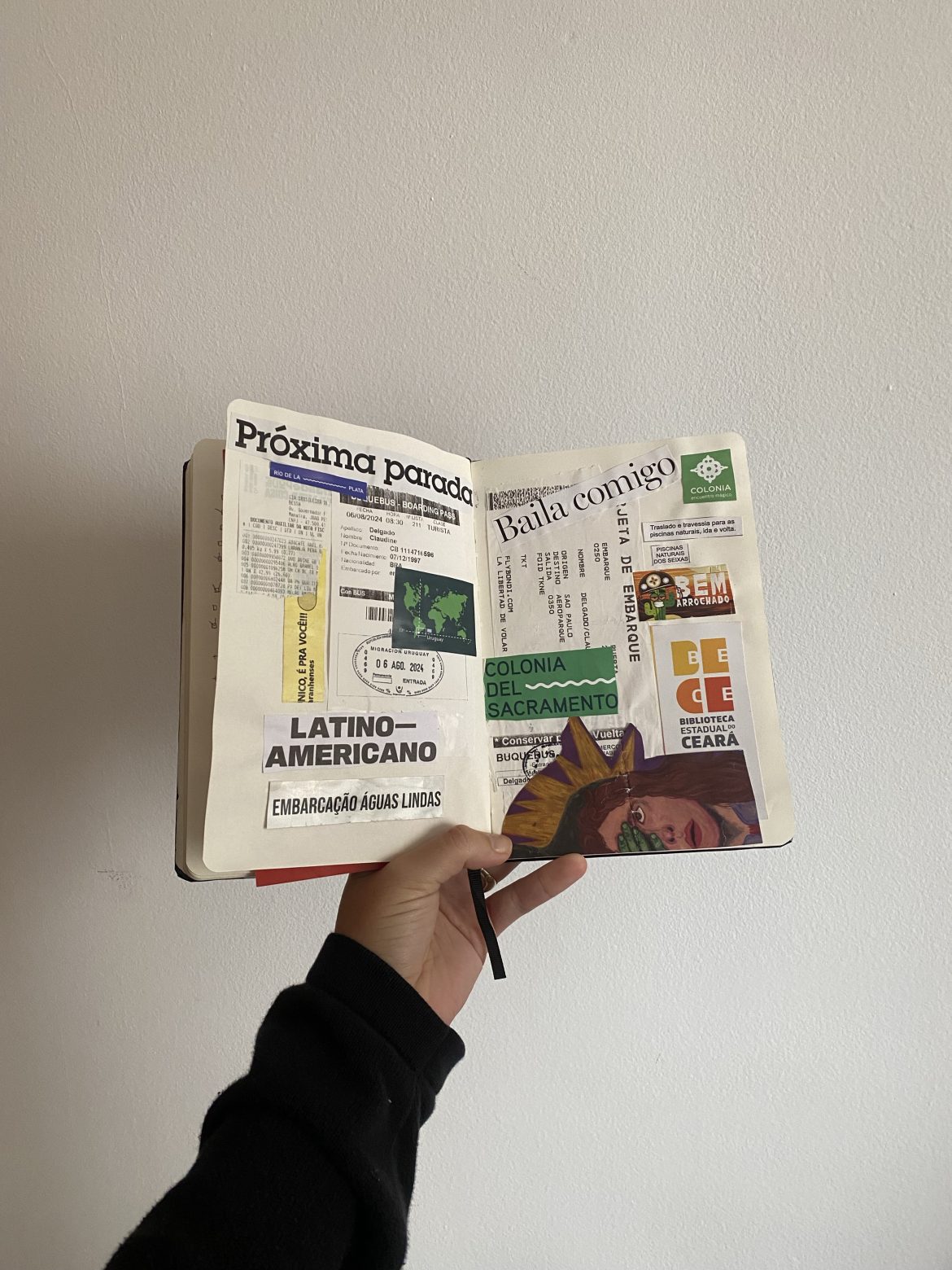
- Used in scrapbooks or travel diaries
It’s an intimate, creative way of “taking something with you” without taking anything away.
@crafta.girl I saved all the materials I use in my highlight “Stamps” 🙌🏼 This is part 10 of collecting beautiful textures in my sketchbook 😍 #texture #textures #graphicdesign #design #designer #branding #portugal #lisbon #logo #graphicdesigners #sketchbook #sketch ♬ original sound – joshyy 🦦
This tactile practice speaks to a deeper desire many travellers share to travel intentionally, to engage all five senses, to slow down and notice details and to honour places without exploiting them.
A texture imprint holds a story. It reminds you of where you stood, what you felt under your fingers, and the moment you chose to pause.
A more sustainable way to remember
Experiential travel also aligns with sustainability. Fewer mass-produced souvenirs mean:
- Less waste
- Less overconsumption
- More respect for local environments and cultures
You’re not supporting tourist traps — you’re supporting your own creativity and memory-making.
Travel as a feeling, not a thing
At its core, experiential travel reminds us that the most valuable things we bring home can’t be wrapped or shelved. They live in our bodies, our stories and our sense of self.
And sometimes, they live in a small piece of clay — quietly holding the a story of a place that once changed you.
ALSO SEE:
Featured Image: DupePhoto